Labels

Investing (292) Lifestyle (287) Entertainment (236) Singapore (149) Technology (111) Rewards (110) Equities (85) Gaming (71) AI (69) U.S. (63) Crypto (54) Food (52) Portfolio (51) Data (40) Travel (40) Sports (37) News (34) Movies (33) Savings (33) Insights (31) Credit Card (28) Policies (24) Shows (23) Earnings (18) Holidays (18) Tennis (17) Bonds (12) Promotions (12) Football (11) World (11) REITs (10) Referral (10) Toys (8) Anime (6) Apps (6) Cash Management (6) Healthcare (6) China (5) ETFs (5) Property (5) Security (5) DeFi (4) T-Bills (4) Retirement (3) Robotics (3) Shopping (3) Blog (2) Cashback (2) Insurance (2) Japan (2) Reviews (2) Robo-Advisor (2) 1-For-1 (1) Asia (1) Australia (1) CPF (1) Commodities (1) Currency (1) Funds Management (1) Futuristic (1) Inflation (1) Malaysia (1) Miles (1) Nerfs (1) SGD (1) Social (1) Weird (1)

Monday, 24 November 2025

Investing Updates: What to Expect in the Week Ahead (Earnings from Zoom, Alibaba,Nio and Dell)


Source:


ChatGPT:


The week ahead features a dense lineup of major earnings and key macro data, with markets still navigating elevated volatility. All three major U.S. indices remain negative for November, and the sudden cancellation of October CPI and GDP reports—due to the recent government shutdown—has left traders unusually “data-blind.” As a result, markets will rely heavily on PPI, PCE, jobless claims, retail sales, and high-frequency indicators to assess inflation and growth momentum.

Several high-profile companies are set to report. On Monday, Zoom will release Q3 FY2026 numbers, with expectations for modest revenue growth and steady margins as AI features and enterprise clients become increasingly important. Symbotic will also report, and investors will watch for new automation contracts and margin guidance.

Tuesday brings earnings from AlibabaNIO, and Pony.ai. Alibaba is under scrutiny for cloud growth, international commerce, and capital spending, while NIO faces pressure to clarify delivery trends, profitability plans, and pricing strategy amid China’s EV price war. Pony.ai is expected to update its robotaxi commercialisation progress. After the close, DellZscaler, and HP Inc. will report, providing insight into AI server demand, cybersecurity budgets, and corporate hardware spending.

On Wednesday, Deere and Li Auto report, serving as indicators of global industrial capex and China’s EV competitiveness. Key data releases include durable goods orders, the PCE inflation index, and FOMC minutes, which may offer clues on potential December rate cuts.

Markets closed last week lower, with notable stock moves: Alphabet surged on its Gemini 3 AI release, while Nvidia, AMD, and Circle fell on profit-taking, valuation concerns, and interest-rate sensitivity despite strong underlying fundamentals.


Rewards Updates: Kris+ check-in challenge ending on 30 November 2025


Source:


ChatGPT:


Kris+ is ending its long-running Check-In Challenge on 30 November 2025, giving users one final week to earn 20 KrisPay miles (worth S$0.20) for completing three check-ins. Launched in February 2022, the feature originally rewarded 150 KrisPay miles (S$1) weekly to encourage daily app engagement, but the incentive was gradually reduced: to S$0.50 in November 2022, then S$0.20 from May 2023 onwards. While the value diminished, the campaign remained a simple way for users to collect small rewards.

Kris+ confirmed the challenge’s closure, thanking users and hinting at a new feature launching on 1 December 2025. For those still completing check-ins, the usual rules apply: check in on any three days per week (non-consecutive), wait 24 hours between check-ins, and receive miles instantly upon the third check-in. These miles must be spent within the Kris+ app, cannot be transferred to KrisFlyer, and expire after six months.

The article calculates the maximum earnings for a user who participated diligently every week. Across the three reward phases, users could have earned approximately S$76.50, though this slightly overstates actual value due to occasional maintenance downtime. Additional value could be gained via milesback promotions, but exact amounts vary.

As a bonus, the article also highlights the best credit cards to use with Kris+, with top picks including Citi Rewards (via Amaze), DBS Woman’s World Card, and the KrisFlyer UOB Credit Card for general earn rates. Dining-specific cards like HSBC Revolution, UOB Lady’s Card, and Maybank XL Rewards can also earn 4 mpd at selected merchants.

Overall, the Kris+ check-in feature is ending after nearly four years, with users encouraged to complete one last round before the platform introduces its next update.

Investing Updates: More than 6 in 10 retail investors in Singapore hold crypto, but allocation size conservative: survey


Source:


ChatGPT:


A new joint study by SingSaver and Coinbase shows that 61% of retail investors in Singapore hold cryptocurrency, but their exposure remains cautious. Most crypto holders keep allocations small: 74% allocate less than 10% of their total assets to crypto, while only 8% invest more than 25%. The median investor portfolio is between S$3,000 and S$5,000, and the average holder owns about three cryptocurrencies, with diversification common but still concentrated in major coins.

The report describes investors as “ambitious but cautious,” noting that over half identify as HODLers, signalling long-term conviction in crypto’s value. Meanwhile, 20% trade actively and 22% trade occasionally. This aligns with diverging perceptions of crypto: 44% view it as an asset, while 29% see it as a speculative tool, highlighting crypto’s dual identity in the market.

Crypto adoption is driven heavily by younger investors. Over 70% of holders are aged 18 to 34, with equal representation between the 18–25 and 25–34 age groups. Only 12% of holders are above 45, reinforcing crypto’s appeal among digital-native demographics.

Education remains a challenge. Social media is the dominant source of crypto learning, cited by 62% of respondents, followed by friends, family, and online media or exchange blogs. However, volatility (68%) and knowledge gaps (57%) remain key barriers preventing wider adoption.

Despite these concerns, interest persists: 27% of non-holders plan to invest in the next year, while 33% are undecided. The report concludes that future growth in Singapore’s crypto market depends on improved education, transparency, security, and reliability. Clarifying crypto’s role—whether investment or speculation—will be essential for long-term integration into the financial landscape.

Investing Updates: Are Singaporeans Moving Away From Property As A Retirement Strategy?


Source:


ChatGPT:


Polls claiming that Singaporeans are abandoning property as a retirement strategy are misleading because they often reflect the agenda of the organisations funding them rather than true public sentiment. A Manulife survey suggests only 35% now view property as a key retirement tool—down from 65% previously—while ERA and PropNex polls show strong continued preference for real estate, with many still seeing property as a retirement nest egg. These contradictions arise largely from how survey questions are framed, how samples are selected, and where respondents are sourced.

Younger Singaporeans responding to online surveys—often priced out of the market or unable to buy—naturally show less enthusiasm for property investing. Older respondents in offline polls, who benefited from past appreciation or already own homes, tend to be more positive. Question phrasing also heavily influences responses: highlighting costs pushes people away from property, while emphasising tangibility steers them toward it.

Insurers have incentives to downplay property’s importance in retirement planning because money committed to real estate is money not invested in policies like annuities or ILPs. Conversely, property agencies have reasons to promote real estate despite rising prices, cooling measures, and higher capital requirements.

Ultimately, these surveys reveal more about the motivations of insurers and property agencies than about Singaporeans’ genuine retirement preferences. Many “polls” function as disguised marketing, and the author argues they may as well be straightforward ads. Ads can be repeated, while publications rarely run the same poll editorial twice, making these survey-based promotions less efficient and no more persuasive.

The article then continues with broader property news, such as sales rankings, price trends, and notable gainers and losers in the market.

Sunday, 23 November 2025

Rewards Updates: 2025 Edition: Best Credit Cards for Shopping


Source:


ChatGPT:


Shopping is one of the hardest categories to optimise for miles because each bank defines “shopping” differently. While many cards award bonus miles for purchases like clothes, shoes, jewellery and electronics, the crucial difference lies in how many Merchant Category Codes (MCCs) each card accepts, and how high the monthly bonus caps are.

Eight major cards offer shopping bonuses, with seven giving 4 mpd. The HSBC Revolution stands out as the strongest overall option thanks to its 38 MCC coverage and a high bonus cap of S$1,500 per calendar month until February 2026 (after which it drops to S$1,000). The UOB Preferred Platinum Visa and Citi Rewards offer 4 mpd but rely on MCC whitelists when used online or in-store respectively.

Other strong contenders include the Maybank XL Rewards Card and OCBC Rewards Card, both offering 4 mpd across 13 MCCs. OCBC Rewards is especially attractive in 2025, offering 6 mpd on Shopee, Lazada, Taobao, TikTok Shop and Watsons capped at S$1,000 monthly. High spenders may prefer the KrisFlyer UOB Credit Card, which gives uncapped 2.4 mpd on online shopping if the cardholder spends S$1,000 yearly on Singapore Airlines Group.

Across all cards, shopping can span up to 41 MCCs, but only seven core MCCs universally trigger shopping bonuses. These cover major department stores and fashion retailers. MCC 5311 (department stores) is particularly valuable because platforms like HeyMax use it, allowing users to “switch” MCCs by buying gift cards for other merchants.

OCBC Rewards also extends eligibility via its special merchant whitelist, covering Amazon, Lazada, Guardian, Watsons and more. Meanwhile, UOB Lady’s and Lady’s Solitaire require users to select “Fashion” or other categories quarterly.

Ultimately, while earn rates matter, MCC coverage and caps determine which card delivers the most miles for shopping.

Entertainment Updates: Bleach: Soul Resonance launches globally today, bringing Ichigo's tale to mobile


Source:


ChatGPT:


Bleach: Soul Resonance has officially launched worldwide on iOS and Android, bringing the iconic story of Ichigo Kurosaki and the cast of Bleach to mobile in a fast-paced action RPG format. Over 15 million pre-registrationshighlight massive interest in the title, signalling strong expectations for quality and faithful adaptation.

The game retells classic story arcs from the anime, letting players relive major battles and memorable moments. At launch, 17 playable characters are available, including fan favourites such as Byakuya KuchikiKisuke UraharaUryΕ« Ishida, and Ichigo himself. Players assemble teams of three, switching between characters mid-battle to create combos, dodge attacks, and unleash special skills. The gameplay features fluid arena-style combat paired with flashy visual effects that recreate the spectacle of the anime.

More characters will be added over time, each offering distinct combat styles to diversify team strategies. The game uses banner-based character recruitment familiar to gacha players, but includes an 80-draw SSR guarantee, ensuring all players secure at least one top-tier character within that limit. In addition to character pulls, players collect stamps, a progression system used to boost character stats such as damage output.

Despite gacha elements, the guarantee system aims to make progression more accessible. With faithful storytelling, a growing roster, and action-forward combat, Bleach: Soul Resonance seeks to appeal both to longtime fans and newcomers who may not yet know the depth of the series.

The game is free to download now on the App Store and Google Play, inviting players to dive into Soul Society and experience Bleach’s iconic battles in a modern mobile format.

Friday, 21 November 2025

Entertainment Updates: ‘Varsapura’ RPG From ‘Genshin Impact’ Developer HoYoverse Is Set In Singapore


Source:


ChatGPT:


HoYoverse, the studio behind hits like Genshin Impact and Zenless Zone Zero, has announced its next major project: Varsapura, an open-world RPG uniquely set in Singapore. The reveal came through a 31-minute gameplay video showcasing early footage and confirming that the game is being built on Unreal Engine 5. HoYoverse is also hiring for development roles in its Singapore and Shanghai offices, indicating a long development runway.

The demo shows the player character—customisable to “match each viewer’s preferences”—joining an organisation called SEAL (Shadow Emergency Alliance). Early gameplay includes combat against monsters using unconventional weapons such as umbrellas and paper folders. The narrative appears to centre around a mysterious condition known as Mindrot and disruptive events called Cognosea anomalies, though full plot details remain limited.

One of Varsapura’s standout features is its detailed recreation of Singapore. The trailer transitions from indoor missions to an open-world driving segment that highlights recognisable landmarks. Viewers spotted street signs referencing Serangoon and Rochor, as well as areas inspired by Bras BasahParliament House, and the Church of Saints Peter & Paul. The setting suggests an urban fantasy world layered over a stylised version of the city.

The footage was captured on an Nvidia RTX 4090 PC, emphasising the game’s early technical ambitions. However, HoYoverse has yet to disclose any specifics on monetisation. Given the studio’s history with gacha systems, players expect such mechanics to appear eventually, but nothing has been confirmed.

As the game remains in early development and the studio continues recruiting talent, it may take time before more details—including release plans—are revealed. Even so, Varsapura is shaping up to be one of HoYoverse’s most ambitious and intriguing titles, especially with its Singapore-based worldbuilding.

Investing Updates: SGX to reduce board lot sizes to 10 units for securities above $10


Source:


ChatGPT:


The Singapore Exchange (SGX) will reduce the board lot size for securities priced above $10 from the current 100 units to 10 units, according to an announcement made on Nov 19 as part of the Monetary Authority of Singapore’s (MAS) equities market review. The change aims to make higher-priced stocks more accessible to retail investors and to stimulate overall trading activity. This is the first adjustment since January 2015, when board lots were reduced from 1,000 to 100 units to lower the investment threshold for blue-chip and other large-cap counters.

MAS says the smaller board lot size will allow investors to buy into a wider range of equities with lower capital outlay, helping broaden market participation. Alongside this change, SGX will introduce measures to expand the offering of investment products linked to SGX-listed securities. These include enabling portfolio management servicesfractional trading, and robo-investing for SGX counters, potentially aligning Singapore’s market practices more closely with those seen in major global exchanges. Fractional trading, in particular, is expected to appeal to younger or smaller-scale investors seeking greater flexibility in position sizing.

Additionally, SGX plans to adopt a broker custody account model, which MAS notes is consistent with international norms and may attract more globally active asset managers. Despite the shift, retail investors can continue using their traditional CDP (Central Depository) direct accounts if preferred, ensuring continuity for those accustomed to existing arrangements.

SGX will conduct a public consultation in 1Q2026 before implementing the rule changes, giving market participants the opportunity to provide feedback. Overall, the adjustments are intended to modernise Singapore’s equity market structure, enhance accessibility and competitiveness, and support long-term investor engagement across retail and institutional segments.

Technology Updates: Collaboration in ChatGPT is coming to Singapore: what it can do, how it works and what you’ll need


Source:


ChatGPT:


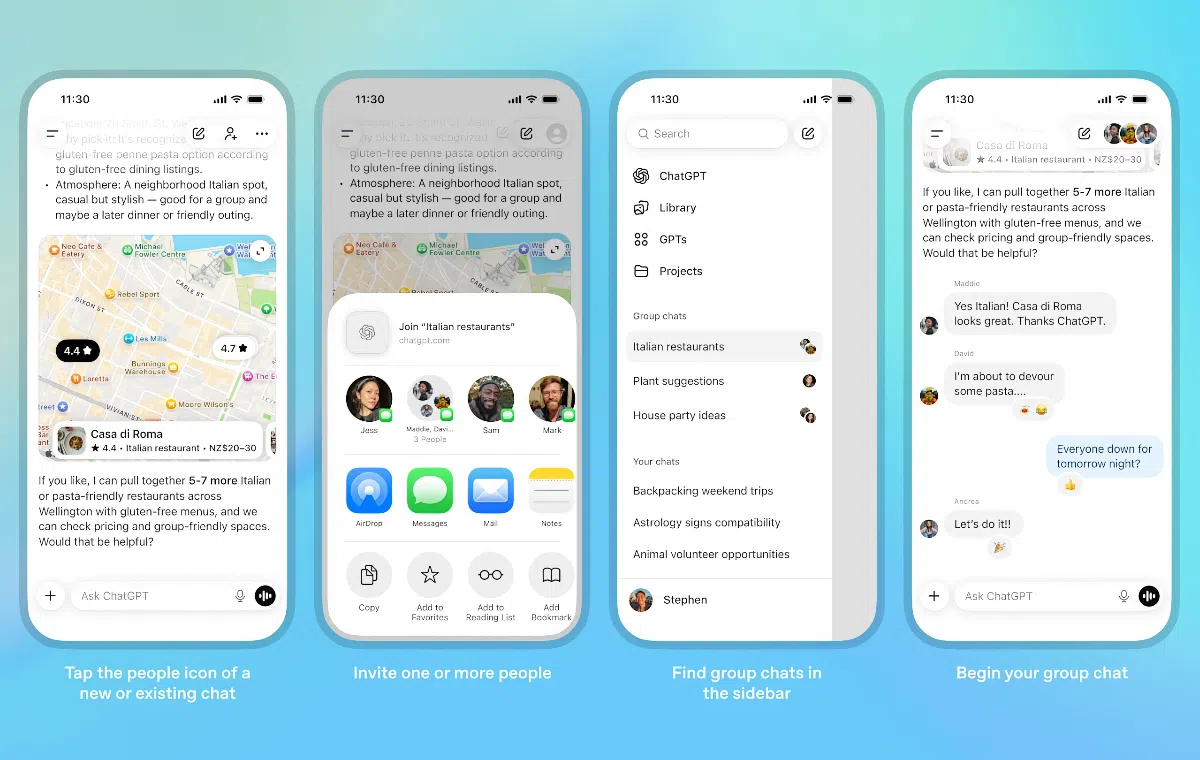
ChatGPT’s new group chat collaboration feature is rolling out to Singapore, allowing multiple people to work together with the AI in real time. Once the app is updated, users can access the feature through the people icon in the top-right corner, though some may need to wait a few days for the full global rollout.

The feature allows up to 20 participants in a single chat, making it useful for trip planning, school projects, team proposals, home renovation discussions or any situation where shared input is needed. Anyone in the group can call on ChatGPT by addressing it directly. The AI can answer questions, help generate content, analyse shared images and files, or respond to voice input. It acts like a knowledgeable team member who supports the conversation without dominating it.

Behind the scenes, the system uses the GPT 5.1 Auto model family, automatically selecting the most capable version based on the user’s plan tier (Free, Go, Plus or Pro). ChatGPT also behaves more naturally in group settings — pausing when needed, using emojis and recognising conversation cues.

To start a group chat, users simply open the app, tap the people icon, choose “Start group chat,” then share an invite link. Participants set a name and profile photo on joining. Group chats are separate from private ones, and ChatGPT’s memory does not apply. If a member under 18 joins, sensitive content is reduced for everyone.

Some limitations remain: certain tools like Python/data analysis are not yet supported in group mode, and performance may vary by region or plan. Still, Singapore users can expect strong use cases across study groups, families, startups and business teams, shifting ChatGPT from a solo assistant into a shared collaborative partner.

Wednesday, 19 November 2025

Technology Updates: ‘Excuse me, are you S’porean?’: Lions Befrienders’ upgraded AI agent calls seniors in familiar voice


Source:


ChatGPT:


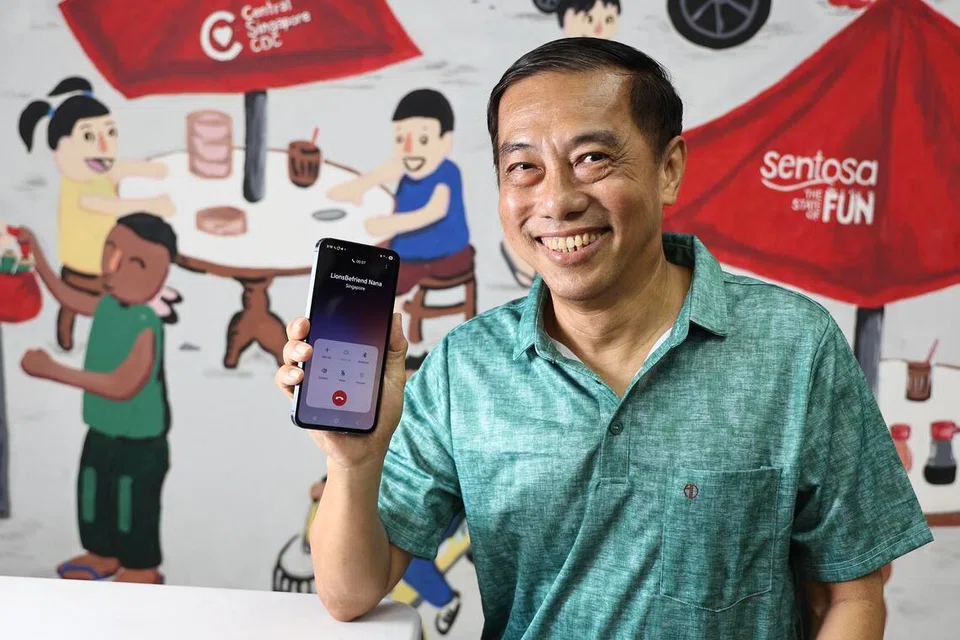
Lions Befrienders has upgraded its Singlish-speaking AI voice agent to better support Singapore’s rapidly ageing population, using it to automate daily check-ins with seniors living alone. The enhanced system, tested by 100 seniors including 69-year-old Mr Tan Hwee Leng, now responds almost instantly and sounds far more natural than the earlier 2024 version, which many users found mechanical. The AI asks about availability, interests and volunteering, and adapts when seniors say they are busy, helping reduce loneliness through familiar, human-like conversation.

The social service agency plans to officially launch the upgraded agent by March 2026, enabling outreach to scale significantly despite manpower limits. Lions Befrienders currently supports more than 10,000 seniors and operates 10 active ageing centres. The new system helps automate missed-check-in callbacks and flags urgent cases—such as seniors feeling unwell—so staff can respond quickly. It aims to minimise social isolation and complement staff who typically make 15-minute personal calls.

Developed with Seasalt.ai and Twilio, the agent is linked to a senior database, allowing hundreds of personalised conversations daily, with plans to increase capacity into the thousands. Twilio also enables SMS/WhatsApp interactions and provides transcripts for case files. The AI is being trained to understand more local languages and dialects including Malay, Tamil, Hokkien and Cantonese, with support from A*Star’s MERaLion model. Future upgrades will include emotion detection, enabling the system to sense changes in tone or distress.

Voice AI is gaining traction in healthcare, and Twilio notes growing interest in patient engagement and virtual assistant use cases. Seniors like Mr Tan are enthusiastic, anticipating a future where the AI can inform them about activities without needing to visit a centre, making support more accessible and personalised.