Labels

Lifestyle (430) Investing (390) Entertainment (302) Singapore (244) Technology (143) Rewards (131) Insights (107) Gaming (102) Equities (97) AI (87) Food (77) U.S. (77) Data (76) Crypto (71) Sports (67) Travel (63) Portfolio (54) News (45) Credit Card (37) Movies (35) Savings (34) Earnings (31) Football (31) Policies (26) Property (26) Shows (24) Holidays (23) Tennis (23) Bonds (16) Promotions (16) Toys (15) World (15) Malaysia (13) REITs (13) T-Bills (12) China (11) Apps (10) Referral (10) Healthcare (9) Anime (8) DeFi (8) Cash Management (7) Currency (7) Retirement (6) Security (6) CPF (5) ETFs (5) Miles (5) Shopping (5) Commodities (4) Robotics (4) Weird (4) platform (4) Cashback (3) Insurance (3) Japan (3) Blog (2) Reviews (2) Robo-Advisor (2) 1-For-1 (1) Asia (1) Australia (1) Banking (1) Funds Management (1) Futuristic (1) Indonesia (1) Inflation (1) Nerfs (1) SGD (1) SSB (1) Social (1)
Showing posts with label Property. Show all posts

Friday, 14 August 2026

Property Updates: A New Survey Reveals What 77% Of HDB Owners Want Most In Their Next Home — And It’s Not Price Or Space


Source:


ChatGPT:


A new PropNex survey suggests Singapore’s traditional property-upgrading ladder is becoming less straightforward. The “HDB Flat Owners Sentiment Report 2026”, based on more than 1,530 HDB owners surveyed from February to June, found that 55.1% aspire to own private housing. However, 73.9% said their current HDB flat already meets their housing needs, indicating that wanting a condo does not necessarily mean dissatisfaction.

The longer owners remain in their flats, the less likely they are to want an upgrade: 40.2% of those living in HDB flats for under five years had no upgrading plans, rising to 63% among those there for more than 20 years. Millennials were also much more likely than Baby Boomers to aspire to private housing.

Accessibility, rather than prestige, emerged as the strongest priority. Among aspiring private-home buyers, 77% ranked proximity to an MRT station, bus interchange or transport hub as important, ahead of reasonable pricing at 67% and living space at 41.6%. City-fringe condos were the most popular private-home choice, while only 7.2% preferred prime-district locations. Moreover, 40.6% wanted their next home near their current one, highlighting strong neighbourhood attachment.

Affordability remains a major constraint: about 60% budgeted below $1.5 million, while 21.9% planned to spend $1.5 million to $2 million.

The survey also points to changing attitudes towards Executive Condominiums. Following new rules doubling the MOP to 10 years and delaying full privatisation to 15 years, 40.5% of a small post-announcement sample said the longer MOP would deter them.

Overall, the survey portrays upgrading as still desirable, but increasingly shaped by affordability, convenience, neighbourhood familiarity and retirement considerations, rather than prestige, speculation, or status alone.

What social media & forums are saying

Reddit: The discussion broadly supports the article’s central point that location and value matter more than simply owning a condo. A fresh r/singapore thread about the same PropNex findings attracted discussion questioning what private housing actually adds beyond HDB facilities and status. (Reddit)

Another recent discussion showed people comparing HDB and condos based on space, MRT access and price, with some arguing that a large, well-located HDB can provide better value than a much smaller condo. (Reddit)

HardwareZone: Forum discussions are similarly focused on the space-versus-facilities trade-off. One recent thread about moving from HDB to condo questioned whether upgrading actually improves quality of life, particularly because comparable condo units can be significantly smaller. (HardwareZone Forums)

There is also strong emphasis on MRT accessibility. HardwareZone discussions repeatedly treat proximity to MRT, amenities and transport links as major determinants of property desirability—closely matching the survey’s 77% finding. (HardwareZone Forums)

X, Facebook, Instagram, TikTok and Threads: I found limited publicly indexable discussion specifically tied to this August 13 article, so I would not claim there is a clear consensus on those platforms. This is an important limitation: much of the conversation on these platforms is either behind login/search restrictions or not indexed by search engines.

Overall social-media takeaway

The online conversation appears to reinforce three themes:

  1. HDB isn't necessarily a stepping stone anymore — many people see a good HDB in a convenient location as a perfectly acceptable long-term home.

  2. MRT/location beats “atas” postcode — accessibility is viewed as practical value, not merely convenience.

  3. The condo upgrade needs to make financial sense — commenters increasingly question taking on a much larger mortgage simply for facilities or status. Recent discussions explicitly debate whether the money could instead remain in HDB while the difference is invested. (Reddit)

The interesting conclusion is that the PropNex survey's 55% figure doesn't necessarily mean Singaporeans are unhappy with HDB. It may instead indicate that many want the financial optionality, perceived wealth-building potential and lifestyle flexibility associated with private property—while still valuing the affordability, space and location of HDB.

Friday, 7 August 2026

Property Updates: Singapore Properties Are Too Expensive. Can Living in Malaysia Work?


Source:


ChatGPT:


Dr Wealth argues that rising Singapore property prices are prompting some Singaporeans to consider living in Johor Bahru (JB) while working in Singapore. The strategy is essentially a housing and cost-of-living arbitrage: earn Singapore dollars while spending more of them in Malaysia, where accommodation and daily expenses can be substantially cheaper.

The article estimates a one-bedroom condominium outside Singapore's city centre at about S$2,600–S$3,000 monthly, compared with roughly S$440–S$735 for a comparable JB unit near the CIQ. It estimates potential rental savings of around S$2,000 monthly, or S$120,000 over five years before transport, currency and other costs. Daily living expenses in JB can also be considerably lower.

However, Singaporeans buying Malaysian property face restrictions. The article says Johor's general foreign-buyer minimum is RM1 million, while certain areas such as Medini have exemptions. Foreign buyers also face an 8% residential-property stamp duty from 2026 and potentially substantial Real Property Gains Tax, making short-term property speculation unattractive.

The biggest potential game changer is the Johor Bahru-Singapore RTS Link, targeted for passenger service by the end of 2026. With a five-to-six-minute rail journey between Bukit Chagar and Woodlands North and capacity of up to 10,000 passengers per hour in each direction, the RTS could make cross-border commuting considerably more practical.

Nevertheless, the strategy involves trade-offs: immigration, commuting time, healthcare access, social life and potentially crowded peak-hour trains remain concerns. The article recommends that buyers focus on properties close to the RTS or CIQ rather than generic developments vulnerable to oversupply.

Its conclusion is targeted rather than universal: young professionals, remote workers and people prioritising capital accumulation may benefit most, while families requiring convenience and Singapore-based services may find the lifestyle compromises harder to justify.


Social media & forum reaction

I researched HardwareZone, Reddit, Facebook and publicly indexed discussions on X/Instagram/TikTok/Threads. The strongest conversation is actually around RTS + JB property + daily commuting, rather than this specific Dr Wealth article.

🟒 Reddit: “It makes financial sense, but can you tolerate the commute?”

A May 2026 r/singaporefi discussion asked whether a Singaporean could share an Airbnb/rental in JB while working in Singapore. The financial argument was attractive—particularly for someone with some work-from-home days—but commenters repeatedly warned that commuting is the real problem and that long-term accommodation requires dealing with immigration/visa rules. (Reddit)

Another Reddit user considering a JB home while working in Singapore was advised to rent or stay in JB for a week first and experience five days of commuting before committing to a purchase. (Reddit)

That captures the central online debate:

The money is attractive; the lifestyle is the question.

🟠 HardwareZone: much more sceptical about JB property speculation

HardwareZone has several active discussions about JB property and the RTS.

One 2026 thread explicitly discussing whether to buy JB property warns that buyers should focus carefully on location and not assume they will automatically make money. Another poster argues that large numbers of new condos around the RTS could eventually create oversupply and pressure rental yields. (HardwareZone Forums)

There is also scepticism about the assumption that the RTS automatically makes surrounding properties winners. One HardwareZone comment bluntly suggested that if JB property is attractive, RTS-area condos are more likely to benefit than Singapore properties, while another warned that JB prices could simply become more expensive as Singaporeans and Malaysians increasingly use the area. (HardwareZone Forums)

πŸš† RTS is the real star of the discussion

The RTS generates considerably more excitement than the property article itself.

A recent Reddit post about RTS train testing received 424 upvotes, with commenters expressing excitement about finally having a fast rail connection to JB. Others immediately worried about crowding once it opens. (Reddit)

The official LTA Facebook post announcing the first RTS train arriving for testing attracted 427 reactions and 2,000 shares, showing how much public interest there is in the project. LTA says the system is targeted for passenger service by December 2026 and will have peak capacity of up to 10,000 passengers per hour in each direction. (Facebook)

πŸ’° But will RTS really make JB living cheaper?

This is where the online debate becomes interesting.

Some Redditors think the RTS could dramatically increase demand for JB homes. Others believe prices near Bukit Chagar/CIQ will rise precisely because Singaporeans can now access them more easily. One discussion predicted that properties around the RTS could become significantly more expensive. (Reddit)

There is also a counterargument: if RTS fares are around S$5–S$7 per trip, the savings from living in JB are reduced for daily commuters. Reddit discussions have already debated whether the fare would make sense compared with buses or cars. (Reddit)

πŸ‡ΈπŸ‡¬ Singapore vs πŸ‡²πŸ‡Ύ JB: the “best of both worlds” argument

Supporters essentially see this as:

Earn SGD + live in JB + spend MYR + enjoy larger housing.

A HardwareZone discussion described the RTS as potentially creating a “win-win” situation: Singaporeans can enjoy cheaper JB consumption while Malaysian workers can reach Singapore jobs more easily. (HardwareZone Forums)

But critics argue that JB isn't as cheap as it used to be, particularly in areas popular with Singaporeans. A recent Reddit discussion even described JB as increasingly expensive unless you consolidate multiple activities—shopping, petrol, meals and services—into one trip. (Reddit)

🏠 The property-investment warning

This is perhaps where I would differ slightly from the article's optimistic tone.

The online property community repeatedly stresses:

RTS proximity ≠ guaranteed capital appreciation.

HardwareZone users are already discussing the number of condos being built around JBCC/RTS and whether the future supply could overwhelm demand. One discussion specifically warned about potentially 15,000 units around JBCC by 2029–30 and possible pressure on rental yields. (HardwareZone Forums)

So the consensus among more experienced property commenters appears to be:

Buy for lifestyle first; investment return second.

πŸ“± X, Facebook, Instagram, TikTok & Threads

I couldn't find enough publicly indexed, verifiable posts specifically discussing the Dr Wealth article itself on X, Instagram, TikTok or Threads to establish a reliable platform-wide sentiment.

Facebook, however, has strong engagement around the RTS. The official LTA announcement generated 2,000 shares, while RTS-related Malaysian Facebook posts focus heavily on faster commuting and the expected transformation of JB. (Facebook)


Overall sentiment: 🟒 Attractive idea, 🟑 major caveats

The social-media debate can be distilled into four camps:

ViewSentiment
“Live in JB, earn SGD”🟒 Very attractive
“RTS changes everything”🟒 Optimistic
“But daily commuting is painful”🟑 Cautious
“Don't assume JB property will make you rich”πŸ”΄ Strong warning

The financial arbitrage is real, but the article arguably makes the strategy sound easier than it will be for a typical Singaporean family.

For a single person or couple with hybrid/WFH arrangements, JB + RTS could be genuinely compelling.

For someone commuting five days a week, the calculation changes dramatically. Even a five-minute train journey doesn't mean a five-minute door-to-door commute—you still have to get to the station, clear immigration, travel from Woodlands North to your workplace and repeat the process every evening.

And for property buyers, I'd take the online community's warning seriously: the safest thesis is “I want to live there,” not “RTS will make my condo appreciate.”

The most interesting possibility is that RTS could simultaneously make JB more attractive to Singaporeans while making the best-located JB properties more expensive—partially eliminating the very arbitrage that attracted people there in the first place. (HardwareZone Forums)

Property Updates: Why Rental Prices In Singapore Are Still Climbing Despite More Homes Coming This Year


Source:


ChatGPT:


Singapore’s rental market continued to rise in 2Q2026 despite expectations that additional housing supply would ease pressure. Private residential rents increased 0.7% quarter-on-quarter, up from 0.3% in 1Q2026, while HDB rents rose 0.4%. Realion (OrangeTee & ETC) expects modest full-year growth of 2%–3% for private homes and 1%–3% for HDB flats.

The main reason rents increased was timing: relatively few new private homes were completed in 2Q2026. Only 700 private residential units were completed, down from 911 in the previous quarter. Just 1,611 units were completed in the first half of 2026, compared with 2,329 in 1H2025. However, the situation should improve in 2H2026, when about 5,012 private units are expected to be completed.

Rental demand also remained healthy. Private rental transactions rose 5.1% quarter-on-quarter to 22,290 units. The Core Central Region recorded the strongest non-landed rental growth at 1.2%, while RCR rents were flat and OCR rents declined 0.3%. Landed rents jumped 2.7%.

HDB rental demand was supported by seasonal factors, particularly international students renewing leases before the new academic year. Approved applications to rent out HDB flats increased 4.9% to 10,002 units, although volumes remained broadly stable year-on-year.

Looking ahead, increased housing completions and more HDB flats reaching their five-year minimum occupation period could increase rental supply and competition. However, expatriate inflows from multinational companies could sustain demand. Conversely, worsening economic conditions, job restructuring and AI-related displacement among foreign professionals could weaken demand.

Overall, the article suggests Singapore's rental market is stabilising rather than collapsing. More supply should moderate rents, but strong occupancy and persistent demand mean significant declines are unlikely in the near term.

Social media & forum reaction

The interesting thing about the online discussion is that rental affordability remains a much bigger emotional issue than the modest 0.4%–0.7% quarterly increases suggest.

🟠 Reddit

Singapore Reddit discussions show considerable frustration from tenants who feel landlords continue increasing rents despite the broader market supposedly stabilising.

One recent r/singaporefi discussion involved a renter considering buying a condo specifically because their landlord kept increasing rent. The user was paying around S$1,800/month and questioned whether continuing to rent made financial sense. Commenters debated buying versus renting and whether a property purchase should be viewed as a long-term decision rather than simply a way to escape rent increases. (Reddit)

Another discussion comparing HDB and condo rentals showed a substantial price gap, with an example of a S$3,490 HDB rental versus S$4,600 condo rental. The tenant questioned whether paying roughly S$1,000 more for a condo actually delivered sufficient additional value. (Reddit)

There is also growing discussion about whether Singapore's property market is becoming increasingly divided between people who can afford private property and those remaining in HDB. One Reddit thread noted that the affordability gap between HDB and condos has widened significantly. (Reddit)

🟠 HardwareZone

HardwareZone discussions tend to focus less on the headline rental index and more on actual asking rents, landlords and whether Singapore property remains affordable.

The recurring sentiment is that headline statistics can sometimes disguise what tenants experience when renewing a lease. Location, flat condition, MRT proximity and unit size can produce much larger differences than the national rental index.

A recurring argument is also that increased supply should eventually give tenants more negotiating power, particularly for older condos and HDB flats competing with newly MOP flats.

🟒 Property investor perspective

Property investors are generally more optimistic.

URA's official 2Q2026 data confirms that private residential rents rose 0.7%, while landed rents jumped 2.7%. At the same time, Singapore is maintaining substantial future housing supply: the government expects around 60,600 private residential units including ECs to be completed over the next few years. (Urban Redevelopment Authority (URA))

This creates an interesting tension:

More homes → more rental supply → downward pressure

but simultaneously:

More population/expatriates → more rental demand → upward pressure

The outcome will depend on which force grows faster.

πŸ“± X, Facebook, Instagram, TikTok & Threads

I could not find enough publicly indexed, verifiable posts specifically discussing this Stacked Homes article on X, Facebook, Instagram, TikTok or Threads to establish reliable platform-wide sentiment.

However, broader Singapore property conversations consistently revolve around:

  • “Why is rent still expensive?”

  • Whether landlords will finally lower rents

  • Whether tenants should buy instead

  • HDB versus condo rental value

  • Foreign-worker/expatriate demand

  • Whether incoming housing supply will finally improve affordability

πŸ“Š What the numbers actually suggest

The headline “rents are still climbing” sounds more dramatic than the underlying data.

Private rents:

1Q2026: +0.3%
2Q2026: +0.7%

HDB:

1Q2026: +0.5%
2Q2026: +0.4%

And importantly, some private segments are already weakening: OCR rents fell 0.3% and RCR rents were flat in 2Q2026. (Urban Redevelopment Authority (URA))

Meanwhile, HDB resale prices actually fell 0.3% in 2Q2026, suggesting the broader housing market is showing signs of moderation even while rents remain relatively resilient. (The Straits Times)

Overall sentiment: 🟑 Frustrated but increasingly optimistic

The social-media discussion is essentially saying:

“Supply is coming, but when will tenants actually feel it?”

For renters, the important development isn't the small quarterly increase. It's the 5,012 private homes expected to complete in 2H2026 plus more HDB flats reaching MOP.

If those homes enter the rental pool at the expected pace, late 2026 into 2027 could be considerably more tenant-friendly.

But strong occupancy of 93.6%, continued multinational-company activity and expatriate demand mean Singapore is unlikely to experience a dramatic rental crash unless the economy deteriorates substantially.

Bottom line: the rental market appears to be transitioning from a landlord-dominated market toward a more balanced one—but Singapore tenants may need to wait for the incoming supply to actually hit the market before they see meaningful relief.

Monday, 3 August 2026

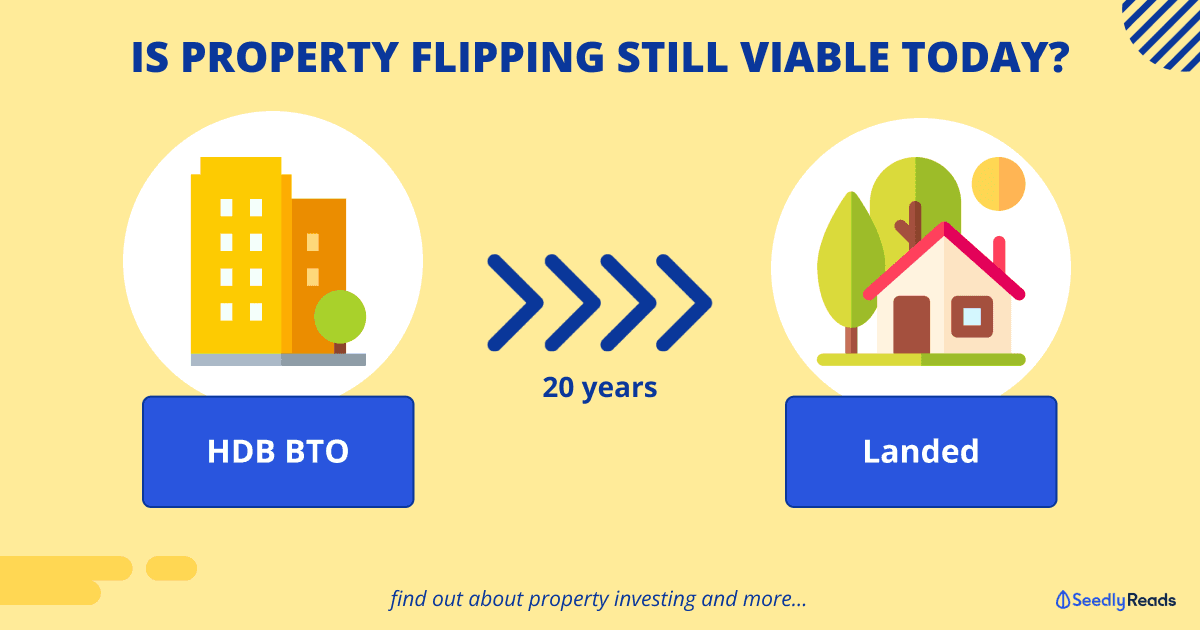
Property Updates: House Flipping Singapore: Can You Go From a BTO to a Landed Property?


Source:


ChatGPT:


Seedly examines whether Singapore households can realistically use a BTO-to-condo-to-landed-property strategy to build wealth through property flipping. While some families have successfully upgraded over generations, the article argues that the strategy is much harder today because investors must account for stamp duties, mortgage interest, renovation, agent fees, CPF accrued interest and opportunity costs.

A property selling above its purchase price does not necessarily mean the owner made a large net profit. Historical success stories can also be misleading because they may omit financing costs or depend on buying in particularly desirable locations during strong market periods. (Seedly - Get Rich or Die Tryin')

Short-term flipping has become particularly difficult after 4 July 2025, when Seller's Stamp Duty (SSD) was increased and extended to four years. Residential properties purchased from that date face SSD of 16% if sold within one year, 12% after one to two years, 8% after two to three years and 4% after three to four years. (Ministry of Finance (MOF))

BTO owners also face MOP restrictions, meaning a BTO cannot simply be bought and quickly resold. Plus and Prime flats generally have longer 10-year occupation requirements. Meanwhile, property prices do not rise uniformly: Seedly notes that 2Q2026 private residential prices rose 0.5%, but non-landed prices fell 0.1% while landed prices increased 2.6%. (Seedly - Get Rich or Die Tryin')

The article concludes that property can still build wealth, but flipping should not be viewed as a low-risk shortcut to becoming rich. Buyers should stress-test mortgages against higher interest rates, income loss and weaker markets, while considering liquidity and diversification.

Social media & forum reaction

Reddit has the strongest directly relevant discussion. A July 24 r/asksg thread questioning whether flippers actually make money attracted 129 upvotes, with commenters highlighting renovation, mortgage interest, CPF refunds, transaction costs and opportunity costs. Several argued that headline "paper gains" can substantially overstate actual profits. (Reddit)

Another Reddit discussion specifically questioned the BTO-to-property-upgrade strategy, with users noting that rising prices for the next home can consume much of the apparent gain from selling the first property. (Reddit)

HardwareZone: I found relevant historical forum discussions around property flipping and Singapore housing, but no significant thread directly discussing this newly published Seedly article.

X, Facebook, Instagram, TikTok and Threads: I could not find enough publicly indexed, verifiable posts specifically about this Seedly article to establish meaningful platform-specific sentiment. This is important because absence from search results does not mean there was no discussion—many social posts are private, poorly indexed or inaccessible to search engines.

Overall sentiment: The discussion is noticeably more sceptical than the traditional "BTO appreciation → condo → landed" success story. The dominant theme is that gross property appreciation is not the same as net wealth creation. Reddit commenters particularly emphasise financing costs, CPF interest, renovation, liquidity and the risk that the next property appreciates faster than your current home. (Reddit)

My takeaway: For Singapore investors, the article's strongest point is not that property cannot make money, but that you need to calculate the entire property cycle—not just the selling price minus purchase price.

Sunday, 5 July 2026

Property Updates: I Compared Johor And Batam As Housing Alternatives For Singaporeans — One Market Had More Upside Than I Expected


Source:


ChatGPT:


The article compares Johor and Batam as affordable housing alternatives for Singaporeans who are priced out of the local property market. While new ferry links—including a proposed Tanah Merah–Pasir Gudang route—may improve accessibility, the author argues that transport alone is unlikely to drive property prices. Instead, employment opportunities, infrastructure development and government policies remain the key factors influencing long-term property values.

In Johor, areas closest to Singapore, such as Johor Bahru and Iskandar Puteri, have enjoyed strong price appreciation of 30–50% since 2020 due to the RTS Link and the Johor-Singapore Special Economic Zone (JS-SEZ). By comparison, Pasir Gudang, despite its industrial importance, has seen more modest growth. A future ferry connection could increase its attractiveness, but this remains speculative.

Batam presents a different investment proposition. Supported by its Free Trade Zone status, special economic zones and major projects such as the Batam-Bintan Bridge, the island has experienced stronger property price growth than many parts of Indonesia. Developments like Opus Bay and Nuvasa Bay specifically target Singaporean buyers, with apartment prices starting from around S$81,000 and rental yields averaging above 6%.

The article also outlines ownership rules. Foreign buyers in Johor generally face a minimum purchase price of RM1 million, while Batam allows foreign apartment purchases from roughly S$76,500, albeit under leasehold arrangements with Indonesian ownership regulations.

The conclusion is that buyers should prioritise affordability, lifestyle and legal residency options over expectations of rapid capital gains. While Batam offers lower entry prices and higher rental yields, Johor provides freehold ownership and stronger infrastructure. Ultimately, sustained demand will depend on reliable ferry services, continued economic growth and employment opportunities.


Social media and forum discussion

HardwareZone

  • Members debate whether Batam or Johor offers better value.

  • Many favour Johor for freehold ownership, legal familiarity and stronger resale demand.

  • Others believe Batam is undervalued because of its Free Trade Zone and growing infrastructure.

Reddit

  • Singapore property communities appreciate the article's data-driven approach.

  • Common concerns include foreign ownership rules, currency risk, political stability and resale liquidity.

  • Some users view Batam as suitable for holiday homes rather than primary residences.

X

  • Users discuss whether ferry connectivity could create the next cross-border property hotspot.

  • Most remain cautious, arguing transport alone rarely drives sustained price appreciation.

Facebook

  • Comments from Singaporeans are mixed.

  • Younger readers like Batam's low entry prices, while retirees favour Johor for familiarity and healthcare access.

Instagram

  • Property influencers highlight waterfront developments such as Opus Bay, with attractive visuals generating strong engagement.

TikTok

  • Videos compare "What S$100k buys" in Batam versus Johor, with viewers impressed by the larger homes available outside Singapore.

Threads

  • Discussions centre on affordability and lifestyle, with many saying cross-border living could become more practical if ferry services become frequent and reliable.

Overall sentiment

Sentiment is cautiously positive. Readers agree Batam offers attractive pricing and rental yields, while Johor benefits from stronger infrastructure and freehold ownership. Across platforms, the consensus is that ferry connectivity is helpful but not enough on its own—economic development, employment and government policy will determine whether either market delivers lasting investment returns.

Friday, 3 July 2026

Property Updates: Unintended Consequences of HDB Cooling Measures?


Source:


ChatGPT:


The YouTube video "Unintended Consequences of HDB Cooling Measures?" examines how recent Singapore housing policies, while intended to cool the resale market and improve affordability, may be reshaping buyer behaviour in unexpected ways.

The video argues that measures such as tighter financing rules, increased housing supply and stricter eligibility requirements have slowed HDB resale price growth. However, instead of reducing overall demand, they may be diverting buyers into other segments of the property market. One notable effect is stronger interest in Executive Condominiums (ECs), which offer a middle ground between public and private housing. Analysts say cooling measures have made ECs more attractive to HDB upgraders who are priced out of private condominiums. (CNA)

The discussion also highlights how affordability constraints are creating a widening gap between HDB owners and private property buyers. As upgrading becomes more difficult, the HDB and private housing markets are increasingly serving different buyer groups with different financial profiles. (Reddit)

Another theme is that cooling measures may shift demand geographically or across property types rather than eliminating it. Buyers continue adapting their strategies by choosing different housing options, adjusting budgets or delaying purchases instead of leaving the market entirely. Property professionals in the video stress that government policies remain focused on maintaining long-term housing affordability rather than causing a market correction. (Insights by PropertyLimBrothers)

The overall conclusion is that cooling measures have largely succeeded in moderating excessive price growth but have also created secondary effects, including changing upgrade pathways, stronger EC demand and greater segmentation within Singapore's residential property market. Buyers are therefore encouraged to focus on affordability, financing and long-term housing needs rather than attempting to predict future policy changes.


Social media & forum discussion

HardwareZone

  • Property forums debated whether cooling measures have made upgrading from HDB to private housing significantly harder.

  • Many users believe ECs have become the biggest beneficiaries.

Reddit

  • r/singapore and r/SgPropertyInvesting discussions broadly agree that cooling measures have slowed prices but also split the HDB and private markets into separate buyer pools. (Reddit)

  • Common themes include:

    • EC demand has strengthened.

    • Upgrading is less affordable.

    • Policies are achieving stability rather than triggering a housing crash.

X

  • Property commentators described the measures as "policy calibration" rather than aggressive intervention.

  • Debate centred on whether further easing or tightening will be needed if prices continue moderating.

Facebook

  • Property groups discussed whether current conditions favour first-time buyers over investors.

  • Many homeowners shared concerns about reduced upgrade opportunities.

Instagram

  • Real estate creators published infographics explaining the ripple effects of cooling measures.

  • Educational content on ECs and financing attracted strong engagement.

TikTok

  • Singapore property creators posted short explainers on why EC launches remain highly competitive despite slower resale growth.

  • Many videos compared today's market with previous cooling cycles.

Threads

  • Discussions focused on affordability and whether Singapore's housing market is becoming increasingly segmented.

  • Users generally supported cooling measures but acknowledged their unintended side effects.

Overall sentiment

Online sentiment is mixed but largely supportive. Most agree the cooling measures have improved market stability and discouraged speculation. However, many believe they have also made upgrading more difficult, boosted EC demand and widened the divide between HDB and private housing buyers, illustrating how policy changes often produce ripple effects beyond their original objectives.

Friday, 19 June 2026

Property Updates: Why The ‘Safer’ HDB Loan Isn’t Always The Smarter Choice


Source:


ChatGPT:


A Stacked Homes article challenges the common belief that the HDB concessionary loan is always the safest financing option for Singapore homeowners. Written by Sebastian Sieber, founder of mortgage platform Cashew, the article argues that for owners planning to sell their HDB flat within three to five years, certain bank fixed-rate loans may actually be both cheaper and lower-risk.

The key argument revolves around a little-known feature offered by some banks: redemption penalty waivers upon a genuine property sale. Many homeowners avoid bank loans because of lock-in periods and early repayment penalties, typically around 1.5% of the outstanding loan. However, the article notes that several banks waive these penalties when the borrower sells the property rather than refinancing with another lender.

As of mid-2026, HDB concessionary loans charge 2.6% interest, while some bank fixed-rate packages are available from around 1.6% to 2.0%. According to the article, the interest savings can be substantial. On a S$400,000 loan, a homeowner selling after five years could save nearly S$18,000 in interest payments compared with staying on an HDB loan.

The article also reviews bank offerings from DBS, OCBC, and UOB, highlighting differences in sale-waiver policies. While some banks provide full penalty waivers on genuine sales, others only partially waive penalties.

However, the article acknowledges that bank loans are not always superior. Homeowners intending to hold their flats for decades may face refinancing risks and exposure to future interest-rate increases. Historically, HDB loans outperformed bank loans during periods of high interest rates, particularly between 2005–2008 and 2022–2025.

The conclusion is that homeowners should evaluate their intended holding period, loan size, and exit strategy rather than automatically assuming HDB loans are the safest choice.


Social Media & Forum Discussions

HardwareZone

Property and finance subforums have generated considerable discussion around this topic.

Common reactions:

  • Many members agreed that HDB loans are often chosen because of familiarity rather than financial optimisation.

  • Users shared experiences refinancing from HDB loans to bank loans after collecting their keys.

  • Some highlighted that the article's assumptions depend heavily on rates remaining low.

  • Others cautioned that borrowers often underestimate the value of certainty during volatile interest-rate cycles.

Frequently discussed points:

  • Sale penalty waivers.

  • Whether fixed-rate packages remain attractive if SORA falls further.

  • The inability to switch back to an HDB loan after refinancing.


Reddit

Discussion in Singapore property and personal finance communities has been mixed.

Supportive viewpoints:

  • Many users agreed that HDB loans are psychologically comforting but not always mathematically optimal.

  • Some noted that homeowners planning to sell immediately after MOP are ideal candidates for bank refinancing.

Critical viewpoints:

  • Users questioned whether the article, written by a mortgage platform founder, naturally favours bank loans.

  • Some argued that future rate uncertainty was understated.

  • Others stressed that average homeowners may value simplicity over maximising savings.


X (Twitter)

The article sparked discussion among mortgage brokers, property agents, and financially savvy homeowners.

Popular themes:

  • "HDB loan isn't always the safest."

  • Comparisons between fixed-rate packages and SORA-linked loans.

  • Sharing calculators showing potential interest savings.


Facebook

Property-investment groups and homeowner communities discussed the article extensively.

Recurring comments:

  • Requests for recommendations on refinancing.

  • Questions about DBS, OCBC, and UOB sale-waiver terms.

  • Debate over whether refinancing paperwork is worth the savings.


Instagram

Real estate content creators and mortgage advisers used the article to create educational posts.

Popular content:

  • Infographics comparing HDB loans versus bank loans.

  • Reels explaining sale-waiver clauses.

  • Examples of potential savings over a five-year holding period.


TikTok

Finance influencers produced short explainers and calculators.

Trending angles:

  • "The mortgage myth Singaporeans believe."

  • "How one clause could save you thousands."

  • Comparisons of monthly repayments under different loan structures.


Threads

Threads discussions largely mirrored Facebook and X.

Key observations:

  • Users appreciated the article for highlighting a rarely discussed clause.

  • Many agreed that homeowners should review loans periodically instead of sticking with their original financing arrangement indefinitely.

  • Others maintained that peace of mind still makes HDB loans worthwhile for many families.


Overall Sentiment

The overall online sentiment is cautiously positive but skeptical. Many homeowners and finance enthusiasts agree that sale-waiver clauses are underappreciated and that bank loans can offer significant savings for owners planning to sell within a few years. However, discussions across HardwareZone, Reddit, Facebook, Threads, and X consistently emphasize that the article's conclusions depend on individual circumstances, future interest-rate movements, and the borrower's risk tolerance. The strongest takeaway echoed online is that homeowners should compare actual loan terms rather than assume the HDB loan is automatically the safest or most cost-effective option.

Thursday, 21 May 2026

Property Updates: This Family Of Five Spent $40K To Have Their Macpherson BTO Fully Designed By IKEA


Source:


ChatGPT:


A Macpherson Weave BTO family of five turned an exploratory IKEA visit into a near fully furnished home, spending about $40,000 to design and fit out their 969 sq ft four-room flat using IKEA’s Home Design Service. Initially seeking inspiration for their new flat, homeowners Seng and his wife expanded the plan from kitchen ideas to a full-home design solution after discovering IKEA’s bundled service as a cost-effective alternative to traditional interior design firms.

IKEA’s design team provided consultation, space planning, 3D layouts, and product recommendations, while coordinating installation with external contractors for works beyond its scope. The family, who previously lived in a resale flat that required little renovation, prioritised keeping costs and timelines under control, comparing IKEA’s offer with interior design firms that quoted roughly 20 percent more. Most furnishings, including kitchen systems, wardrobes, lighting, and bedroom setups, were sourced from IKEA, with only select appliances and plumbing works handled by third parties.

IKEA’s service, launched in Singapore recently, aims to simplify renovation by offering end-to-end coordination for standardized layouts common in new BTO developments. Company representatives noted that prefabricated housing designs in Singapore allow IKEA to scale its model efficiently across similar apartment configurations. However, the service does not yet include demolition, painting, or full renovation works, requiring homeowners to engage external contractors for certain tasks.

IKEA plans to expand these capabilities in Singapore to offer a more complete renovation package in the near future. Overall, the Seng family’s experience highlights growing interest among Singapore homeowners in bundled, affordable, design-led renovation solutions from established furniture brands seeking to challenge traditional interior design firms in a competitive housing market, reflecting changing expectations for home renovation services in Singapore.

Tuesday, 19 May 2026

Property Updates: Why More Young Singaporeans Are Rushing Into Private Property In 2026 — But Not For The Reasons Many Assume


Source:


ChatGPT:


A growing number of young Singaporeans are entering the private property market in 2026, but according to the article, the trend is driven less by greed or investment ambition and more by fear of being permanently priced out of housing.

Recent reports showed strong growth in private home purchases among buyers under 35, with banks such as DBS Bank reporting a 40% rise in home loans from younger borrowers between 2024 and 2025. OCBC Bank also noted increased interest from singles buying condos for investment. However, the author argues that the emotional atmosphere today differs sharply from earlier property booms such as the pre-2013 surge, which was characterised by optimism and speculation.

Instead, many younger buyers today appear motivated by anxiety. After witnessing rapid price increases during and after the COVID-19 period across HDB resale flats, executive condominiums, private condos, and rentals, many fear that delaying a purchase by a few years could leave them unable to afford homes in desirable locations altogether.

The article suggests that this mindset has reshaped housing behaviour. Younger buyers are stretching finances, pooling resources with partners or parents, and prioritising property purchases before other life milestones such as marriage or career stability. Parents are also increasingly encouraging early purchases, fearing their children could eventually be locked out of the market or inherit ageing flats with limited lease value.

Smaller condo unit sizes and lower entry prices have made private housing more accessible, but the article argues the deeper driver is psychological. Unlike previous generations who viewed private property as a symbol of success or wealth accumulation, many young Singaporeans now see buying property as a form of protection against future exclusion.

The author concludes that today’s market is increasingly shaped by preservation and survival instincts rather than pure investment optimism, creating a stronger and potentially more difficult-to-cool emotional force in Singapore’s housing market.

Wednesday, 6 May 2026

Property Updates: From $1.18 Million To $1.728 Million: How Record-Breaking HDB Resale Prices Have Changed In The Last Decade


Source:


ChatGPT:


Singapore’s HDB resale market has seen dramatic price growth over the past decade, with record-breaking transactions rising across all flat types and million-dollar deals becoming increasingly common. In April 2026, a new αƒ”αƒ αƒαƒ•αƒœαƒ£αƒšαƒ˜ high of $1.728 million was set for a 5-room flat at City Vue @ Henderson, highlighting how far prices have climbed since 2017.

Executive flats—such as maisonettes and jumbo units—remain among the largest HDB homes, though no new ones have been built since the early 2000s. Their record prices rose about 38%, from $1.16 million in 2017 to a peak of $1.6 million in 2025, with recent top sales concentrated in Bishan and Bukit Timah.

5-room flats recorded even stronger growth, with prices jumping over 46% from $1.18 million in 2017 to $1.728 million in 2026. High-floor units in central or mature estates, including DBSS developments and SERS replacement flats, dominate these records due to location, views, and modern design.

For 4-room flats, every record transaction from 2017 to 2026 occurred at Pinnacle@Duxton. Prices surged more than 52%, from just under $1 million in 2017 to over $1.5 million in recent years. Despite smaller sizes, their prime location and panoramic views continue to command premium prices.

Meanwhile, 3-room flats saw a 35% increase, from $688,000 in 2017 to $930,000 in 2025. Newer flats in estates like Bidadari are now overtaking older units in places like Tiong Bahru, reflecting buyer preference for newer leases.

Overall, the data shows a clear trend: newer flats, central locations, and high-floor units are driving record prices, with further increases likely.

Monday, 4 May 2026

Property Updates: How the RTS Link Is Changing the Way Singaporeans Think About Living in Johor Bahru


Source:


ChatGPT:


The upcoming Johor Bahru–Singapore Rapid Transit System (RTS), set to launch in January 2027, is reshaping how Singaporeans view living in Johor Bahru. Connecting Woodlands North MRT Station to Bukit Chagar station in about six minutes, the system promises reliable, predictable cross-border travel—something historically lacking.

While Johor Bahru was once seen mainly as a short-trip destination, the RTS is prompting Singaporeans to consider it as part of their long-term housing strategy. The key shift is not just faster travel, but consistent commuting. This reliability enables people to plan daily routines—work, school, or healthcare—making cross-border living more feasible.

As a result, some Singaporeans are exploring Johor Bahru as a second home, retirement base, or a way to access larger, more affordable housing. Rising property prices in Singapore are a major driver, with Johor offering more space and flexibility. Importantly, this demand is practical rather than speculative, with buyers focused on lifestyle needs and long-term usability.

However, not all properties will benefit equally. Areas near the RTS station, such as Taman Pelangi and Taman Sentosa, are expected to attract stronger interest due to their connectivity and amenities. Broader economic growth in sectors like healthcare and education is also supporting sustained demand.

Despite the opportunities, cross-border property purchases require careful planning. Buyers must consider regulations, taxes, financing rules, currency risks, and maintenance responsibilities.

Overall, the RTS will not instantly transform Johor Bahru into a “Singapore suburb.” Instead, it will gradually position the city as a complementary housing option, offering Singaporeans more flexibility in balancing cost, space, and lifestyle choices over time.

Saturday, 25 April 2026

Property Updates: Singapore Property Market 1Q2026: Latest Housing Stats, Condo Prices, Supply And Demand


Source:


ChatGPT:


Singapore’s private property market in 1Q2026 showed continued price growth but emerging signs of moderation after a strong 2025. Overall private home prices rose 0.9% quarter-on-quarter, accelerating from 0.6% in the previous quarter, indicating resilience despite global geopolitical uncertainty. However, transaction activity weakened, with new home sales falling 31.5% to 2,013 units, while unsold inventory rose 6.8% to over 38,000 units, pointing to increasing supply and competition.

Across regions, the Outside Central Region (OCR) led price growth with a 2.2% increase, driven by upgrader demand and relative affordability. The Rest of Central Region (RCR) saw moderate gains of 0.8%, while the Core Central Region (CCR) rebounded 0.6% after a previous decline, supported by more accessible pricing and layouts attracting local buyers. Landed property prices, however, dipped 0.4%.

Developers launched fewer new units (1,844) compared to the previous quarter, but sales still exceeded launches, suggesting pricing remains supported by high land and construction costs. Executive Condominiums (ECs) stood out as a strong segment, with 1,168 units sold out of 1,320 launched, as buyers favoured larger, more affordable alternatives to private condos.

In the resale market, transactions declined 8.6% to 3,225 units but remained stable within historical ranges, reflecting steady demand from buyers seeking immediate occupancy. Sub-sales were limited, indicating low speculative activity.

The rental market showed tentative stabilisation, with rents rising 0.3% after a prior decline, though vacancy rates edged up to 6.2%. Completed housing stock increased modestly, while vacant units also rose slightly.

Overall, while prices remain firm, the market is showing signs of normalisation. Rising supply, softer sales volumes, and higher vacancies suggest a potential shift towards a more balanced, price-sensitive environment in the coming quarters.

Friday, 10 April 2026

Property Updates: Property upgrading has built wealth for many, but what is the full cost of the dream?


Source:


ChatGPT:


Property upgrading in Singapore—typically moving from public housing to private property—has long been seen as a reliable path to wealth. However, this narrative deserves closer scrutiny. While past generations benefited from rising prices and favourable conditions, today’s buyers face higher costs, tighter regulations, and more uncertain returns.

A common scenario illustrates the trade-offs: a couple upgrades from an HDB flat to a condo, doubling their mortgage and stretching their finances. Despite meeting lending criteria, their increased expenses—loan repayments, maintenance fees, childcare, and insurance—leave little financial buffer. The result is often longer working hours, lifestyle sacrifices, and mounting stress, raising the question of whether this is truly an “upgrade” in quality of life.

Experts like Christopher Tan argue that past success has been ΰ¦­ুলly treated as a universal rule. What worked in earlier decades may not apply today. Similarly, entrepreneur Jeremy Ko highlights the psychological toll of large mortgages and the opportunity cost of tying up capital in property rather than more flexible or higher-return investments.

Financially, property gains may also be less impressive than they appear. After accounting for stamp duties, interest, taxes, and maintenance, returns can be modest, and losses are not uncommon. Property is also a concentrated, illiquid asset—difficult to sell partially and heavily reliant on market conditions.

Beyond finances, upgrading can reduce flexibility and freedom. Heavy debt may limit career choices, delay life decisions, and erode peace of mind. While safeguards like loan limits prevent over-borrowing, they do not guarantee comfort or long-term affordability.

Ultimately, upgrading should not be an automatic goal but a deliberate decision. Buyers should consider not just potential profits, but also lifestyle impact, financial resilience, and whether the move truly supports a meaningful and sustainable way of living.

Monday, 6 April 2026

Property Updates: HDB Resale Prices Just Fell For The First Time Since 2019 — Is This The Start Of A Bigger Shift?


Source:


Claude:


HDB Resale Prices Fall for First Time Since 2019

HDB resale prices dipped 0.1% in Q1 2026 — the first quarterly decline since 2019 — marking the fifth consecutive quarter of slowing or flat price growth. While modest, this signals a meaningful shift in Singapore's public housing market.

The primary driver is a surge in flats reaching their Minimum Occupation Period (MOP). Around 13,400 units are expected to enter the resale market in 2026, roughly double last year's figure, with even larger volumes anticipated in 2027 and 2028. Key contributors include Tampines, Punggol, and Queenstown. This supply wave has already nudged analysts to revise full-year price growth forecasts down from 7% to around 5%.

The introduction of Plus and Prime flat categories may also be quietly reshaping demand. These centrally located BTO options give buyers access to well-situated homes without turning to the resale market. Despite stricter conditions like a 10-year MOP, they remain consistently oversubscribed.

On the financing side, buyers relying on bank loans face uncertainty. While interest rates aren't expected to spike, geopolitical tensions — particularly in the Middle East — could delay anticipated rate cuts, keeping borrowing costs elevated for longer. Those considering switching from HDB concessionary loans to bank loans are advised to consult a mortgage broker before acting.

Finally, the article addresses whether selling within the same development to upgrade is worthwhile. The verdict: it can make sense for lifestyle reasons, since you already know the environment. However, purely investment-driven moves may disappoint, as prices within a single development tend to rise in tandem, leaving little room for outperformance after accounting for stamp duties, legal fees, and agent commissions.

Comments:

Good information.

Sunday, 29 March 2026

Property Updates: Over 1,000 Condos In Singapore Are Now Over 30 Years Old — And It Could Change How Buyers Think


Source:


https://stackedhomes.com/over-1000-condos-in-singapore-are-now-over-30-years-old-and-it-could-change-how-buyers-think/#sh.xhz2um

ChatGPT:


Over 1,000 of Singapore’s roughly 3,750 condo developments are now over 30 years old, raising important questions about ageing properties, rising maintenance costs, and future buyer behaviour. While there has been discussion about whether the government should support struggling MCSTs, public funding for private property maintenance is unlikely, given most Singaporeans do not live in condos.

As condos age, maintenance expenses increase, placing financial strain on owners. This shifts the en bloc conversation: instead of focusing purely on windfall gains, ageing developments may face pressure where staying becomes less viable. Some may struggle to fund major repairs while also failing to reach the required consensus for collective sales, leading to gradual decline.

One theoretical solution is lowering en bloc thresholds for older developments with insufficient sinking funds, though challenges like pricing and relocation remain. Alternatively, some condos choose renewal over redevelopment. Developments like Mandarin Gardens show that failed en bloc attempts can encourage owners to invest in upgrades, improving long-term viability.

For buyers, this trend means a shift in due diligence. Beyond monthly maintenance fees, they must assess sinking funds, past and upcoming major works, and the effectiveness of estate management. These factors will become increasingly critical as more condos enter their later life stages.

The article also highlights key buying considerations. Leasehold properties often offer better short- to mid-term gains due to lower entry prices, while freehold benefits require longer holding periods. Exit strategy depends on affordability and buyer demand, with mid-sized family units typically Ψ§Ω„Ψ£ΩƒΨ«Ψ± liquid. Location—especially proximity to MRTs and amenities—remains crucial for resale demand and price support.

Comments:

Good Information.

Sunday, 22 March 2026

Property Updates: Why Some Singaporeans Are Considering A Second Home In Malaysia Without Leaving Singapore — Thanks To MM2H


Source:


Claude:


Why Singaporeans Are Eyeing Malaysia's MM2H Programme as a Second Home Option

The Malaysia My Second Home (MM2H) programme, traditionally associated with retirees, is attracting growing interest from a broader range of Singaporeans — including professionals, entrepreneurs, and families — following recent framework revisions.

The New Tiered Structure: The updated MM2H now offers three tiers:

  • Platinum – 20-year visa; RM2M property + USD$1M fixed deposit
  • Gold – 15-year visa; RM1M property + USD$500K fixed deposit
  • Silver – 5-year visa; RM600K property + USD$150K fixed deposit

Notably, MM2H is not a pathway to permanent residency.

Why It's Gaining Traction: The impending launch of the Johor Bahru-Singapore Rapid Transit System (RTS) by end-2026 is making cross-border living increasingly practical. Remote and hybrid work arrangements have also made extended stays in cities like Kuala Lumpur or Penang more feasible, without giving up Singapore as a primary home.

Lifestyle and Financial Appeal: Malaysian cities offer larger living spaces, a slower pace of life, and significantly lower property prices. Landed homes in Penang, for instance, start from RM2.96 million — a fraction of equivalent Singapore properties, where landed home prices are projected to rise at least 5% this year. Currency diversification through Ringgit-denominated assets is another draw.

Popular Locations: Johor Bahru (especially near the upcoming RTS), Kuala Lumpur's Mont Kiara and Bangsar, and Penang remain top choices among Singaporean buyers.

Key Risks to Consider: Policy changes, long-term financial commitments, tax implications, property liquidity, and varying foreign ownership rules across Malaysian states all warrant careful evaluation before committing.

For most Singaporeans, MM2H is less about relocating and more about expanding regional lifestyle flexibility.

Monday, 2 March 2026

LifeStyle Updates: Why HDB Needs To Start Building Bigger Flats For “Large Families”


Source:


https://dollarsandsense.sg/why-hdb-needs-to-start-building-bigger-flats-for-large-families/

ChatGPT:


The article argues that Singapore should start building larger HDB flats to better support “large families” with three or more children, as part of broader efforts to address the country’s persistently low fertility rate. During Budget 2025, Prime Minister Lawrence Wong introduced the Large Families Scheme, while in Budget 2026, MP David Hoe proposed a new “jumbo BTO flat” with extra bedroom space.

Although Housing & Development Board (HDB) already offers 5-room and 3Gen flats, flat combinations, and priority schemes for families with three or more children, the average size of 5-room flats has stayed at about 110 sqm since 1997. This is despite changes in household structures and living needs. Official data shows that while average household size has declined, the absolute number of large households (five or more persons) has remained broadly stable over the past decades. The fall in average household size is mainly due to rapid growth in smaller households, not a disappearance of large families.

Census data further reveals that households with five or more members are far more likely to live in homes larger than 120 sqm, yet most newer HDB flats fall below this threshold. Large families also have significantly less living space per person. For example, a five-person household in a typical 5-room flat has around 22 sqm per person, roughly half the space enjoyed by a single person in a 2-room unit.

The article concludes that housing design matters for family formation. If Singapore is serious about encouraging larger families, policies should go beyond incentives and priorities, and include building genuinely larger flats that are more conducive to raising children.

Comments:

Agree that I need bigger flats 😏