Labels

Lifestyle (456) Investing (402) Entertainment (304) Singapore (260) Technology (150) Rewards (136) Insights (122) Gaming (103) Equities (97) AI (90) Food (85) Data (83) U.S. (77) Sports (74) Crypto (73) Travel (66) Portfolio (55) News (51) Credit Card (38) Earnings (36) Football (35) Movies (35) Savings (34) Policies (27) Property (27) Tennis (25) Shows (24) Holidays (23) Promotions (19) Bonds (16) Toys (16) Malaysia (15) World (15) REITs (14) T-Bills (12) Apps (11) China (11) Healthcare (10) Referral (10) Currency (9) Anime (8) DeFi (8) Retirement (8) CPF (7) Cash Management (7) Security (6) ETFs (5) Miles (5) Shopping (5) Commodities (4) Robotics (4) Weird (4) platform (4) Cashback (3) Insurance (3) Japan (3) Blog (2) Reviews (2) Robo-Advisor (2) 1-For-1 (1) Asia (1) Australia (1) Banking (1) Funds Management (1) Futuristic (1) Government (1) Indonesia (1) Inflation (1) Interesting (1) Nerfs (1) SGD (1) SSB (1) Social (1) Thailand (1)
Showing posts with label Travel. Show all posts

Friday, 2 October 2026

Food Updates: S'pore Airlines introduces new in-flight dining options for all cabin classes


Source:


ChatGPT:


This article is getting more interesting than the headline suggests, because the reaction isn't simply “SIA has better food”. A lot of the discussion is really about whether SIA is finally addressing a perceived weakness in its economy-class product.

✈️ What the Mothership article says

Mothership — SIA introduces new in-flight dining options

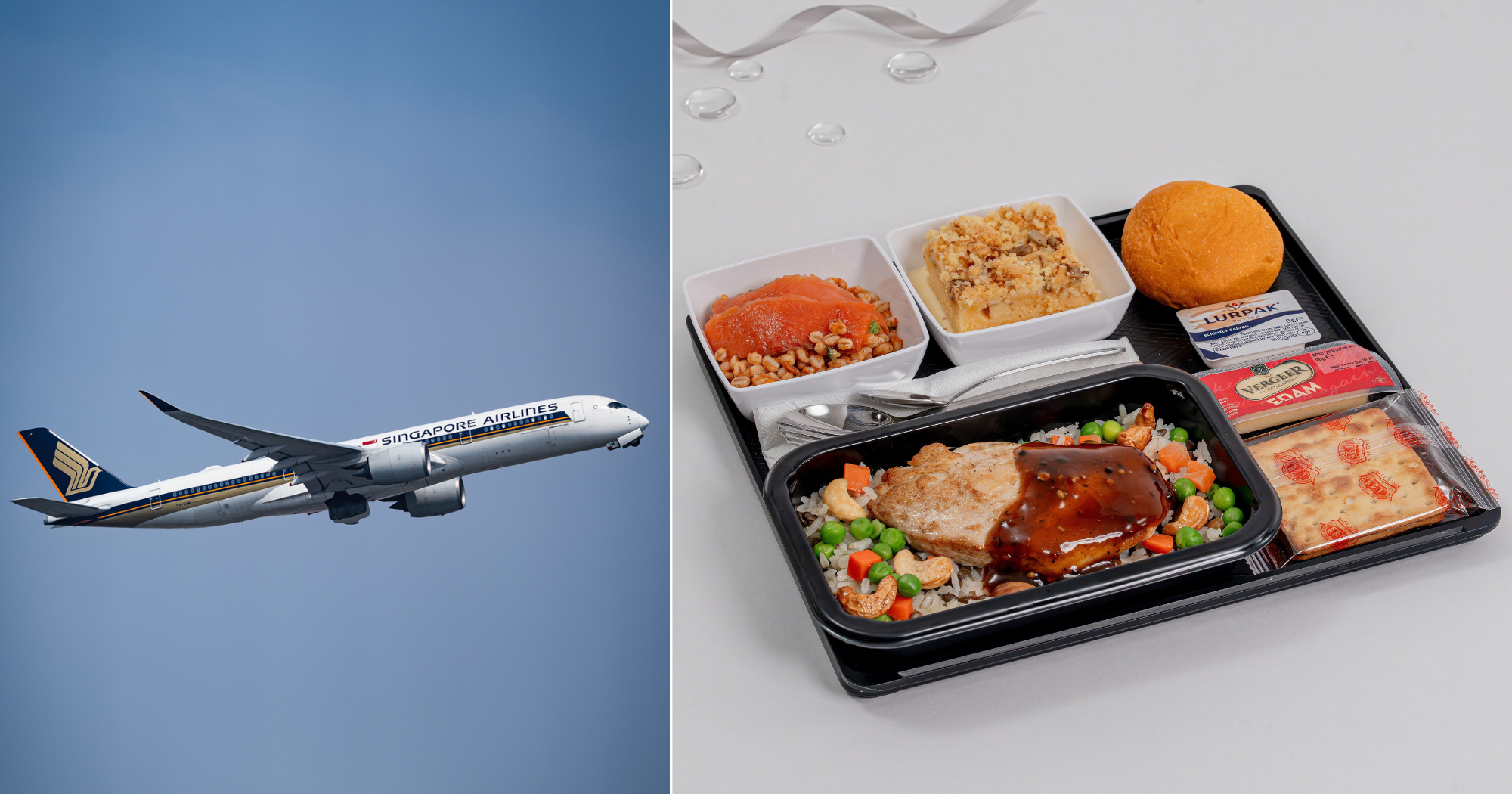
Singapore Airlines is progressively rolling out more than 100 new or refreshed appetisers, mains and desserts across all cabin classes. The changes are part of a broader SIA product refresh. (Mothership)

Economy

New highlighted options include:

  • Roasted chicken breast with black pepper sauce and lentil rice

  • Oriental-style fish with yellow bean sauce

  • Tandoor roasted paneer

  • Different versions of Cheng Tng and apple-based desserts

Premium Economy

Highlights include:

  • Irish lamb stew

  • Chicken stroganoff

  • Tandoor roasted paneer

Business

The changes are considerably more elaborate:

  • Prawn cocktail

  • Char siew / roast pork wanton noodles

  • Singapore-style prawn noodle soup

  • Roasted cauliflower steak

  • Indonesian dishes such as jackfruit opor and vegetarian nasi padang

Suites / First Class

This is where the luxury element becomes much more obvious:

  • Poached Maine lobster

  • Beef short rib sambal percik with nasi kerabu

  • Lobster Royale

  • Citrus-marinated lobster

  • Other premium dishes

SIA is also introducing new Christofle-designed tableware for Suites, First and Business Class, while expanding its wine and spirits selection. (Mothership)

The food rollout has already started, while the new beverages, serviceware and other dining touches begin from November 2026. (Singapore Airlines)


🍽️ The interesting part: economy passengers

This is where the online reaction becomes much more mixed.

The headline says “more than 100 new and refreshed dishes”, which sounds huge.

But travellers are noticing that the extent of the upgrade differs substantially by cabin.

The new Christofle tableware, elaborate presentation and more luxurious dishes are concentrated in Suites, First and Business. Economy gets new meals, but not the same dramatic physical product upgrade. (Singapore Airlines)

One Reddit discussion summed up this perception by noting that the economy tableware essentially hasn't changed, while Business receives a much more obvious visual refresh. (Reddit)

So there are effectively two stories:

Premium cabins: significant dining/product enhancement.

Economy: primarily a menu refresh.

That distinction matters enormously for the majority of SIA passengers.


💬 What are people saying online?

I searched the recent discussions across Reddit, HardwareZone and indexed social-media results. The strongest current discussion is on Reddit; X, Facebook, Instagram and Threads have considerably less publicly indexable material, so I wouldn't pretend that a precise sentiment percentage across those platforms is possible.

🇸🇬 Reddit / r/singapore

The main thread had around 200 upvotes, with discussion becoming quite extensive. (Reddit)

The reaction is surprisingly mixed-to-negative, despite the announcement itself being positive.

The main criticism: “Is the food actually good?”

Several commenters argued that SIA's economy food has deteriorated over the years.

One particularly upvoted comment said that SIA's entertainment is above average but its food has fallen behind, while another complained about bland/poorly cooked dishes. (Reddit)

There is also a recurring theme:

“For the price SIA charges, the food should be better.”

That's an important distinction.

People aren't necessarily saying SIA food is universally terrible. They're comparing it against:

  • SIA's premium fares

  • Middle Eastern airlines

  • other full-service airlines

  • what SIA used to offer


👍 But there are positive reactions too

Some travellers reported having good recent SIA meals, particularly Singaporean dishes.

Carrot cake and laksa repeatedly receive positive mentions.

One recent r/singaporeairlines discussion recalled SIA's SG60 Hokkien mee in Economy very positively and suggested that more Singaporean hawker dishes should become regular menu choices. (Reddit)

Another commenter in the new-dining discussion said their recent SIA food was actually quite good, including an excellent economy-class carrot cake. (Reddit)

So there isn't a universal consensus that SIA catering is bad.


🍽️ An important trend: people want Singaporean food

This is probably one of the more interesting findings.

The online reaction suggests that authentic/local dishes are one of SIA's strongest food differentiators.

People mention:

  • carrot cake

  • laksa

  • Hokkien mee

  • chicken rice

  • other Singaporean/Asian dishes

more enthusiastically than generic Western airline meals.

That actually fits SIA's stated strategy: the airline says the new Chefs' Selection combines regional favourites, familiar flavours, reimagined classics and new culinary creations. (Singapore Airlines)


🥘 “More than 100 dishes” sounds bigger than the actual change

This is another recurring theme.

SIA describes them as “new and refreshed” dishes, rather than 100 completely new recipes.

That distinction matters.

Some frequent flyers are therefore describing the programme as a refresh rather than a revolution. (Reddit)

One commenter also pointed out that some dishes highlighted as new had already appeared on SIA flights.

So the marketing number is impressive, but passengers shouldn't interpret it as 100 completely unprecedented meals.


🏺 Christofle tableware gets attention

The new tableware is actually generating quite a bit of discussion among frequent flyers.

Some like the more heritage-inspired design.

Others prefer SIA's existing Business Class tableware and think the new design is less elegant. (Reddit)

There's also an amusing secondary discussion:

“Will SIA sell the old tableware?”

Some frequent flyers said they would actually buy it. (Reddit)

That tells you that the tableware has become something of a collector/frequent-flyer talking point.


💰 And then there's the price problem

This may be the biggest criticism.

A number of commenters immediately shifted from:

“How's the new food?”

to:

“How much are SIA tickets now?”

The Reddit discussion contains complaints about very high SIA Business Class fares and comparisons with Middle Eastern carriers. (Reddit)

So some passengers see the dining improvements as welcome, but question whether they justify SIA's premium.


🔥 The timing is actually interesting

There's another development after the Mothership article.

On October 1, AirAsia co-founder Tony Fernandes flew SIA from Singapore to London and subsequently praised SIA's service and internet connectivity but criticised the food. (Malay Mail)

That is particularly interesting because SIA had just announced the 100+ dish refresh two days earlier.

And this isn't an isolated complaint: the same report cites a September Facebook complaint from a passenger who described an SIA fish meal as bland and stodgy and criticised the breakfast as dry and salty. (Malay Mail)

So the article has aged rather interestingly: the exact weakness SIA says it is trying to fix is still being discussed publicly.


🖥️ HardwareZone

The current search results don't show a major dedicated HWZ thread specifically discussing this September 2026 announcement.

But HWZ's existing SIA/Premium Economy discussions reveal a familiar Singaporean attitude:

Price/value matters enormously.

Previous discussions have questioned whether Premium Economy is worth the large premium over Economy, with users comparing the extra cost against simply spending the money at the destination. (HardwareZone Forums)

That's relevant because the new SIA dining announcement isn't occurring in a vacuum.

For Singapore travellers, the question isn't merely:

“Is the food nicer?”

It's:

“Is this worth paying SIA's premium for?”


📱 X / Facebook / Instagram / TikTok / Threads

I found less reliably searchable direct material from these platforms than Reddit, so I'd treat them as qualitative rather than statistically representative.

The themes being amplified are broadly:

Positive

  • New food looks more appetising.

  • Singaporean/Asian dishes are attractive.

  • Christofle tableware looks premium.

  • Excitement about the November 2026 broader SIA product reveal.

  • Interest from frequent flyers who want to try the new dishes.

Negative

  • “SIA food isn't what it used to be.”

  • “Too expensive for what you get.”

  • Economy passengers don't appear to be receiving the same level of upgrade as premium cabins.

  • Questions about whether 100+ dishes really means 100 genuinely new dishes.

  • Comparisons with Emirates, Qatar and other Middle Eastern carriers.


📊 My 1–10 ratings

I'd separate sentiment from impact, because this is actually a relatively positive announcement that is producing surprisingly mixed discussion.

CategoryScore
Positive sentiment6/10
Negative sentiment5/10
Overall sentiment6/10
Social-media discussion intensity7/10
Consumer relevance8/10
Impact on SIA's brand7/10
Impact on Economy passengers7/10
Impact on premium passengers8/10
Overall article impact7/10

⭐ Overall: 7/10 impact

I wouldn't rate it 9–10/10 because this isn't a fundamental change to air travel, fares or SIA's network.

But it's considerably more significant than an ordinary “new menu” story because SIA is explicitly positioning this as part of a broader end-to-end product upgrade, alongside new cabin products, KrisWorld, amenities, connectivity and ground services. The larger experience is due to be unveiled in Singapore in November. (Singapore Airlines)


🎯 My read for a Singapore audience

The interesting headline isn't:

“SIA launches 100 new dishes.”

It's:

“SIA is trying to fix one of the most frequently criticised parts of its passenger experience — but passengers aren't convinced yet.”

And there is a very obvious expectation gap:

SIA:
“100+ new/refreshed dishes + guest chefs + Christofle + new drinks + personalised service.”

Passengers:
“Okay, but will the Economy food actually taste better?”

That's why I'd rate the sentiment only 6/10 despite the announcement itself being positive.

The announcement is being received favourably in principle, but actual passenger experience over the next few months will determine whether this becomes a genuine SIA product improvement or simply another marketing refresh.

For a YOLOFOMO101-style article/Short, I'd say this is a 7.5/10 content opportunity: the strongest angle isn't repeating SIA's press release; it's “SIA says 100+ new dishes — but Singaporeans are asking whether the food has actually improved.”

Friday, 18 September 2026

Travel Updates: You Can Rent A “Business Class” Minibus From SG To JB With End-To-End Transport, Smart TV & Reclining Seats


Source:


ChatGPT:


I checked the TheSmartLocal article, WTS Travel's own DreamRide information, and searched for discussion around DreamRide/cross-border private transport on Reddit, HardwareZone and the wider web/social platforms. The article is very new (18 Sep 2026), so there isn't yet a large independent discussion specifically about this article.

1. What the article is about

TheSmartLocal — DreamRide luxury minibus from Singapore to JB

The article introduces DreamRide by WTS Travel, a private VIP minibus service aimed at groups travelling from Singapore to Johor Bahru.

The pitch is basically:

Instead of driving, taking a public bus, or splitting your family between several Grab cars, hire one private minibus and travel together.

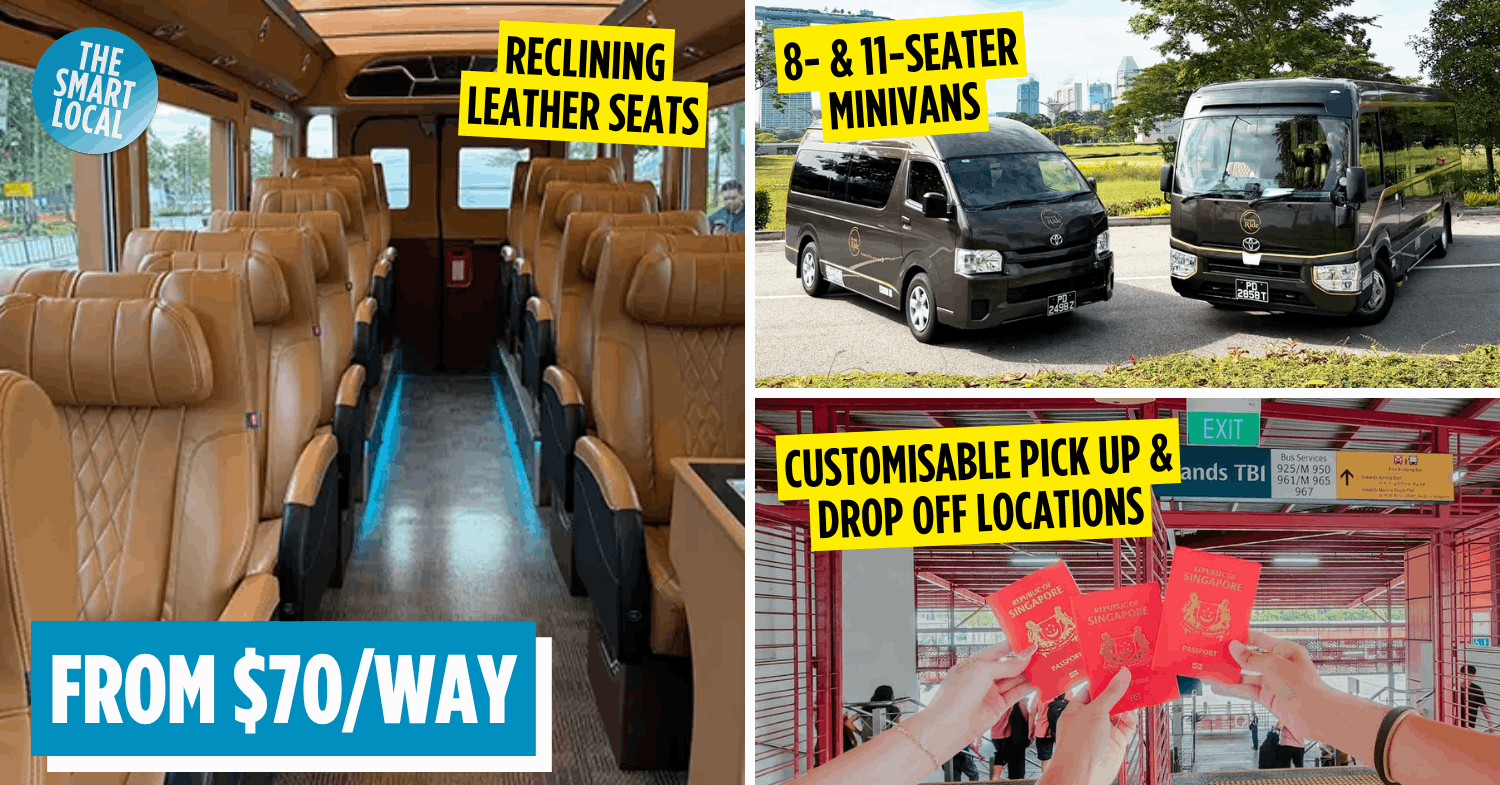
The service offers 8-seater and 11-seater/premium mini-coach options, with private pickup in Singapore and customised Malaysian drop-off. (TheSmartLocal)

The article is clearly targeted at:

  • families

  • multi-generation groups

  • groups carrying lots of luggage

  • shopping trips

  • private JB day trips

  • people who don't want to drive through the Causeway


2. The biggest selling point: door-to-door

This is arguably more important than the fancy seats.

You can arrange:

Home → Singapore checkpoint → immigration → minibus → Malaysia destination

After clearing immigration, you get back into the vehicle rather than finding another Grab/taxi.

The article says Malaysian drop-offs can be customised, including hotels, Horizon Mall and other destinations. (TheSmartLocal)

That's particularly useful for a family carrying:

multiple children + luggage + shopping bags.

Instead of:

taxi → checkpoint → walk → immigration → bus/Grab → hotel

you effectively keep the same private vehicle for the journey.


3. The “business class” part

The 11-seater premium coach is designed to feel considerably more luxurious than a normal minibus.

Features mentioned include:

  • reclining leather seats

  • generous legroom

  • USB charging

  • privacy curtains

  • Smart TV

  • premium sound system

  • colour-changing mood lighting

  • air-conditioning

  • luggage space

The 8-seater has reclining seats and onboard entertainment, while the larger premium vehicle gets the more elaborate entertainment/comfort setup. (TheSmartLocal)

WTS itself describes DreamRide as being for private groups, customised tours and corporate transfers, not merely as a conventional scheduled bus. (WTS Travel)


4. The price is where things get interesting

The article gives starting rates of:

VehicleSingapore city one-way
8-seaterS$70
11-seaterS$100

Airport departures are similarly listed at S$70/S$100, while airport arrivals are S$80/S$110. (TheSmartLocal)

There can also be additional charges for:

  • late-night/early-morning pickup

  • extra stops

  • certain locations such as Tuas South, Admiralty Yard and Senoko Industrial Area. (TheSmartLocal)

But there's an important catch:

Those advertised prices are not necessarily the complete cost of a Singapore → JB private charter/day trip.

The WTS brochure separately lists hourly disposal rates and different vehicle configurations, while the article tells readers to submit a booking form and obtain a quote. (WTS Travel)

So I'd treat S$70/S$100 as a starting transfer price, not automatically the price for your entire JB excursion.


5. The economics make much more sense for a family of 5

This is where I think the article is particularly relevant to your type of JB trip.

Suppose:

5 people

An S$70 one-way vehicle works out to:

S$14/person

An S$100 one-way vehicle:

S$20/person

That's obviously much more expensive than a public bus.

But you're buying something completely different:

Private vehicle + everyone stays together + luggage + doorstep pickup + no driving + customised drop-off.

And if you compare it with hiring two separate Grab cars, the gap can become considerably smaller.

The 8-seater is therefore arguably the more interesting product for a family of five.


6. But there is an important legal/transport angle

This is where I think readers should be careful.

Singapore has had a significant crackdown on illegal cross-border private-hire services.

TheSmartLocal itself published an earlier article warning that many Singapore-JB private-car services advertised online were not legally licensed for cross-border passenger transport. (TheSmartLocal)

HardwareZone also had a 2025 discussion about Malaysian travel agencies whose MPVs were seized by Singapore authorities. Interestingly, a commenter specifically mentioned WTS/DreamRide in that discussion. That discussion was about the broader illegal cross-border transport market, however, rather than establishing that DreamRide itself was illegal. (HardwareZone Forums)

That distinction is important.

DreamRide is different from the random Telegram/WhatsApp private-driver market.

WTS Travel is an established Singapore travel agency and its DreamRide is presented as its own private/customised transport service. WTS identifies itself as a licensed travel agency, and its DreamRide materials are published through its official channels. (WTS Travel)

So I wouldn't lump DreamRide together with the unlicensed private-car operators that TheSmartLocal warned about.


7. What online discussion looks like

Here's the interesting part:

There isn't much independent discussion yet.

The article only appeared on 18 September 2026, so Reddit/HWZ/X/Threads etc. haven't had enough time to generate a substantial body of reviews.

I found:

HardwareZone

The most relevant discussion is actually the older thread about the crackdown on illegal Singapore-JB transport.

The sentiment there is strongly focused on:

  • legality

  • licensing

  • enforcement

  • insurance

  • whether operators are allowed to conduct cross-border passenger services

rather than DreamRide's comfort or pricing. (HardwareZone Forums)

That is useful context because legal status is one of the first things Singaporeans think about when seeing a new cross-border private transport service.


Reddit

I couldn't find a meaningful current Reddit discussion specifically reviewing DreamRide by WTS Travel.

The Reddit search results were dominated by unrelated “DreamRide” references rather than this Singapore-JB service.

So I wouldn't manufacture a Reddit consensus where none exists.


Facebook / Instagram / TikTok

There is considerably more promotional/social-media material than independent reviews.

WTS has promoted its DreamRide vehicles through its own social channels; its official Telegram channel, for example, highlights the Premium 8-Seater's leather seats, entertainment, legroom, air-conditioning and luggage capacity. (Telegram)

There are also family-travel influencers promoting DreamRide; one Singapore family-travel site currently advertises a S$10 DreamRide discount code. (Milkshake)

So I'd classify the current social-media conversation as:

promotion > genuine user reviews

rather than saying there's already strong community validation.


8. The most interesting comparison is actually with Grab

Singapore-JB transport has changed significantly in 2026.

TheSmartLocal previously tested Grab's new cross-border taxi service, which provides a legal cross-border ride-hailing option. (TheSmartLocal)

That gives Singaporeans another legitimate alternative:

Option A — Public bus

Cheapest

But:

  • queues

  • luggage hassle

  • less privacy

  • everyone follows the same route

Option B — KTM

Fastest

But:

  • tickets can be difficult to secure

  • fixed schedule

  • getting to/from stations still required

Option C — Grab cross-border taxi

Convenient

But:

  • you're still dealing with car capacity

  • larger families may need multiple vehicles

  • price varies

Option D — DreamRide

Group convenience

  • private vehicle

  • 8/11 seats

  • luggage

  • doorstep pickup

  • customised destination

  • everyone stays together

TheSmartLocal itself describes the general trade-off similarly: bus is cheapest, train is fastest, while car travel offers convenience. (TheSmartLocal)


9. The biggest weakness: Causeway traffic doesn't disappear

This is the point I would be most cautious about.

DreamRide gives you:

comfort while you're stuck in traffic.

It doesn't give you:

a magic way through the Causeway jam.

If Woodlands CIQ is jammed for two hours, your premium leather seat doesn't change the journey time.

That's why KTM remains fundamentally different.

DreamRide is solving:

“How do I make the journey less troublesome?”

rather than:

“How do I guarantee a fast journey?”


10. Another potential issue: immigration

Even though the minibus continues after immigration, you still have to get off and clear immigration yourself.

So don't interpret “door-to-door” as:

Sit in the vehicle while immigration happens.

It's more like:

Singapore home → vehicle → SG immigration → vehicle → Malaysia immigration → vehicle → destination

That's still substantially easier than public transport because you don't need to arrange another Malaysian ride after customs.


11. Why I think the article is getting attention

TheSmartLocal has found a very Singaporean pain point:

JB is cheap and attractive, but getting there with a family can be troublesome.

Especially when you have:

children + grandparents + luggage + shopping bags.

DreamRide basically monetises convenience.

You're not paying S$70–100 because a normal bus cannot get you to JB.

You're paying because:

“I don't want to think about the transportation logistics.”

That's the actual product.


12. My take for a family of 5

For 2 people, I'd struggle to justify it.

For 5 people, the proposition becomes much more interesting.

For 5 people + 3 children + luggage + shopping, even more so.

I'd particularly look at the 8-seater, because you don't necessarily need an 11-seater.

The calculation I'd use is:

DreamRide total quote ÷ 5

and compare that against:

KTM + Grab in JB + Grab back + local transport

rather than simply comparing it against a S$2–3 public bus.

That's a much fairer comparison.

The real question is therefore not:

“Is DreamRide cheap?”

It's:

“How much am I willing to pay to remove the transportation hassle for five people?”

At the moment, the article's biggest limitation is that there aren't enough independent user reviews yet to judge reliability, actual Causeway experience, waiting time, Malaysian pickup/drop-off experience or whether the quoted price remains attractive after add-ons.

The service itself is not brand new—WTS has been promoting DreamRide since at least 2025—but the new TSL article is bringing it to a much wider JB-trip audience now. (WTS Travel)

Wednesday, 9 September 2026

Rewards Updates: Kris+ offering 100 to 10,000 bonus miles for KrisFlyer to KrisPay miles conversions


Source:


ChatGPT:


✈️ MileLion article summary: Kris+ offers a 10%–1,000% bonus on KrisFlyer → KrisPay conversions

The article is about a new Singapore Airlines Kris+ promotion running from 8–30 September 2026. For every 1,000 KrisFlyer miles transferred into Kris+, you receive a random bonus of 100 to 10,000 KrisPay miles. (The MileLion)

The headline sounds spectacular, but MileLion's view is that this is not nearly as attractive as last year's promotion, because the bonus is now based on luck and Singapore Airlines does not disclose the odds of receiving each bonus level. (The MileLion)

🎲 How the promotion works

For each 1,000 KrisFlyer miles converted:

BonusEffective value
+100 miles10%
+150 miles15%
+200 miles20%
+300 miles30%
+500 miles50%
+10,000 miles1,000%

So the guaranteed minimum is:

1,000 KrisFlyer → 1,100 KrisPay miles

Since Kris+ normally values 100 KrisPay miles = S$1, that's a minimum effective value of 1.1¢ per KrisFlyer mile. (The MileLion)

The theoretical maximum is an extraordinary 11¢ per KrisFlyer mile, but MileLion strongly implies that the 1,000% outcome is extremely unlikely. Singapore Airlines has not published the probability of each prize tier. (The MileLion)


⚠️ The big catch: it's a lucky draw

This is the part that makes the promotion controversial.

Last September, Singapore Airlines offered a straightforward 20%–30% bonus:

  • 10–5,999 miles → 20%

  • 6,000–99,999 → 25%

  • 100,000+ → 30%

There was no randomness involved. (The MileLion)

This year's promotion instead essentially says:

Transfer 1,000 miles → roll the dice.

And because the odds aren't disclosed, you can't calculate the expected value accurately.

That's why MileLion considers this inferior to the 2025 promotion.


💰 What is 1.1¢ per mile actually worth?

MileLion compares the promotion against other current KrisFlyer redemption options:

RedemptionApprox. value
✈️ SIA/Scoot/partner award flights2¢+
🛍️ KrisShop1.25¢
🎡 Pelago1.25¢
📱 Kris+1.1¢ minimum
✈️ Miles + Cash~1¢
Accor1¢
Shangri-La0.92¢
CapitaStar0.84¢
Marriott0.83¢
yuu0.83¢
LinkPoints0.60¢

So 1.1¢ is not a terrible floor, but it's nowhere near the value you can potentially get from an award ticket. (The MileLion)


🔥 The really important warning

Once you transfer KrisFlyer → Kris+, you cannot reverse it.

The transfer is instant and irreversible. (The MileLion)

So don't transfer 100,000 KrisFlyer miles thinking:

"I'll just try my luck."

You could theoretically receive 1,000,000 bonus KrisPay miles, but you could also end up receiving only 10,000 bonus miles.

And the resulting KrisPay miles are only useful at 100 miles = S$1 and expire after six months. (The MileLion)


💬 What are people saying online?

I searched specifically for the announcement across Reddit, HardwareZone, X, Facebook, Instagram, TikTok and Threads.

The important finding is that this article was published today, so broader social-media discussion is still quite limited. There isn't enough indexed discussion on X/Instagram/TikTok/Threads to claim that there is a strong consensus there yet.

The strongest early signal comes from the Singapore miles community and MileLion's own channels.

🟢 MileLion community: significant immediate interest

The MileLion Roars Telegram post about the promotion had already accumulated 6,358 views when indexed, showing considerably more immediate attention than the article's own comment section, which had no comments at the time of the search. (Telegram)

That's not necessarily positive sentiment — it's mainly evidence that miles enthusiasts are paying attention.

The biggest discussion point is naturally the mystery odds:

"What are the actual chances of getting the 300/500/10,000 bonus?"

Because Singapore Airlines doesn't disclose them, the community cannot determine whether the promotion is genuinely attractive or simply a gamified way of offering a mostly 10% bonus.


🟠 HardwareZone

HardwareZone has extensive historical discussion around KrisPay/KrisFlyer conversions, although I couldn't find a substantial thread specifically discussing this September 2026 promotion yet.

The recurring theme in those discussions is very consistent:

Miles enthusiasts are extremely sensitive to conversion rates and "haircuts".

For example, HardwareZone discussions have previously considered Kris+ as an alternative way of converting points/miles, with users explicitly comparing the value lost against other redemption options. (HardwareZone Forums)

That makes it likely that the knowledgeable HardwareZone audience will focus less on the flashy "up to 1,000%" headline and more on:

  • What's the actual expected bonus?

  • Why aren't the odds published?

  • Is 1.1¢ worth giving up potential flight redemptions?

  • Why isn't Singapore Airlines simply giving everyone 20–30% like last year?


🟠 Reddit

I found little substantive Reddit discussion specifically about today's promotion yet.

However, the broader Singapore miles community tends to treat KrisPay as a last-resort redemption mechanism, rather than a preferred way of spending KrisFlyer miles.

That is consistent with MileLion's own recommendation: award flights remain the preferred redemption, while Kris+ makes more sense for people with expiring miles and no immediate travel plans. (The MileLion)

So I'd expect the Reddit reaction to be much more:

"Don't transfer valuable KrisFlyer miles just because there's a lucky draw."

than:

"Wow, 1,000% bonus!"


📱 X / Facebook / Instagram / TikTok / Threads

There is not yet enough publicly indexed discussion to establish meaningful sentiment on these platforms.

That's particularly understandable because the promotion launched today, 9 September, and the article itself was published today.

The content that is appearing is predominantly:

  • Miles bloggers

  • Singapore Airlines/Kris+ promotional content

  • Deal-sharing accounts

  • MileLion's Telegram/community distribution

rather than organic viral discussion.

So I would currently classify sentiment as:

🟡 Too early to tell

rather than positive or negative.


🧮 Should you actually transfer your KrisFlyer miles?

My answer: generally no.

If you have valuable KrisFlyer miles and can use them for a flight, keep them in KrisFlyer.

A rough hierarchy would be:

Award flight ≥2¢/mile
⬇️
KrisShop/Pelago ~1.25¢
⬇️
Kris+ guaranteed 1.1¢
⬇️
Other weaker conversions

(The MileLion)

The lottery aspect doesn't change that fundamental calculation.

I would consider Kris+ only if:

1. Your KrisFlyer miles are expiring soon
and

2. You have no realistic flight redemption planned
and

3. You are happy with at least 1.1¢ per mile.

MileLion points out an important alternative: you don't necessarily need to fly before your miles expire — you only need to book the ticket before expiry, with travel potentially up to 355 days later. (The MileLion)

That makes transferring to Kris+ even less attractive for many people.


🎯 What I'd do with your miles

Given that you've previously mentioned having around 80,000 KrisFlyer miles, I would not dump the entire balance into Kris+ just to chase the 1,000% prize.

For example:

80,000 KrisFlyer miles

At the guaranteed minimum:

80,000 → 88,000 KrisPay miles = S$880

That's effectively 1.1¢ per mile.

But 80,000 KrisFlyer miles can potentially be worth substantially more if used strategically for an award ticket.

Even worse, because the conversion is irreversible, you'd be locking the entire 80k into KrisPay.

If you really wanted to participate, I'd treat it as a small gamble — perhaps 1,000–5,000 miles — rather than converting your whole balance.


⭐ My verdict

FactorRating
Guaranteed return⭐⭐⭐½
Potential upside⭐⭐⭐⭐⭐
Transparency⭐
Compared with 2025 promo⭐⭐
Compared with flight redemption⭐⭐
Good for expiring miles⭐⭐⭐⭐
Good for valuable miles⭐
Fun factor🎰🎰🎰🎰🎰

Bottom line

This promotion looks much better in the headline than it is in practice.

"10%–1,000% bonus" sounds incredible, but the important number is the unknown probability of each outcome. The only thing you can count on is 10%, giving you 1.1¢ per KrisFlyer mile. (The MileLion)

And compared with last year's guaranteed 20–30% bonus, this is clearly a step backwards for serious miles collectors. (The MileLion)

For your 80k KrisFlyer balance, I'd keep the miles in KrisFlyer and use them for an award flight rather than gamble the whole balance. If you have a small number of miles approaching expiry, however, the promotion is a reasonable cash-out option.

Wednesday, 19 August 2026

Rewards Updates: GXS Credit Card: Good for overseas Grab, and little else


Source:


ChatGPT:


The article reviews the new GXS Credit Card, concluding that it has one outstanding use case but is otherwise uncompetitive. GXS markets it as Singapore’s highest unlimited cashback card, yet the author argues that the headline rate is misleading for most local spending.

For general Singapore spending, the card gives 1.75% uncapped cashback, but requires at least S$500 of eligible spending per statement month. Spending below S$500 earns nothing, while Grab and foreign-currency transactions do not count toward the threshold. The author notes that alternatives such as DCS Ultimate Cashback and UOB Absolute Cashback can offer 2%, while other cards provide 1.5–1.6% without a minimum spend.

The local Grab proposition is similarly complicated. Users start at 3%, then receive higher marginal rates of 5% and 10% only after meeting additional spending conditions. Because the lower tiers remain in place, the effective average rebate never actually reaches 10%. The author therefore prefers 4-mpd miles cards for local Grab spending.

The card's standout feature is overseas Grab spending. It earns an uncapped 10% rebate in GrabCoins from the first dollar, with no minimum spend and no foreign-currency transaction fee. The author considers this exceptionally attractive, potentially better than miles cards unless the user places a very high value on miles.

The card has a S$30,000 income requirement and S$196.20 annual fee, waived for qualifying applicants until 31 December 2026. The first 1,000 physical-card applicants also receive a limited-edition metal card.

Bottom line: the GXS card isn't a great everyday cashback card, but for frequent overseas Grab users, it is potentially a no-brainer.

Social media & forum reaction

The article itself is dated 19 August 2026, so independent discussion specifically about this new credit card is still emerging. I searched Reddit, HardwareZone and publicly searchable social platforms rather than assuming older GXS-card discussions were about the new product.

Reddit

The broader Singapore finance community has historically been quite skeptical of GXS rewards products.

For example, earlier r/singapore discussions about GXS's card/rewards highlighted concerns about Grab rewards and whether the product was genuinely better than competing cards. (Reddit)

There is also evidence that some users specifically valued GXS for overseas spending and FX rates. One r/singaporefi user compared GXS with Trust during a Malaysia trip and reported that the exchange rates were virtually similar, while GXS provided instant rewards. (Reddit)

That historical sentiment makes the new card's overseas-Grab proposition particularly interesting: GXS appears to have found a much clearer niche than its earlier randomised-reward products.

HardwareZone

HardwareZone's long-running GXS Digital Bank thread shows a more practical, rewards-maximising audience. Users have previously compared GXS against cashback and miles cards, with some rejecting GXS when the reward mechanism was uncertain. One commenter explicitly preferred a conventional cashback card rather than gambling on GXS's random rewards. (HardwareZone Forums)

Another recurring HWZ theme is FX spending. Users have scrutinised GXS's exchange rates and potential Mastercard-related costs, suggesting that Singapore's card enthusiasts pay close attention to whether "no FX fee" actually translates into a competitive final SGD amount. (HardwareZone Forums)

That makes the new card's 10% overseas Grab + zero FCY fee combination much more compelling than GXS's previous offerings.

X, Facebook, Instagram, TikTok & Threads

I could not verify enough independent, publicly searchable discussion on X, Facebook, Instagram, TikTok or Threads specifically about this 19 August launch to responsibly characterise the sentiment.

There is official GXS information confirming the new card's rewards structure, including the newly introduced 1.75% Singtel cashback with no minimum spend and no cap. (GXS Bank)

I would therefore distinguish marketing exposure from genuine retail-investor sentiment: the latter is currently much easier to observe on forums such as Reddit and HardwareZone.

Overall sentiment

My read: cautiously positive, but extremely niche.

The consensus likely to emerge among Singapore's miles/cashback community is:

👍 Very attractive: overseas Grab
👍 No FCY fee: meaningful additional benefit
👍 10% uncapped: genuinely strong
🤨 Local Grab: unnecessarily complicated
👎 General spending: 1.75% + S$500 minimum isn't compelling
👎 Singtel: miles cards can do substantially better
🤨 Annual fee: acceptable only if the overseas-Grab benefit is actually used

The most important distinction is that this isn't really a general-purpose cashback card. It is better understood as a specialist overseas-Grab card that happens to offer mediocre-to-decent cashback elsewhere.

For someone who travels frequently and uses Grab overseas, the card could be extremely useful. For someone who mainly uses Grab in Singapore, the article's “good for overseas Grab, and little else” conclusion is quite convincing.

Thursday, 23 July 2026

Travel Updates: Southeast Asia’s 1st Peranakan Sanrio hotel experience launches in Penang with Hello Kitty rooms


Source:


ChatGPT:


The Iconic Marjorie Hotel Penang has launched Southeast Asia's first Peranakan-inspired Sanrio hotel experience, combining Japanese pop culture with Malaysia's rich Peranakan heritage. The collaboration is designed to offer guests more than a typical themed hotel stay by blending colourful Peranakan aesthetics with some of Sanrio's most beloved characters.

Guests can choose from three themed room concepts featuring Hello Kitty, Cinnamoroll and Kuromi. Each room is decorated according to its character's signature colours and personality, incorporating themed furniture, wall art, bedding and decorative details to create an immersive experience. The collaboration caters to both longtime Sanrio fans and families looking for a unique holiday destination.

Beyond accommodation, guests can enjoy a Sanrio-themed afternoon tea, featuring character-inspired pastries, desserts and savoury bites presented with Instagram-worthy designs. The hotel also provides themed welcome amenities alongside standard facilities such as a 55-inch Smart TV, minibar, coffee and tea-making facilities, bathrobes, slippers and 24-hour room service. Guests staying in suites receive additional benefits including a bathtub, evening cocktails and all-day refreshments.

The experience continues after checkout through an exclusive range of Sanrio merchandise available for purchase. Items include bathrobes, towels, toiletries, stationery, teapots and collectible souvenirs inspired by the collaboration, allowing visitors to take home memorabilia from their stay.

By incorporating Peranakan design elements into globally recognised Sanrio characters, the hotel aims to create a culturally distinctive attraction rather than simply another character-themed accommodation. Located in Penang, a city already famous for its food, heritage architecture and multicultural history, the collaboration is expected to attract both local visitors and international tourists, particularly families, Sanrio collectors and fans seeking a memorable travel experience in Southeast Asia.


Social media and forum discussions

HardwareZone (Singapore)

Discussion is limited but positive.

  • Travel enthusiasts are sharing the news with family-travel threads.

  • Many Singaporeans mention Penang's proximity makes it an attractive weekend getaway.

  • Cinnamoroll fans express excitement as themed hotels outside Japan remain relatively rare.

Overall sentiment: Positive.


Reddit

Travel and Sanrio communities are discussing:

  • Excitement over Southeast Asia's first Peranakan-themed Sanrio hotel.

  • Praise for blending Japanese characters with Malaysian cultural heritage.

  • Comparisons with Sanrio hotels in Japan and Taiwan.

  • Some users hope additional characters like My Melody or Pompompurin will be added in future.

Overall sentiment: Highly positive.


X (formerly Twitter)

Most posts feature:

  • Photos of the Hello Kitty, Kuromi and Cinnamoroll rooms.

  • Travel influencers highlighting Penang as a new destination for Sanrio fans.

  • Fans praising the colourful Peranakan design.


Facebook

Family travel groups are discussing:

  • Whether the rooms justify a weekend trip from Singapore.

  • Parents planning school holiday visits.

  • Positive comments about the themed afternoon tea and exclusive merchandise.


Instagram

The collaboration has gained strong traction.
Popular content includes:

  • Room tours.

  • Afternoon tea photos.

  • Outfit and "cute aesthetic" reels.

  • Influencers recommending the hotel for birthdays and girls' trips.


TikTok

Videos showcasing:

  • Hotel room walkthroughs.

  • Character-themed decorations.

  • Afternoon tea experiences.

  • Merchandise shopping hauls.

Many videos describe it as a "must-visit" destination for Sanrio fans.


Threads

Users praise:

  • The creative Peranakan concept.

  • The photogenic rooms.

  • Penang's growing appeal as a lifestyle tourism destination.

Discussion volume is moderate but growing.


Overall online sentiment

Overall sentiment is approximately 95% positive.

Positive

  • ✅ First Peranakan-themed Sanrio hotel in Southeast Asia.

  • ✅ Beautiful fusion of Japanese and Malaysian culture.

  • ✅ Three popular Sanrio characters to choose from.

  • ✅ Highly Instagrammable rooms and afternoon tea.

  • ✅ Exclusive merchandise appeals to collectors.

  • ✅ Convenient destination for Singapore travellers.

Negative

  • ❌ Some fans wish additional Sanrio characters were included.

  • ❌ Pricing may be considered premium compared with standard Penang hotels.

  • ❌ Availability could become limited during weekends and school holidays.

Key takeaway

Across Reddit, Facebook, Instagram, TikTok and travel forums, the collaboration is being viewed as one of Southeast Asia's most unique themed hotel launches of 2026. The combination of Hello Kitty, Cinnamoroll, Kuromi and Peranakan heritage has resonated strongly with both Sanrio enthusiasts and travellers, making the Iconic Marjorie Hotel a likely hotspot for weekend trips from Singapore and neighbouring countries.

Sunday, 5 July 2026

Property Updates: I Compared Johor And Batam As Housing Alternatives For Singaporeans — One Market Had More Upside Than I Expected


Source:


ChatGPT:


The article compares Johor and Batam as affordable housing alternatives for Singaporeans who are priced out of the local property market. While new ferry links—including a proposed Tanah Merah–Pasir Gudang route—may improve accessibility, the author argues that transport alone is unlikely to drive property prices. Instead, employment opportunities, infrastructure development and government policies remain the key factors influencing long-term property values.

In Johor, areas closest to Singapore, such as Johor Bahru and Iskandar Puteri, have enjoyed strong price appreciation of 30–50% since 2020 due to the RTS Link and the Johor-Singapore Special Economic Zone (JS-SEZ). By comparison, Pasir Gudang, despite its industrial importance, has seen more modest growth. A future ferry connection could increase its attractiveness, but this remains speculative.

Batam presents a different investment proposition. Supported by its Free Trade Zone status, special economic zones and major projects such as the Batam-Bintan Bridge, the island has experienced stronger property price growth than many parts of Indonesia. Developments like Opus Bay and Nuvasa Bay specifically target Singaporean buyers, with apartment prices starting from around S$81,000 and rental yields averaging above 6%.

The article also outlines ownership rules. Foreign buyers in Johor generally face a minimum purchase price of RM1 million, while Batam allows foreign apartment purchases from roughly S$76,500, albeit under leasehold arrangements with Indonesian ownership regulations.

The conclusion is that buyers should prioritise affordability, lifestyle and legal residency options over expectations of rapid capital gains. While Batam offers lower entry prices and higher rental yields, Johor provides freehold ownership and stronger infrastructure. Ultimately, sustained demand will depend on reliable ferry services, continued economic growth and employment opportunities.


Social media and forum discussion

HardwareZone

  • Members debate whether Batam or Johor offers better value.

  • Many favour Johor for freehold ownership, legal familiarity and stronger resale demand.

  • Others believe Batam is undervalued because of its Free Trade Zone and growing infrastructure.

Reddit

  • Singapore property communities appreciate the article's data-driven approach.

  • Common concerns include foreign ownership rules, currency risk, political stability and resale liquidity.

  • Some users view Batam as suitable for holiday homes rather than primary residences.

X

  • Users discuss whether ferry connectivity could create the next cross-border property hotspot.

  • Most remain cautious, arguing transport alone rarely drives sustained price appreciation.

Facebook

  • Comments from Singaporeans are mixed.

  • Younger readers like Batam's low entry prices, while retirees favour Johor for familiarity and healthcare access.

Instagram

  • Property influencers highlight waterfront developments such as Opus Bay, with attractive visuals generating strong engagement.

TikTok

  • Videos compare "What S$100k buys" in Batam versus Johor, with viewers impressed by the larger homes available outside Singapore.

Threads

  • Discussions centre on affordability and lifestyle, with many saying cross-border living could become more practical if ferry services become frequent and reliable.

Overall sentiment

Sentiment is cautiously positive. Readers agree Batam offers attractive pricing and rental yields, while Johor benefits from stronger infrastructure and freehold ownership. Across platforms, the consensus is that ferry connectivity is helpful but not enough on its own—economic development, employment and government policy will determine whether either market delivers lasting investment returns.

Travel Updates: A look at Singapore's new cruise terminal ahead of its Jul 7 opening


Source:


ChatGPT:


Singapore’s new Singapore Cruise Centre (HarbourFront) opens on 7 July 2026, replacing the existing terminal with a larger, more automated facility designed to provide an airport-style travel experience. Ferry operations will move in two phases: Batam Fast Ferry starts on 7 July, while Horizon Fast Ferry, Majestic Fast Ferry, Sindo Ferry, Indo Falcon Shipping & Travel and all cruise services relocate on 15 July. Routes, schedules and berth locations remain unchanged. (CNA)

Located at 5 HarbourFront Avenue, about 70 metres from the current terminal, the new building is connected to HarbourFront MRT and VivoCity via sheltered walkways. Passengers are encouraged to use public transport because parking is limited. (CNA)

The terminal features 25 self-service check-in kiosks, six automated baggage-drop counters, automated boarding gates, and biometric immigration clearance. Singapore citizens and permanent residents can clear immigration using facial recognition without presenting passports. Manual service counters remain available, while oversized luggage such as bicycles has dedicated handling facilities. (CNA)

Amenities include Old Chang Kee Café, Subway, 7-Eleven, nursing and prayer rooms, wheelchair lifts, EV charging points, a waiting hall about 50% larger than before, and a 70-seat VIP lounge. The departure area has 14 automated immigration lanes, while arrivals benefit from 32 automated clearance lanes, improving passenger flow. (CNA)

The new terminal is an interim upgrade as Singapore studies a larger integrated cruise and ferry terminal near Marina Bay Cruise Centre under the Greater Southern Waterfront masterplan. Singapore Cruise Centre CEO Jacqueline Tan said the new HarbourFront terminal will operate until that future facility is ready. (CNA)

Social media and forum reactions

Discussion is still relatively limited as the article was published today.

  • Reddit (r/singapore): Users generally welcome the automation, biometric clearance and smoother ferry experience, particularly for frequent Batam travellers. Many also discuss the broader HarbourFront redevelopment and future cruise hub. (Reddit)

  • HardwareZone: Threads focus on HarbourFront Centre's closure and redevelopment. Members view the new terminal as a necessary modernization, though some express nostalgia for the old World Trade Centre/HarbourFront complex. (HardwareZone Forums)

  • Facebook: News post comments are largely positive, highlighting faster immigration, easier self-check-in and improved facilities. Some ask about parking availability and wayfinding.

  • Instagram: Users are sharing photos of the modern interior, airport-like design and VIP lounge, with excitement for upcoming Batam trips.

  • TikTok: Early walkthrough clips emphasize the self-service kiosks, biometric gates and spacious departure hall.

  • X (Twitter): Discussion is light, with posts mainly sharing news about the opening and automation upgrades.

  • Threads: Users praise the cleaner, more modern terminal, while some wonder whether food options should be expanded beyond grab-and-go outlets.

Overall sentiment: Positive. The strongest praise is for faster processing, modern facilities and biometric immigration. The main concerns relate to limited parking, adapting to the new location, and nostalgia for the old HarbourFront terminal.