Labels

Lifestyle (430) Investing (390) Entertainment (302) Singapore (244) Technology (143) Rewards (131) Insights (107) Gaming (102) Equities (97) AI (87) Food (77) U.S. (77) Data (76) Crypto (71) Sports (67) Travel (63) Portfolio (54) News (45) Credit Card (37) Movies (35) Savings (34) Earnings (31) Football (31) Policies (26) Property (26) Shows (24) Holidays (23) Tennis (23) Bonds (16) Promotions (16) Toys (15) World (15) Malaysia (13) REITs (13) T-Bills (12) China (11) Apps (10) Referral (10) Healthcare (9) Anime (8) DeFi (8) Cash Management (7) Currency (7) Retirement (6) Security (6) CPF (5) ETFs (5) Miles (5) Shopping (5) Commodities (4) Robotics (4) Weird (4) platform (4) Cashback (3) Insurance (3) Japan (3) Blog (2) Reviews (2) Robo-Advisor (2) 1-For-1 (1) Asia (1) Australia (1) Banking (1) Funds Management (1) Futuristic (1) Indonesia (1) Inflation (1) Nerfs (1) SGD (1) SSB (1) Social (1)
Showing posts with label AI. Show all posts

Monday, 17 August 2026

Investing Updates: How Singapore investors are using brokerage AI tools to analyse portfolios, gain insights


Source:


ChatGPT:


Singapore retail investors are increasingly using AI tools embedded in brokerage platforms to interpret market news, analyse earnings, screen stocks and understand their portfolios. The Business Times highlights Tiger Brokers, Moomoo and Longbridge, whose AI features are shifting from simple question-and-answer tools towards personalised, continuous investment research.

Tiger Brokers reported particularly strong adoption: Singapore TigerAI conversation volumes rose 500% year on year by June 2026, while monthly active users increased 65%. Investors use it to assess tariff impacts, company fundamentals, valuations, capital flows and upcoming catalysts. In one example, TigerAI warned an investor about excessive optimism and an approaching earnings report, helping him avoid buying before a subsequent sell-off.

Longbridge is taking a more proactive approach. Its AI can monitor market developments relevant to an investor's holdings, analyse portfolio history and previous decisions, and propose an action plan. However, users must confirm trades. About 30% of Longbridge's global users have used its AI, while around 18% engage with it monthly.

Moomoo positions AI as useful across investor experience levels: beginners can simplify financial terminology and earnings reports; intermediate investors can accelerate research and comparison; advanced traders can conduct screening, options analysis, strategy development and backtesting. Moomoo AI's Singapore engagement has grown rapidly since its June 2025 launch.

The article also highlights a key concern: AI may encourage action rather than patience. Analytico AI founder S Kishan warns that brokerage AI could have an inherent incentive to keep investors trading and checking their apps. Data privacy is another issue, although some users feel more comfortable providing information to AI embedded within regulated brokerage platforms.

Overall, brokerage AI is becoming a powerful research assistant, but investors still need to verify its conclusions and avoid treating AI-generated insights as investment advice.

Social-media/forum reaction

  • Reddit: Discussions are generally positive about AI's speed and convenience. Users report using Moomoo AI for stock analysis, market trends, risk warnings and earnings explanations. (Reddit)

  • HardwareZone: I found no substantial, clearly indexed thread specifically discussing this BT article or the Singapore brokerage-AI trend.

  • X: No sufficiently reliable indexed discussion surfaced to establish representative sentiment.

  • Facebook / Instagram / TikTok / Threads: Similarly, publicly searchable results were insufficient to make a defensible sentiment assessment.

  • Longbridge communities: Recent discussions show users experimenting with AI for stock screening, valuation comparisons, options and scenario analysis. (Reddit)

Interesting takeaway: The online reaction appears more enthusiastic about AI as a research shortcut than as an autonomous trader. That distinction matters: even Moomoo's AI integrations warn that AI output should not be treated as investment advice. (businesstimes.com.sg) Longbridge itself warns that its AI can produce inaccurate, outdated or misleading information and says users should independently verify its output. (longbridge.com)

Sunday, 9 August 2026

Entertainment Updates: BERSAMA MAJULAH (Together, Onward) — a SPORE FALL film


Source:


ChatGPT:


“BERSAMA MAJULAH (Together, Onward)” is presented as a Spore Fall film that combines Singaporean identity with a futuristic, AI-driven science-fiction setting. Spore Fall is a Singapore-produced sci-fi universe created by Edenstone, set in the fictional city of Lionara and built around a deadly spore outbreak, social upheaval and authoritarian power. The wider project was launched as a 10-episode vertical micro-drama, with episodes running under three minutes and distributed through YouTube Shorts, TikTok and Instagram Reels. (GlobeNewswire)

The “Bersama Majulah” concept adds an explicitly Singaporean layer to the franchise. “Together, Onward” echoes the spirit of Majulah Singapura — the national anthem's call for Singaporeans to unite and move forward together. That message has long been associated with Singapore's multicultural identity, resilience and collective progress. (Prime Minister's Office Singapore)

What makes the project interesting is the contrast between a familiar Singaporean phrase and a dystopian science-fiction world. Instead of treating Singapore merely as a backdrop, Spore Fall attempts to build a locally rooted story that could be expanded internationally into films, games and other media. Edenstone describes it as a transmedia IP rather than simply a short film, and in March 2026 announced funding plans to expand the universe. (GlobeNewswire)

The online reaction is mixed. Supporters see the project as an ambitious experiment showing how Singaporean creators can use generative AI and short-form storytelling to compete globally. Critics, particularly on Reddit, question the visual quality of AI-generated entertainment, the displacement of local creative talent and whether audiences will accept AI-heavy storytelling. (Reddit)

Social media & forum reaction

The discussion I found is much stronger around Spore Fall generally than around this specific “BERSAMA MAJULAH” video.

  • Reddit: The clearest Singapore discussion is on r/SingaporeRaw, where reactions are sharply divided. Some users argue that AI allows cheaper entertainment and that people are already consuming AI micro-dramas. Others call AI productions “slop” and argue Singapore should invest more in human animators and filmmakers. (Reddit)

  • AI communities: Reddit's r/aiwars has discussed Spore Fall as an example of Singapore's emerging AI-film scene. Commenters were curious about whether it was fully AI-generated and what AI means for future filmmaking. (Reddit)

  • HardwareZone: I could not find a substantive HardwareZone thread specifically discussing this video, so I would not manufacture a supposed HWZ consensus.

  • X / Facebook / Instagram / TikTok / Threads: I likewise found no sufficiently verifiable public discussion specifically tied to this video's title/YouTube ID. The project is officially designed for TikTok, YouTube Shorts and Instagram Reels, so those platforms are important distribution channels, but searchable public commentary about this exact film remains limited. (GlobeNewswire)

  • Mainstream media: The Straits Times has covered Spore Fall as part of Singapore's emerging micro-drama industry, placing it alongside other local experiments with short-form digital storytelling. (The Straits Times)

  • Chinese-language media: Lianhe Zaobao highlighted the bigger question behind projects such as Spore Fall: AI can dramatically expand production possibilities, but creators still need enough “humanity” for audiences to connect with the work. (SPORE FALL)

Bottom line: BERSAMA MAJULAH is interesting less as a conventional Singapore patriotic film and more as an experiment in Singaporean identity + AI filmmaking + globally scalable entertainment. The biggest debate isn't really the “Majulah” message — it is whether AI can produce Singapore-made stories that audiences genuinely care about.

Friday, 7 August 2026

Entertainment Updates: AI Actress Lands Brand Deal, Charges Up To S$49K For 60-Sec Ad, Out-Earning Human Celebs


Source:


ChatGPT:


AI-generated actress Fang Taozi has become an unlikely commercial star in China after the AI micro-drama The Girl Who Got Laid Off became a viral hit. Created entirely digitally, Taozi gained more than 400,000 Douyin followers within about a month, while the drama reportedly surpassed 200 million views on a single platform. Her popularity has now translated into advertising revenue, with her first reported brand collaboration involving coloured contact lenses.

The eye-catching part is her price. Listings on Douyin’s marketing platform reportedly put Taozi’s rates at 168,000 yuan (about S$31,900) for a 1–20-second video, 208,000 yuan (S$39,600) for 21–60 seconds and 258,000 yuan (S$48,900) for longer videos. These rates can exceed those of some human celebrities and influencers with substantially larger followings.

Brands are attracted by the practical advantages of virtual personalities. Taozi does not age, get tired, cancel appearances or become involved in scandals. Her appearance and personality can also be controlled, while content can theoretically be produced continuously without the logistical demands of a human celebrity.

However, the commercial model raises questions about authenticity and consumer trust. Critics argue that an AI character cannot genuinely use a product or provide personal testimony. This is particularly significant for contact lenses, which are regulated as Class III medical devices in China. Lawyers have warned that advertising claims implying personal experience could breach rules requiring human endorsers to have actually used products.

Online reactions are divided. Some see AI influencers as the next evolution of celebrity marketing, while others question whether consumers would trust recommendations from someone who does not exist. The bigger issue may be whether Taozi represents a sustainable new advertising model—or simply the novelty phase of AI entertainment. (ECNS)

What social media and forums are saying

Chinese social media — overwhelmingly the most active discussion

The strongest discussion is currently on Weibo and Douyin, rather than English-language Reddit or Singapore forums. The hashtag “ไธคไธชAIๆผ”ๅ‘˜ๆฏ”ๅ†…ๅจฑๅพ…็ˆ†่‰บไบบ้ƒฝ็ซ” (“Two AI actors are more popular than up-and-coming entertainment stars”) reportedly reached the top of Weibo's trending list. Discussion volume around the AI drama and its characters has been reported at more than 800 million, illustrating how unusual the phenomenon has become. (Sina Mobile)

The reactions broadly fall into four camps:

  • “AI is finally good enough.” Some viewers say they initially watched without realising Taozi was AI. Her realistic skin texture, facial imperfections and expressions are frequently cited as reasons she avoids the usual “AI face” problem. (Sohu)

  • AI threatens human entertainers. A recurring discussion is whether virtual actors could replace lesser-known human actors and influencers because they are cheaper, controllable and never “go offline.” (Sina Mobile)

  • The “fake world” concern. Others find the idea of an AI character posting breakfast, exercising, shopping and interacting with fans unsettling because the entire “life” is manufactured. (Xueqiu)

  • Commercialisation is the real test. Chinese industry commentary increasingly focuses on whether AI characters can turn viral attention into sustainable advertising revenue rather than merely generating views. (The Paper)

Interestingly, Taozi's success appears to come from more than visual realism. Her team created a complete “virtual human” persona: daily vlogs, interactions with another AI character, simulated relationships and lifestyle content. That gives followers the feeling that Taozi exists outside the drama itself. (Sina)

Reddit, X, Facebook, Instagram, TikTok, Threads & HardwareZone

I found much less indexed discussion on Reddit, X, Threads and HardwareZone specifically about Fang Taozi than on Chinese platforms. This appears to be a China-first viral phenomenon at this stage. TikTok/Instagram/Facebook content is also harder to reliably search and verify publicly, so I wouldn't treat isolated reposts or comments as representative of overall sentiment.

That itself is noteworthy: the story has enormous Chinese social-media traction but has not yet generated comparable English-language forum discussion.

Overall sentiment

The most interesting takeaway isn't really the S$49K advertising fee. It's that AI characters are starting to behave like complete media brands rather than simply fictional characters.

Taozi has a storyline → followers → personal social account → lifestyle content → fan relationships → brand advertising.

That is essentially the same commercial funnel used by a human influencer, except the “person” can theoretically be controlled 24/7.

The biggest obstacle remains trust. If consumers know Taozi isn't real, will they still trust her recommendations? And if AI endorsers become common, will advertisers eventually prefer them because they are cheaper and more predictable—or will audiences become increasingly resistant to synthetic personalities?

For now, Taozi looks less like a gimmick and more like an early experiment in a potentially very large AI influencer economy. (The Paper)

Saturday, 1 August 2026

Technology Updates: Undercover is a local web app that finds you the best covered route to your destination


Source:


ChatGPT:


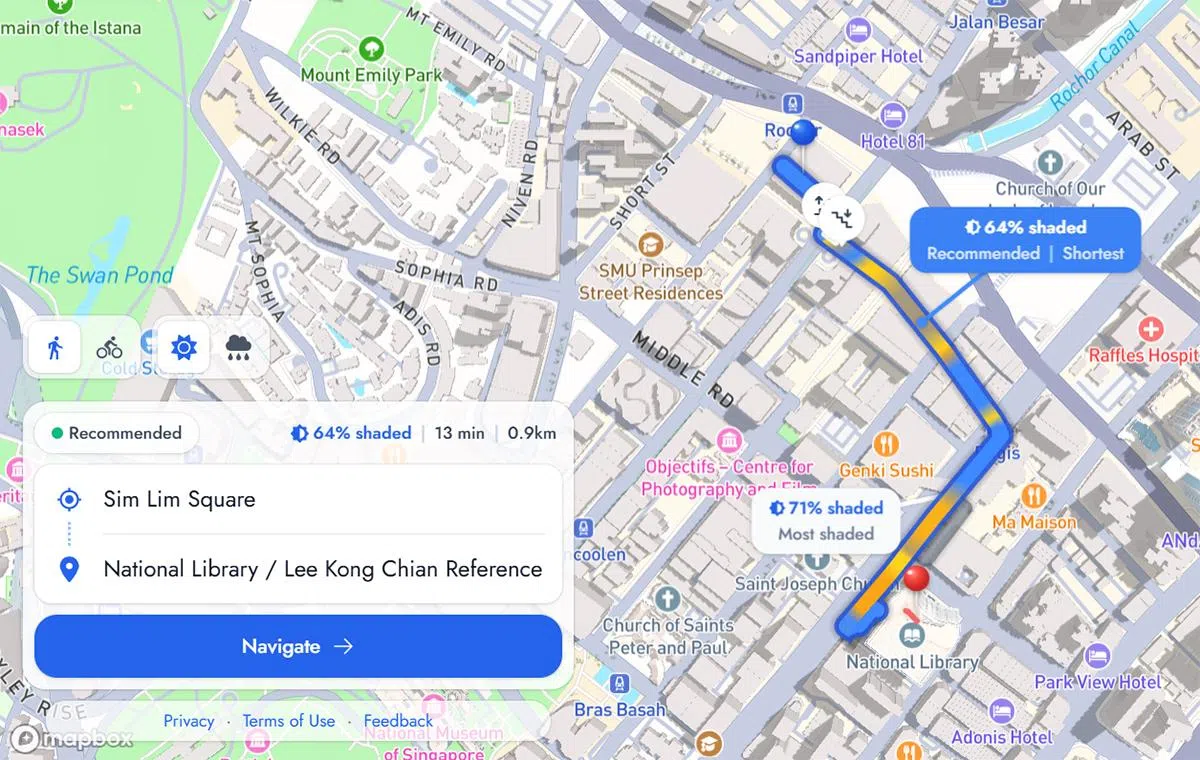
Undercover is a prototype web application developed by a five-person team during Hack for Public Good 2026, an initiative organised by Open Government Products (OGP). Designed specifically for Singapore's hot and rainy climate, the app helps users find the most shaded or sheltered walking route between two locations, making everyday walks more comfortable. According to the article, the app is currently in beta and is intended mainly for short-distance journeys. Rather than simply finding the fastest path, Undercover prioritises routes that maximise protection from the sun or rain.

The application analyses Singapore's network of more than 200km of sheltered walkways while also considering natural shade from buildings. Using building footprint and height information from OpenStreetMap, it estimates how shadows change depending on the time of day and month, allowing it to recommend routes with greater shade. It also includes lesser-known shortcuts through HDB estates and back alleys that traditional navigation apps may overlook.

Users are presented with three route options: the shortest route, the most shaded or sheltered route, and a recommended route that balances walking distance with weather protection. A colour gradient highlights hotter and cooler sections, while separate "shaded" and "sheltered" modes distinguish between natural shade and roof-covered walkways for rainy weather. Cycling routes are also available.

However, the app has several limitations. It currently focuses only on walking and short distances, with no end-to-end public transport journey planning. Users travelling by bus or MRT must search for separate walking segments. The developers plan to improve the platform by adding tree canopy data, better accessibility information and enhanced navigation features. They are also encouraging the public to test the beta version and provide feedback before wider deployment.


Social media and forum discussions

HardwareZone

The article generated strong interest on HardwareZone, where members praised the idea as a practical solution for Singapore's tropical climate. Popular discussion points include:

  • Appreciation for using OpenStreetMap and open data.

  • Comparisons with Google Maps, which optimises for speed rather than comfort.

  • Requests for integration with bus and MRT navigation.

  • Suggestions to include real-time weather, construction works and tree canopy data.

Overall sentiment: Very positive, with many users saying they would use the app daily.

Reddit

On Singapore-focused subreddits such as r/singapore and r/asksingapore, users discussed:

  • How sheltered walkways are one of Singapore's unique urban planning features.

  • Whether the app could become integrated into mainstream navigation apps.

  • Praise for the hackathon team creating something with immediate public value.

  • Suggestions for wheelchair accessibility, barrier-free routes and covered pedestrian bridges.

Many commenters also joked that avoiding the midday sun is "peak Singaporean behaviour."

X (formerly Twitter)

Posts mainly shared the news article and demo screenshots. Users described the app as:

  • "Actually useful."

  • "One of the better hackathon ideas."

  • A welcome solution during Singapore's increasingly hot weather.

Facebook

Technology pages and community groups shared the article, with comments focusing on:

  • Elderly family members benefiting from cooler walking routes.

  • Parents using it when walking with young children.

  • Calls for an official government-supported version.

Instagram

Tech creators and local news accounts highlighted the app's interface and colour-coded heat map. Engagement centred on how it could make walking more comfortable during Singapore's hot afternoons.

TikTok

Short demo videos showing route comparisons attracted positive reactions. Users appreciated seeing alternative shaded paths that they had never noticed before.

Threads

Discussion echoed Instagram, with users praising the concept while suggesting future features such as:

  • Live rain radar integration.

  • Tree shade coverage.

  • Indoor mall connections.

  • Support for entire bus/MRT journeys.

Overall public sentiment

Public reception is overwhelmingly positive. The consensus is that Undercover addresses a genuine everyday problem for Singapore residents by prioritising comfort over speed. While users recognise that the beta version has limitations—particularly around public transport integration and route coverage—they view it as an innovative civic technology project with significant potential. The most requested enhancements include live weather integration, accessibility improvements, comprehensive transport planning, and more accurate shade data using tree canopy information. If these features are added, many believe Undercover could become an indispensable navigation tool for pedestrians in Singapore.

Friday, 3 July 2026

Entertainment Updates: Hong Kong Prison Service's K-Pop-Style Anti-Drug AI Video Backfires; Viewers Say It Promotes Drugs Instead


Source:


ChatGPT:


Hong Kong's Correctional Services Department (CSD) faced widespread criticism after releasing an AI-generated anti-drug music video that many viewers felt unintentionally glamorised drug use instead of discouraging it.

The campaign, titled "Obsession: The Sugar-Coated Trap," featured four AI-generated K-pop-style female idols named Weedy, Coke, Icy and Little E, representing cannabis, cocaine, crystal methamphetamine and etomidate respectively. The colourful music-video format included catchy lyrics promoting the supposed "benefits" of each drug before ending with a warning about addiction and imprisonment. However, many viewers said the upbeat presentation overshadowed the intended anti-drug message.

Following public backlash, the CSD removed the original video and released a shorter version that introduced the warning much earlier. In the revised edit, the AI idols rapidly transformed into elderly men before ending up in prison alongside the message that drugs destroy lives. Despite the changes, the second version also received criticism and was eventually removed.

Ironically, the campaign became an internet sensation. The AI idols inspired memes, parody videos, fan art, stickers and even unofficial photo cards, with many users joking that the government had accidentally created a marketable virtual K-pop group.

The CSD later apologised, acknowledging shortcomings in the production and promising to review its social media approval process. Officials explained that the video was produced entirely in-house using AI without additional public spending and was intended to appeal to younger audiences by portraying drugs as "poison wrapped in a sugar-coated package."

The incident also revived memories of another failed Hong Kong anti-drug campaign earlier in 2026, when a public banner unintentionally appeared to encourage drug use because of its layout. Together, the incidents highlight the challenges governments face when using AI and modern internet culture in public education campaigns.


Social media & forum discussion

Reddit

  • The campaign quickly became a viral topic.

  • Many users joked that the government had "accidentally debuted the hottest AI idol group."

  • Others criticised the campaign for making the drugs appear attractive before presenting the warning.

  • Several comments praised the government's quick apology despite the communication failure.

X

  • The AI idols' images spread rapidly with memes and edited music videos.

  • Users debated whether shock marketing had gone too far.

  • Many described it as a classic example of AI-generated content lacking human judgement.

Facebook

  • Hong Kong news pages attracted thousands of reactions.

  • Comments were split between finding the campaign hilarious and questioning the effectiveness of government messaging.

Instagram

  • Meme accounts and pop culture pages reposted screenshots of the AI idols.

  • Fan edits made the characters resemble genuine K-pop groups.

TikTok

  • Clips of the music video circulated widely.

  • Creators lip-synced the songs, recreated choreography and joked that the campaign had become free promotion instead of prevention.

Threads

  • Discussions focused on the risks of relying on AI for public campaigns.

  • Many argued creative ideas still require strong human oversight.

HardwareZone

  • Users viewed the incident humorously.

  • Discussions centred on how AI-generated marketing can backfire when messaging is poorly executed.

Overall sentiment

Online sentiment is overwhelmingly humorous but critical. Most people agree the campaign failed as an anti-drug message because its attractive visuals and catchy songs overshadowed the warning. However, the CSD earned some praise for acknowledging the mistake quickly, with many viewing the episode as a cautionary lesson on balancing AI, creativity and clear public communication.

Technology Updates: A $7,999 home robot joins the race to automate household chores


Source:


ChatGPT:


Weave Robotics has introduced Isaac 1, a home robot designed to automate everyday household chores, marking another step toward mainstream consumer robotics. Backed by Y Combinator, the startup unveiled the robot with a starting price of US$7,999 or a US$449 monthly subscription, making it significantly cheaper than rival home robots such as 1X's Neo, which is expected to cost around US$20,000. (Business Insider)

Isaac 1 can fold laundry, make beds, tidy rooms and pick up clutter. Unlike traditional robot vacuums, it features two robotic arms mounted on a wheeled base and is designed to operate autonomously for routine tasks. If it encounters situations it cannot handle, remote human operators can take control to complete the job. Deliveries are expected to begin in California in autumn 2026 before expanding further. (Business Insider)

The launch has generated significant online attention, with Weave Robotics' announcement on X attracting over 13 million views shortly after publication. Many see Isaac 1 as evidence that household robots are becoming more affordable and practical, although the technology remains in its early stages. (Business Insider)

Not everyone is convinced. Critics describe the robot as slow and somewhat clunky, while privacy advocates question how data collected inside homes may be used. Weave states that customer information helps improve its services but has not clarified whether household data will be used to train future AI models. (Business Insider)

Isaac 1 enters an increasingly competitive market alongside Tesla Optimus and 1X Neo, highlighting the growing race to bring capable home robots into everyday households. The industry still faces technical challenges, particularly in training robots to operate reliably in unpredictable real-world home environments. (Business Insider)


Social media & forum discussion

X

  • The announcement exceeded 13 million views, making it one of the week's most-discussed robotics launches. (Business Insider)

  • Many praised the US$7,999 price as a milestone toward affordable home robots.

  • Viral comments included "Closer and closer to never doing chores again" and "It's about to get very strange."

Reddit

  • Users compared Isaac 1 with Tesla Optimus and 1X Neo.

  • Common reactions:

    • "Roomba with arms."

    • Excitement over the lower price.

    • Skepticism about how autonomous it really is because of remote human assistance.

    • Privacy concerns about cameras operating inside homes.

HardwareZone

  • No dedicated discussion yet.

  • Existing AI and robotics threads reference Isaac 1 as another sign consumer robots may become common within this decade.

Facebook

  • Tech pages shared demonstration videos.

  • Comments were split between excitement and doubts about reliability, maintenance costs and practicality.

Instagram

  • Robotics creators highlighted its soft, home-friendly design and laundry-folding demonstrations.

  • Many compared it with futuristic robots from science fiction.

TikTok

  • Demo clips of Isaac 1 folding clothes and making beds attracted strong engagement.

  • Popular comments questioned whether the robot could justify its price and handle messy homes.

Threads

  • Discussion centred on affordability versus capability.

  • Users debated whether remote teleoperation means the robot is truly autonomous.

Overall sentiment

Online sentiment is cautiously optimistic. Most people see Isaac 1 as an important step toward practical household robotics thanks to its relatively low price. However, concerns about speed, privacy, remote human intervention and real-world reliability suggest consumers remain intrigued but are waiting to see whether home robots can consistently deliver on their promises.

Saturday, 20 June 2026

Technology Updates: The Human Cell Is Wildly Complex. Can AI Decode It? | Silvana Konermann | TED


Source:


ChatGPT:


In the TED Talk, Silvana Konermann argues that one of the biggest challenges in medicine is understanding the staggering complexity of human cells. Despite decades of research, diseases such as Alzheimer's disease and cancer remain difficult to cure because scientists still cannot fully predict how cells respond to genetic changes, drugs, or environmental factors. (TED)

Konermann explains that biology produces enormous amounts of data from experiments, but much of this information remains fragmented. Her team at the Arc Institute is attempting to solve this by building a “virtual cell” — an AI system trained on data from roughly a billion biological experiments. The goal is to create a model that understands the language of cells in the same way large language models learn patterns in human language. (TED)

Rather than testing every hypothesis in a laboratory, researchers could use the virtual cell to predict how a cell might behave when genes are altered, diseases emerge, or treatments are applied. This could dramatically accelerate drug discovery, reduce costs, and help scientists identify promising therapies before moving to real-world experiments. (TED)

Konermann stresses that the project is ambitious and still under development. Human biology is vastly more complicated than language, and creating accurate predictive models will require unprecedented amounts of data and validation. However, if successful, the virtual cell could become a foundational tool for medicine, enabling researchers to understand disease mechanisms more deeply and design personalized treatments with greater precision. The talk presents AI not as a replacement for scientists, but as a powerful partner in decoding the complexity of life itself. (TED)


Social Media & Forum Discussions

Reddit

Discussion around AI-driven “virtual cells” predates and overlaps heavily with Konermann’s TED talk.

Positive reactions

  • Many users in AI and science communities describe virtual cells as a potential “holy grail” for biology.

  • Supporters believe AI could dramatically shorten drug-development timelines and help researchers understand diseases that have resisted traditional methods. (Reddit)

Skeptical reactions

  • Some molecular biology users question whether enough biological data exists to accurately model entire human cells.

  • Critics argue that current AI systems can hallucinate and may struggle with the complexity of cellular signaling networks.

  • Others want proof-of-concept demonstrations before accepting the claims. (Reddit)

Overall Reddit sentiment: Cautiously optimistic but highly skeptical of timelines and marketing claims.

X (Twitter)

Posts discussing the TED talk and related virtual-cell research generally fall into two camps:

  • Enthusiasts compare the concept to the biological equivalent of large language models and see it as a breakthrough for precision medicine.

  • Skeptics warn that AI hype may be outpacing biological understanding and validation requirements. (Reddit)

Facebook

Science and AI groups largely share the talk as an example of AI’s potential impact on healthcare. Discussions focus on future treatments for cancer, rare diseases, and aging-related conditions. Public engagement appears moderate rather than viral. (TED)

Instagram

Most engagement comes from TED, biotech, and AI-focused accounts. Users respond positively to the idea of AI-assisted drug discovery, often highlighting the visual explanation of cellular complexity. (TED)

TikTok

Short clips and summaries emphasize:

  • “AI learning the language of cells”

  • Faster drug discovery

  • The possibility of personalized medicine

Comments are generally curious and optimistic, though some users question whether the technology is realistic in the near term. (TED)

Threads

Threads discussions mirror X, with a mix of excitement about medical breakthroughs and concerns that virtual-cell projects are being oversold before clinical validation. (Reddit)

Overall Sentiment

The TED talk has been received as a fascinating vision of AI-enabled biology. Supporters view the virtual cell as a transformative step toward faster medical discoveries, while skeptics argue that cellular systems may be far more difficult to model than language. The consensus across forums is that the idea is exciting, but the scientific community will want strong real-world results before declaring it a revolution. (TED)

Sunday, 31 May 2026

Entertainment Updates: AI Pet Translator From China Claims To Understand Pets With Almost 94% Accuracy


Source:


ChatGPT:

A Chinese technology company called PettiChat has launched an AI-powered pet translator that claims to interpret the sounds and emotions of cats and dogs with an accuracy rate of up to 94.6%. Based in Hangzhou, the company says the device can convert pet vocalisations into human-readable text through a mobile application, potentially allowing owners to better understand their pets’ needs and emotions.

The lightweight device, weighing just 27 grams, is attached to a pet’s collar. It records sounds such as barking, meowing, whining, and other vocal cues before analysing them using artificial intelligence. PettiChat says the system combines Alibaba Cloud's Tongyi Qianwen AI model with its proprietary pet translation technology. The AI has reportedly been trained on millions of pet sound recordings and behavioural data samples.

According to the company, the translator can identify common emotional states including hunger, excitement, stress, anxiety, and affection. One of its more unusual features is its claimed ability to learn each pet’s unique behavioural patterns and “accents” over time, improving translation accuracy through continued use.

The announcement has attracted significant attention online. Supporters believe the technology could strengthen communication between pets and owners, particularly in identifying distress or health-related issues. However, critics question how the company measures its reported 94.6% accuracy rate. Many argue that the AI may simply be analysing behavioural indicators—such as barking frequency, movement patterns, or body language—rather than genuinely “understanding” animal communication.

While the concept has captured public imagination, experts and consumers alike remain cautious until independent testing can verify the technology’s claims and real-world effectiveness.


Social Media and Forum Discussions

Reddit

Discussion has been highly sceptical but curious.

Common reactions include:

  • Comparisons to science-fiction concepts and movie-style pet communication.

  • Questions about how the 94.6% accuracy figure was calculated.

  • Jokes that most translations would simply be “Feed me,” “Walk now,” or “Leave me alone.”

  • Debate over whether AI is interpreting sounds or merely predicting emotions based on behavioural patterns.

Many users in pet-related communities believe the technology could be useful for identifying stress or discomfort, but are doubtful that it can truly translate language.

HardwareZone

Technology and gadget enthusiasts have discussed:

  • Whether the product is genuine innovation or marketing hype.

  • Concerns about scientific validation.

  • Comparisons with earlier pet-monitoring collars and smart trackers.

  • Humorous comments about Singapore pets speaking Singlish.

Overall sentiment leans sceptical but entertained.

X (Twitter)

Posts have focused on:

  • The claimed 94.6% accuracy rate.

  • Viral jokes about what pets would actually say.

  • AI enthusiasts sharing the story as another example of expanding AI applications.

Facebook

Pet-owner groups show stronger interest.

Common themes:

  • Potential benefits for elderly pet owners.

  • Monitoring anxiety, illness, or separation stress.

  • Requests for demonstrations and independent reviews.

Instagram

Pet influencers and technology pages have shared:

  • Videos explaining the device.

  • Memes imagining translated pet conversations.

  • Polls asking followers whether they would buy such a device.

TikTok

The story has gained traction through:

  • Comedy skits featuring imagined pet translations.

  • Reactions from pet owners.

  • AI-focused creators discussing future pet technology.

Threads

Threads discussions mirror Instagram and X, with users alternating between excitement and scepticism.

Overall Sentiment

Online sentiment is best described as curious but unconvinced. While many pet owners love the idea of understanding their pets better, the biggest point of debate remains the claimed 94.6% accuracy rate and whether the device truly translates animal communication or simply predicts emotional states using AI and behavioural analysis. The technology has generated significant buzz, but most users are waiting for independent testing before accepting its claims.

Thursday, 21 May 2026

Technology Updates: An AI announcer mispronounced and skipped names during a graduation


Source:


ChatGPT:


A graduation ceremony at Glendale Community College in Phoenix was disrupted after an AI-powered announcer repeatedly mispronounced and skipped student names during commencement. The issues occurred during a livestreamed ceremony, forcing organizers to pause proceedings at least twice while staff attempted to fix the system.

College president Tiffany Hernandez apologized to graduates and attendees, explaining that the problems stemmed from the AI name-reading tool being used. Some students’ names were read incorrectly, while others were skipped entirely because of timing issues as graduates crossed the stage. Initially, affected students were told they would not be allowed to walk again, but after backlash from attendees and viewers, the college eventually offered do-overs with a human announcer reading the names aloud.

AI graduation announcers have become increasingly popular in recent years because they promise more accurate pronunciation of diverse names. Platforms such as Tassel allow students to submit and preview pronunciations ahead of ceremonies using AI-generated voice models trained on professional voice actors. However, the Glendale incident highlighted concerns that automated systems can still fail during live events and may feel impersonal during meaningful milestones.

Some schools are now considering hybrid approaches that combine AI pronunciation assistance with human announcers. Another company, StageClip, offers tools that help human announcers practice names instead of replacing them entirely.

Critics argue that using AI for ceremonies risks prioritizing efficiency over personal connection. June Prakash recently warned that having a real person take the time to learn students’ names conveys respect and belonging in ways automated systems cannot fully replicate.

Friday, 17 April 2026

Technology Updates: Could This AI-Simulated Brain Lead to Human Mind-Uploading?


Source:


ChatGPT:


The article examines whether recent advances in AI brain simulation could eventually enable human mind-uploading, but concludes that such a prospect remains highly uncertain.

Inspired by Richard Feynman’s idea that true understanding requires creation, AI researchers have long attempted to replicate the brain’s processes. San Francisco startup Eon Systems claims a breakthrough with a “virtual fly” powered by a full digital replica of a fruit fly’s brain, or connectome. This model includes about 125,000 neurons and 50 million synaptic connections, and reportedly mimics real neural activity with 95% accuracy. Unlike typical AI models, the system is presented as a true digital twin of a biological brain rather than a behavioural imitation.

Eon views this as an early step toward mind-uploading—the idea that a perfectly simulated brain would reproduce consciousness, memories, and subjective experience. This aligns with transhumanist beliefs that humans could transcend biological limits through technology.

However, many experts strongly disagree. Neuroscientists like Karl Friston argue that simulating brain processes does not necessarily produce consciousness, calling it a “category error.” Similarly, Anil Seth compares the claim to assuming a simulated rainstorm makes a computer wet—highlighting the gap between simulation and subjective experience.

Technical challenges also remain immense. Eon aims to simulate a mouse brain next, but even that is far more complex, and mapping a human brain—estimated at up to 99 billion neurons—appears vastly more difficult. Additionally, the brain’s constantly changing synaptic connections may make perfect replication impossible.

While full mind-uploading is likely far off, the technology could still deliver practical benefits, such as accelerating neuroscience and medical research.

Monday, 23 March 2026

Entertainment Updates: Two AI Actors Make Debut In China, Spark Controversy Over Resemblance To Real Stars


Source:


Gemini:


The Chinese entertainment industry is facing a heated ethical debate following the debut of its first AI actors, Lin Xiyan and Qin Lingyue. Launched by Youhug Media, these digital personas have already established a presence on social media platforms like Douyin and Xiaohongshu. Beyond "starring" in dramas, they are designed to simulate the careers of real celebrities by sharing "daily life" snippets and interacting directly with fans.

However, the lifelike quality of these AI actors has sparked immediate backlash. Netizens quickly noted striking resemblances between the digital stars and established Chinese actors:

  • Lin Xiyan is said to be a "blend" of actresses Zhao Jinmai, Zhang Zifeng, and Liang Jie.

  • Qin Lingyue has been flagged for his strong likeness to actor Zhai Zilu.

This has raised serious legal and moral questions regarding portrait rights and informed consent. Critics argue that using "blended" features of real people without permission is exploitative, leading some fans to tag celebrity studios to encourage legal action.

Beyond the legalities, the controversy highlights a cultural divide. Many viewers expressed a deep distaste for "simulated emotions," arguing that AI lacks the genuine human understanding required for artistic storytelling. Concerns also persist that the pursuit of technological convenience is sacrificing artistic integrity and threatening the livelihoods of real performers in an already competitive market. For many, the "unsettling" nature of these digital clones represents a step too far in the integration of AI into the arts.

Comments:

AI celebrities is the "IN" thing.