Labels

Lifestyle (456) Investing (402) Entertainment (304) Singapore (260) Technology (150) Rewards (136) Insights (122) Gaming (103) Equities (97) AI (90) Food (85) Data (83) U.S. (77) Sports (74) Crypto (73) Travel (66) Portfolio (55) News (51) Credit Card (38) Earnings (36) Football (35) Movies (35) Savings (34) Policies (27) Property (27) Tennis (25) Shows (24) Holidays (23) Promotions (19) Bonds (16) Toys (16) Malaysia (15) World (15) REITs (14) T-Bills (12) Apps (11) China (11) Healthcare (10) Referral (10) Currency (9) Anime (8) DeFi (8) Retirement (8) CPF (7) Cash Management (7) Security (6) ETFs (5) Miles (5) Shopping (5) Commodities (4) Robotics (4) Weird (4) platform (4) Cashback (3) Insurance (3) Japan (3) Blog (2) Reviews (2) Robo-Advisor (2) 1-For-1 (1) Asia (1) Australia (1) Banking (1) Funds Management (1) Futuristic (1) Government (1) Indonesia (1) Inflation (1) Interesting (1) Nerfs (1) SGD (1) SSB (1) Social (1) Thailand (1)
Showing posts with label REITs. Show all posts

Tuesday, 15 September 2026

Investing Updates: S-Reits an ‘oasis of calm’ amid global bond yield surge: UOBKH


Source:


ChatGPT:


I checked the Business Times article and the broader Singapore REIT discussion on HardwareZone and Reddit, plus searches for X, Facebook, Instagram, TikTok and Threads. The article is very recent, so discussion of this exact piece is still limited; the more useful signal comes from the wider debate about S-REITs, bond yields, banks and interest rates.

1. The article in one sentence

UOB Kay Hian remains bullish on Singapore REITs because Singapore's relatively stable government-bond yields make domestically focused S-REITs more attractive while rising yields in the US, UK, Australia and other developed markets hurt REITs with overseas exposure. (The Business Times)

The key idea is not "all S-REITs are safe."

It is:

Singapore exposure = relatively defensive; overseas exposure = increasingly important risk factor.


2. Why UOBKH thinks Singapore is different

The biggest number in the article is the difference in 10-year government bond yields.

Country2026 YTD / current yield cited
🇸🇬 Singapore2.36%
🇨🇳 China~1.7%
🇯🇵 Japan~2.9%
🇺🇸 US~4.9%
🇦🇺 Australia~5.2%
🇬🇧 UK~5.2%

Singapore's 10-year yield has increased only 24 bps this year, versus:

  • US: +63 bps

  • Japan: +82 bps

UOBKH therefore sees Singapore as relatively insulated from the global bond-yield shock. (The Business Times)


3. Why bond yields matter so much to REITs

This is the part that Singapore investors already understand very well.

REITs are effectively competing with bonds for income investors.

Suppose:

Government bond = 5%

and

REIT = 6%

The investor only gets an extra 1 percentage point for taking considerably more risk.

But if:

Government bond = 2.4%

and

REIT = 6%

the REIT's income premium becomes much more attractive.

That's why rising long-term bond yields generally put downward pressure on REIT valuations.

And this is also why the country where the REIT's properties are located matters.


4. The clever part of UOBKH's analysis

UOBKH has changed its valuation methodology.

Instead of treating every S-REIT as if it faces the same risk-free rate, it looks at the 10-year government bond yield of the countries where each REIT owns assets. (The Business Times)

That creates a much more nuanced picture.

A REIT with 90% Singapore assets

is effectively exposed to:

Singapore's ~2.36% risk-free rate.

A REIT with substantial US/Australia/UK assets

has to contend with:

~4.9–5.2% government bond yields.

That can materially affect its valuation.


5. The winners according to UOBKH

UOBKH particularly likes REITs with high Singapore exposure.

It left target prices for these largely unchanged:

CapitaLand Integrated Commercial Trust

Singapore exposure: 93%

Target: S$3.06

Frasers Centrepoint Trust

Singapore exposure: 100%

Target: S$2.93

Lendlease Global Commercial REIT

Singapore exposure: 91%

Target: S$0.79

The important point is that these REITs don't have to absorb the full impact of the much higher overseas bond yields. (The Business Times)


6. The losers: overseas-heavy REITs

This is where the report becomes much more interesting.

CapitaLand Ascott Trust

UOBKH cut its target price by 27.5%.

Why?

40.4% of its assets are in Australia, UK and US.

Frasers Logistics & Commercial Trust

Target cut:

−27.8%

because:

  • Australia: 46.8%

  • UK: 9.8%

of assets. (The Business Times)

That's a huge difference.


7. Two more interesting examples

Mapletree Industrial Trust

Target price cut 15.9% → S$1.74

because its US data-centre portfolio represents 46.5% of assets.

That's particularly interesting because MIT is often viewed as a high-quality Singapore REIT.

But UOBKH is saying:

quality doesn't eliminate duration/geographic risk.

Mapletree Logistics Trust

Target cut 10.9% → S$1.15.

It has substantial exposure to:

  • Australia

  • Malaysia

  • South Korea

Again, the message is that geographic exposure now matters more than simply saying "this is an S-REIT." (The Business Times)


8. UOBKH's actual preferred picks

Despite the bearish adjustments to some names, UOBKH isn't bearish on the entire sector.

Its BUY calls include:

  • CICT — target S$3.06

  • Mapletree Pan Asia Commercial Trust — S$1.71

  • NTT DC REIT — US$1.29

  • UI Boustead REIT — S$1.16 (The Business Times)

So the thesis is really:

BUY the right REITs rather than indiscriminately buying the whole sector.


9. The bigger macro argument

UOBKH believes global bond yields could remain structurally high because of worsening government finances.

🇺🇸 US

  • Budget deficit around 6% of GDP

  • Annual interest costs above US$1 trillion

  • Government debt projected at 142% of GDP by 2031

🇯🇵 Japan

  • Debt around 233% of GDP

  • Ageing population

  • Increasing debt-servicing costs

Meanwhile, Singapore has:

  • persistent budget surpluses

  • substantial investment returns

  • strong fiscal credibility

UOBKH says Singapore's recurring net investment returns averaged S$25.1 billion a year from 2021–2025, helping fund around one-fifth of annual government operating expenditure. (The Business Times)

That helps explain why Singapore's bond market is behaving differently.


10. The social/forum reaction is more complicated

This is where I think the article needs some healthy scepticism.

HardwareZone

The long-running General S-REITs Discussion Thread has historically been extremely focused on US Treasury yields.

One recurring observation is essentially:

UST 10-year/30-year yields spike → S-REITs get hammered.

Another poster explicitly noted that the previous S-REIT crashes were associated with spikes in long-duration US Treasury yields. (HardwareZone Forums)

But HardwareZone investors also recognise that interest rates aren't the only variable.

Debt refinancing, tenant quality, DPU growth, rights issues and dilution all matter.

An older discussion, for example, highlighted that high rates don't merely affect valuation — they eventually increase refinancing costs, which can hit DPU. (HardwareZone Forums)

That is an important distinction from UOBKH's analysis.


11. Reddit is much more sceptical

The recent SingaporeFI discussion following DBS's similar bullish REIT call is revealing.

One commenter basically dismissed S-REITs because of NAV erosion.

Another asked the obvious question:

Why accept roughly 2% additional dividend yield and potentially little capital appreciation when Singapore banks are yielding ~4% and have appreciated much more?

That Reddit discussion received significant engagement, with the "banks are better" argument receiving more support than the bullish REIT argument. (Reddit)

This is important because it shows that retail investors aren't automatically convinced by a 6%+ REIT yield.


12. The "6.2% yield" argument has a catch

Just recently, DBS made a similar argument that S-REITs yield around 6.2%, versus approximately 4% for DBS/OCBC/UOB. (The Business Times)

So on the surface:

S-REITs → 6.2%

Banks → 4%

Looks like REITs are the obvious bargain.

But investors on Reddit pushed back.

Their argument is:

Dividend yield ≠ total return.

A REIT can give you:

6.2% dividend

but lose:

5% in share price

while a bank gives:

4% dividend

and gains:

15% in share price.

Therefore, comparing dividend yields alone can be misleading.


13. There's actually a bigger Singapore investment debate here

The market has undergone a major shift.

For years:

REITs = income

Banks = cyclical/value

But after the enormous bank rally:

Banks = capital gains + growing dividends

while:

REITs = high yield + depressed valuation

So the question investors are now asking is:

Is the REIT discount finally too large?

That is exactly why both DBS and UOBKH are increasingly positive on selected REITs.


14. What I think the article gets right

🟢 Very convincing: Singapore vs overseas exposure

This is probably the strongest point.

A REIT with 90–100% Singapore assets is fundamentally different from one with half its portfolio in Australia/US/UK.

The bond-yield environment now makes that difference more important.

🟢 Singapore's fiscal position is a genuine advantage

Singapore's unusually strong fiscal credibility gives its government bond market a structural advantage.

That makes the 2.36% Singapore 10-year yield much less threatening to local REITs than a 5%+ government yield elsewhere.

🟢 REIT valuations remain interesting

With S-REIT yields around 6%+, there is now a substantial income premium over Singapore government bonds and local banks. (The Business Times)


15. What I would be cautious about

🔴 "Oasis of calm" is slightly too optimistic

Singapore REITs are still equities.

If global risk-off sentiment becomes severe, S-REITs can absolutely fall even if Singapore bond yields remain stable.

🔴 Refinancing still matters

Even a Singapore REIT can have debt that needs refinancing at higher rates.

So you should examine:

aggregate leverage + interest coverage + debt maturity schedule + fixed-rate percentage.

🔴 DPU growth matters

A 6.5% yield isn't necessarily attractive if DPU is falling 3% every year.

🔴 Currency risk

A Singapore-listed REIT can still own Australian/US/UK properties.

So:

SGX listing ≠ Singapore economic exposure.

That's perhaps the most important lesson from this article.


16. What this means for your CapitaLand Ascendas REIT exposure

This article is particularly relevant if you're still holding your CapitaLand Ascendas REIT (A-REIT) position.

I would not interpret the article as simply "sell overseas REITs."

Instead, I'd look at A-REIT through three lenses:

1. Singapore exposure

How much of its asset base/cash flow is genuinely Singapore-linked?

2. Overseas exposure

How much is exposed to Australia, US/Europe and their higher long-term interest rates?

3. Debt/refinancing

When does the debt mature, and at what cost can it realistically be refinanced?

That's much more useful than simply looking at the headline dividend yield.


17. My overall conclusion

I'd summarise the article as:

UOBKH thinks the global bond-yield problem is becoming a geographic problem for S-REITs, not simply an interest-rate problem.

That is a subtle but important distinction.

The hierarchy now looks something like:

Best positioned
→ Singapore-heavy REITs

Middle
→ Asia-heavy REITs

More vulnerable
→ Australia/UK/US-heavy REITs

And the social/forum discussion adds another layer:

"6% yield is attractive, but banks have already demonstrated much stronger total returns."

So I wouldn't blindly buy S-REITs simply because UOBKH says they're an "oasis of calm."

But Singapore-heavy REITs trading at depressed valuations with sustainable DPU and manageable debt are becoming increasingly interesting, especially after the huge run-up in the local banks.

One particularly interesting development is that DBS and UOBKH are now independently making broadly similar arguments for S-REITs, despite the sector having lagged the banks. DBS sees the average S-REIT yield at about 6.2% versus ~4% for the three local banks, while UOBKH's newer analysis says the geographic composition of each REIT is now critical. (The Business Times)
Thursday, 28 May 2026

Investing Updates: Stronger Singdollar, Weaker Dividends? The Impact of Currency Policy on Your REITs


Source:


ChatGPT:


Singapore REIT investors often focus on yields, occupancy and borrowing costs, but currency movements are another major factor affecting distributions. Because Singapore’s monetary policy is centred on managing the Singapore dollar (SGD) exchange rate, a stronger SGD can reduce the value of overseas rental income when converted back into local currency. This creates a hidden drag on distribution per unit (DPU) for REITs with international assets.

Many Singapore-listed REITs earn income in foreign currencies such as the Australian dollar, euro and Japanese yen. When the SGD strengthens, these earnings translate into fewer Singapore dollars, even if property operations remain healthy. Over time, currency headwinds can offset gains from higher occupancy or rental reversions.

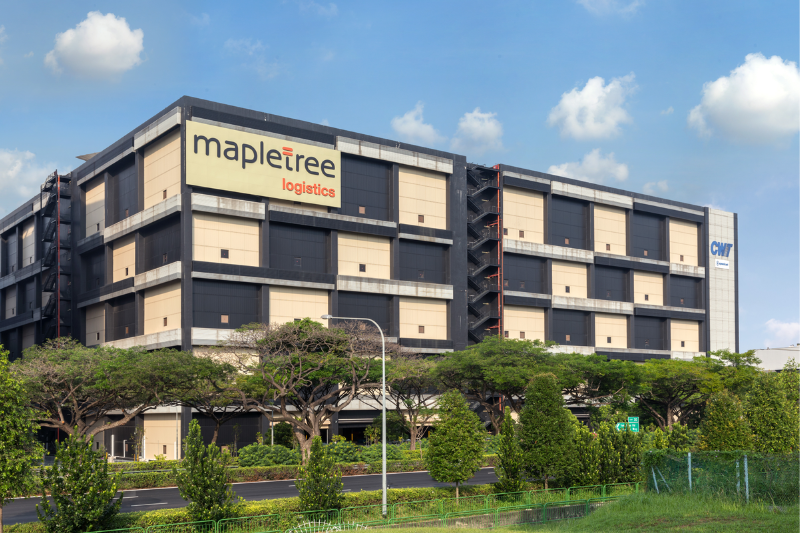
REITs with large overseas portfolios face the greatest exposure. For example, Mapletree Logistics Trust uses hedging strategies such as matching debt currencies to asset locations and hedging about 75% of expected income into SGD. Despite this, its annual DPU declined from S$0.09003 in FY2023/24 to S$0.07262 in FY2025/26, partly due to foreign exchange pressures alongside weaker logistics demand and higher interest costs.

In contrast, Frasers Centrepoint Trust owns mainly Singapore retail properties, meaning its income is largely SGD-based and insulated from currency volatility. Its DPU has remained relatively stable over recent years.

The article concludes that currency risk is becoming increasingly important as S-REITs expand globally. Investors should assess hedging policies, overseas exposure and portfolio balance rather than simply chasing the highest yields.

Monday, 20 April 2026

Investing Updates: CapitaLand Ascendas REIT preferential offering oversubscribed with strong excess demand


Source:


ChatGPT:


The preferential offering by CapitaLand Ascendas REIT was strongly oversubscribed, signalling robust investor demand despite mixed participation from existing unitholders.

Launched at S$2.35 per unit on the basis of 28 new units per 1,000 held, the offering aimed to fund part of a S$1.4 billion acquisition in Singapore and Japan. Total applications reached 315.4 million units—about 244% of the 129.1 million units available—driven largely by excess applications rather than initial entitlements.

Valid acceptances from entitled unitholders amounted to 96.1 million units, or 74.45% of the total offering, indicating that not all investors took up their allocated shares. This left around 33 million units available for excess allocation. However, demand for excess units surged to 219.3 million units—about 6.6 times the available balance—meaning applicants are unlikely to receive their full requested amounts.

Importantly, the REIT’s sponsor, CLI RE Fund Investments, fully subscribed to its entitlement, reinforcing confidence in the exercise. Post-offering, it will hold about 16.07% of total units.

From a fundamentals perspective, the acquisitions funded by this exercise are expected to be accretive. Pro forma figures suggest a 2.1% increase in FY2025 distribution per unit (DPU), rising further to around 4.1% when including additional acquisitions. Financial metrics remain stable, with only a slight increase in leverage and an improvement in net asset value.

Overall, the strong excess demand helps absorb unsubscribed units and reduces overhang concerns. Combined with attractive valuation metrics—such as a dividend yield of 5.9% above historical averages—the REIT remains appealing for income-focused investors.

Monday, 6 April 2026

Investing Updates: Ascendas REIT Preferential Offering: Asking $300M From Unitholders to Buy $1.4B in Properties. Should You Give?


Source:


Claude:


Ascendas REIT's $1.4B Acquisition: Should Unitholders Participate?

CapitaLand Ascendas REIT (CLAR) has announced a S$1.4 billion acquisition of three assets, backed by an Equity Fund Raising (EFR) targeting at least S$900 million. While dilution is an immediate concern for unitholders, the underlying assets and deal structure suggest a strategically sound move.

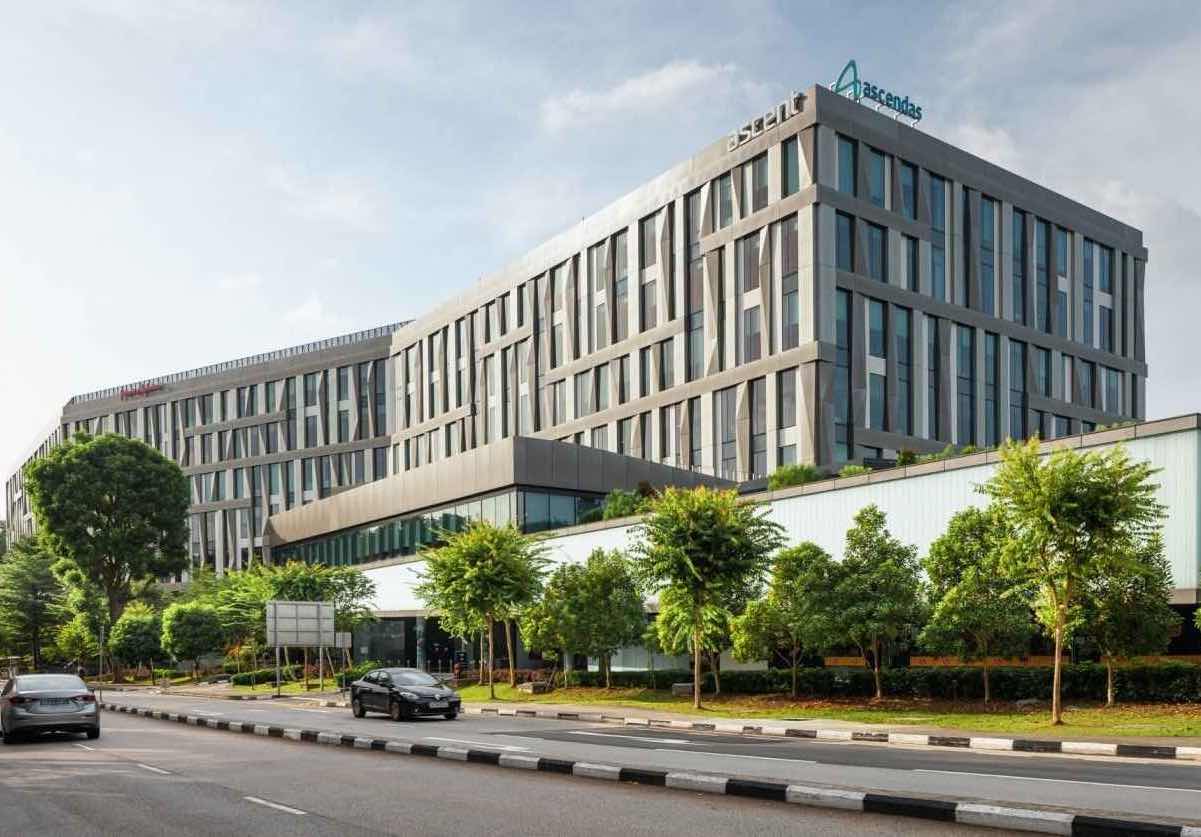
The three acquisitions span developed markets: a logistics complex at 25 Loyang Crescent, Singapore (S$504.2M, 6.9% NPI yield, fully occupied); a 50% stake in Ascent at Singapore Science Park (S$245M, 5.6% yield); and a 49% interest in a Greater Osaka data centre (S$620.7M, 4.3% yield), fully leased with a ~14-year lease featuring annual rent escalations.

Together, these assets improve CLAR's portfolio meaningfully — overall occupancy rises from 90.9% to 91.5%, and the Weighted Average Lease Expiry (WALE) extends from 3.7 to 4.3 years, locking in more visible recurring revenue. The acquisitions are also DPU accretive by 2.12%, while leverage increases by just 0.7 percentage points.

The EFR comprises a private placement — heavily oversubscribed by institutional investors — and a preferential offering open to existing unitholders at S$2.35–S$2.40 per unit, a 4.5%–6.5% discount to pre-announcement prices, helping offset dilution. The preferential offering opens 7 April, with a deadline of 15 April 2026.

The key risk is the macro environment. Ongoing Middle East tensions could delay interest rate cuts, keeping borrowing costs elevated and pressuring REIT valuations. However, financing this deal primarily through equity rather than debt is a prudent move that protects CLAR's balance sheet.

Overall, for long-term investors, participation in the preferential offering appears worthwhile.

Comments:

Yet another Rights issue in one of the old REITs in my portfolio.

I don't think this is a good time to do this.

Will subscribe to it as I'm still having a long runway to retirement.

Sunday, 5 October 2025

Investing Updates: Keppel DC REIT Preferential Offering – What should unitholders do?


Source:


ChatGPT:


Keppel DC REIT (KDCREIT) has announced a preferential offering in conjunction with its acquisition of Tokyo Data Centre 3. Entitled unitholders can subscribe to 80 new units at S$2.24 each for every 1,000 units held, with the offer running from 3–13 October 2025.

The acquisition, valued at JPY 82.1 billion (~S$707 million), will give KDCREIT a 98.47% stake in the asset, with Keppel Ltd holding the rest. Tokyo Data Centre 3 is a newly built, five-storey hyperscale facility in Greater Tokyo, fully leased to a global hyperscaler under a 15-year contract with annual rent escalations. Strategically located with low-latency connectivity, the centre enhances KDCREIT’s position in one of Asia-Pacific’s most robust data centre markets.

Financially, the deal is attractive. It is priced at a 1.1% discount to independent valuation and is expected to be yield-accretive, lifting FY2024 pro forma distribution per unit (DPU) by 2.8% to 9.712 cents. Aggregate leverage will rise from 30.0% to 34.5%, but the balance sheet remains healthy with about S$559 million debt headroom. Portfolio metrics also improve, with occupancy increasing to 95.9% and weighted average lease expiry extending to 7.2 years.

The preferential offering will raise about S$404.5 million via 180.56 million new units at S$2.24, a 6.7% discount to the S$2.40 closing price on 2 October 2025. At current levels, KDCREIT offers a 4.2% historical yield and trades at a price-to-book of 1.54x.

For existing unitholders, the offering provides an opportunity to accumulate units at a discount while benefiting from exposure to a stable, income-generating freehold asset. Given the accretive nature of the deal and strong tenant profile, subscribing appears attractive for long-term investors.

Opinion:

I've owned Keppel DC since 2017. There have been 2 such exercises so far I recall.

It's one of the best performing REITs in my portfolio.

I think it's worth investing as a unit holder too. DYOD.

Wednesday, 3 September 2025

Investing Updates: REIT Watch - Retail S-REITs see lower cost of debt and positive rental reversions as retail sales improve


Source:


ChatGPT:


Seven Singapore-listed retail S-REITs reported mixed financials but benefited from lower borrowing costs and stronger consumer traffic, which supported positive rental reversions. The trusts are CapitaLand Integrated Commercial Trust (CICT), Frasers Centrepoint Trust (FCT), Lendlease Global Commercial REIT (LREIT), Mapletree Pan Asia Commercial Trust (MPACT), OUE REIT, Starhill Global REIT and Suntec REIT.


CICT’s revenue and NPI dipped marginally due to asset sales, but excluding divestments, both rose. DPU increased 3.5 per cent to 5.62 cents, while occupancy stayed resilient at 96.3 per cent. It raised S$600 million via a private placement to acquire the remaining CapitaSpring stake, a deal expected to be DPU-accretive.


FCT posted 99.9 per cent occupancy, with higher shopper traffic and tenant sales. Debt cost fell slightly, though leverage rose due to perpetual securities. AEI works at Hougang Mall secured 74 per cent leasing pre-commitment.


LREIT recorded revenue and NPI growth, with DPU up 1.8 per cent. Debt cost improved and capital structure strengthened with the divestment of Jem office.


MPACT faced revenue and NPI declines following divestments and weaker overseas income. However, VivoCity delivered strong rental uplift of 14.7 per cent.


OUE REIT achieved a 34.3 per cent rental reversion at Mandarin Gallery, significantly outpacing Orchard Road’s rent growth, supported by new retail partnerships.


Starhill Global REIT maintained stable performance, with full leasing at its Singapore assets despite weaker tenant sales at Wisma Atria.


Suntec REIT’s revenue and NPI rose on overseas compensation and domestic strength. Suntec City Mall posted an 18 per cent rental reversion, though shopper traffic softened. Overall, retail REITs remain supported by resilient demand, positive rent reversions, and easing funding costs despite macroeconomic headwinds.


Opinion:


REITs FTW!

Well, hoping it does slowly as I accumulate more. 😙

Tuesday, 1 July 2025

Investing Updates : 2025 Half-Year Recap: Who’s Dominating Singapore’s REITs Market?


Source : 


ChatGPT : 


🇸🇬 Singapore REITs Market: 2025 Half-Year Recap (Summary)


At mid-2025, S-REITs are thriving despite no U.S. rate cuts yet, attracting investors with stable yields and capital gains.


🔝 Top 3 Performers:


1. Frasers Hospitality Trust (+21.4%) – Boosted by tourism recovery; modest 3.1% yield.

2. CapitaLand Integrated Commercial Trust (+13.8%) – Strong retail & office demand; 5.0% yield.

3. First REIT (+10.7%) – High 8.7% yield from healthcare assets in SE Asia.


📊 Sector Strength:


- Suburban retail: Frasers Centrepoint Trust.

- Healthcare: Parkway Life REIT.

- Industrial/logistics: Ascendas REIT, AIMS APAC REIT.

- Digital infrastructure: Keppel DC REIT (joined STI; +5.9%, 4.3% yield).


📉 Macro Tailwind:

SORA fell from 3.02% to 2.08%, cutting REITs' financing costs and making their yields more attractive.


🔮 Outlook:

Expect continued strength as investors rotate toward yield-focused, defensively diversified assets like S-REITs, especially if global rates ease and tourism, healthcare, and digital sectors grow.

Saturday, 28 June 2025

Investing Updates : Is the NikkoAM-StraitsTrading Asia ex Japan REIT ETF Dividend Sustainable?


Source : 


Apple Intelligence : 


The NikkoAM-StraitsTrading Asia ex Japan REIT ETF (SGX: CFA) recently distributed a dividend, with about one-third classified as a return of capital. This raises concerns about dividend sustainability, as returns of capital reduce the fund’s net asset value and future income potential. While the ETF’s long-term data shows a majority of distributions coming from income and gains, the recent return of capital component warrants further investigation for long-term investors.


The NikkoAM-StraitsTrading Asia ex Japan REIT ETF’s distributions are largely supported by underlying REIT performance, with around 90% of payouts backed by earnings and profits. While the ETF’s distribution yield is currently around 5.9%, the weighted average dividend yield of its top 10 holdings is approximately 6.06%. However, potential risks include rising interest rates, sector-specific challenges, and foreign exchange movements, which could impact future payouts.


The NikkoAM-StraitsTrading Asia ex Japan REIT ETF remains a viable option for investors seeking broad-based exposure to the REITs sector.

Tuesday, 10 June 2025

Investing Updates : Is STI increasingly a REIT index?


Source : 


Apple Intelligence : 


• STI Composition: The Straits Times Index (STI) is still dominated by banks, but REITs are gaining ground.


• REITs in STI: REITs currently account for 10% of the STI’s weightage and will increase with the inclusion of Keppel DC REIT.


• Investor Sentiment: The increasing weightage of REITs in the STI reflects investor confidence in the sector.


• STI Composition: The STI will include eight REITs out of 30 constituents, with real estate-linked counters making up approximately 14.71% of the index’s weightage.


• Singapore’s Economy: Singapore’s economy is heavily influenced by real estate, with a mature REIT sector and a land-scarce environment.


• Investor Sentiment: Despite the global rise of technology stocks, the STI’s skew towards financials and real estate reflects investor preferences and the economic realities of Singapore.


• Investor Preference: Singaporean investors, particularly retail ones, favor income-generating assets like REITs and bank stocks for their dividends and defensive nature.


• Future Trend: REITs are expected to gain a larger proportion of the STI’s weight due to falling interest rates and a focus on consumption, while banks may experience mean reversion due to high valuations and decreasing interest rates.


• REIT Expansion: Capitaland Investment and Link REIT are expanding their REIT offerings, providing Singaporean investors with more options in high-quality REITs globally.

Wednesday, 4 June 2025

Investing Updates : From 2% to 6%: 5 Reasons T-Bill Investors Should Switch to REITs


Source : 


Apple Intelligence : 


• T-bill Yield Decline: Singapore Treasury Bills (T-bills) yields have declined from a peak of over 4% in 2023 to 2.12% currently, making them less attractive than CPF OA interest.


• Reinvestment Risk: Investors face reinvestment risk as maturing T-bills can no longer be rolled over into equally attractive investments.


• Inflation Impact: The current T-bill yield of 2.12% is below Singapore’s long-term average inflation rate of 2.59%, resulting in a loss of purchasing power.


• Investment Alternative: REITs offer higher yields compared to T-bills, making them an attractive option for income-seeking investors.


• Yield Comparison: Singapore-listed REITs offer an average yield of 6.9%, significantly higher than the 2.12% yield of 1-year T-bills.


• Risk Considerations: REITs come with higher risk compared to T-bills, including price volatility and no capital guarantee, but these risks can be managed through diversification and a long-term perspective.


• Risk and Return: REITs offer a better risk-reward profile than regular stocks, with lower volatility and higher dividend yields.


• Investment Option: REIT ETFs provide diversification across multiple REITs, simplifying the investment process.


• Potential Opportunity: Falling REIT prices due to rising interest rates present attractive entry points for contrarian investors.


• Interest Rate Impact: Declining interest rates, as seen in Singapore’s SORA, benefit REITs by improving margins and potentially boosting capital gains.


• Investment Characteristics: REITs offer long-term income potential with dividends, avoiding reinvestment risk associated with fixed-maturity investments like T-bills.


• Liquidity and Flexibility: REITs provide greater liquidity and flexibility compared to T-bills, allowing for dollar-cost averaging and easy trading on exchanges.


• Investment Advantages: REITs offer ongoing income, flexible entry, and better liquidity compared to traditional real estate investments.


• Accessibility and Simplicity: REITs provide a straightforward and familiar investment option, especially for conservative investors, with business models centered around property ownership and rental income.


• Diversification and Tax Benefits: REITs offer diversification across a portfolio of properties without the high capital outlay of direct ownership, and they enjoy tax transparency, resulting in higher net yields for investors.


• Diversification Strategy: Diversify across income-generating assets like REITs and T-bills to build a resilient portfolio.


• Economic Environment and Asset Performance: REITs perform well during inflation and economic growth, while treasuries are favored during rising interest rates.


• Current Investment Recommendation: Rebalance portfolios by considering REITs, which offer higher yields (6.9%) compared to T-bills (2.12%), in the current low-interest-rate environment.