Source:
ChatGPT:
1. What the article is about
TheSmartLocal — DreamRide luxury minibus from Singapore to JB
The article introduces DreamRide by WTS Travel, a private VIP minibus service aimed at groups travelling from Singapore to Johor Bahru.
The pitch is basically:
Instead of driving, taking a public bus, or splitting your family between several Grab cars, hire one private minibus and travel together.
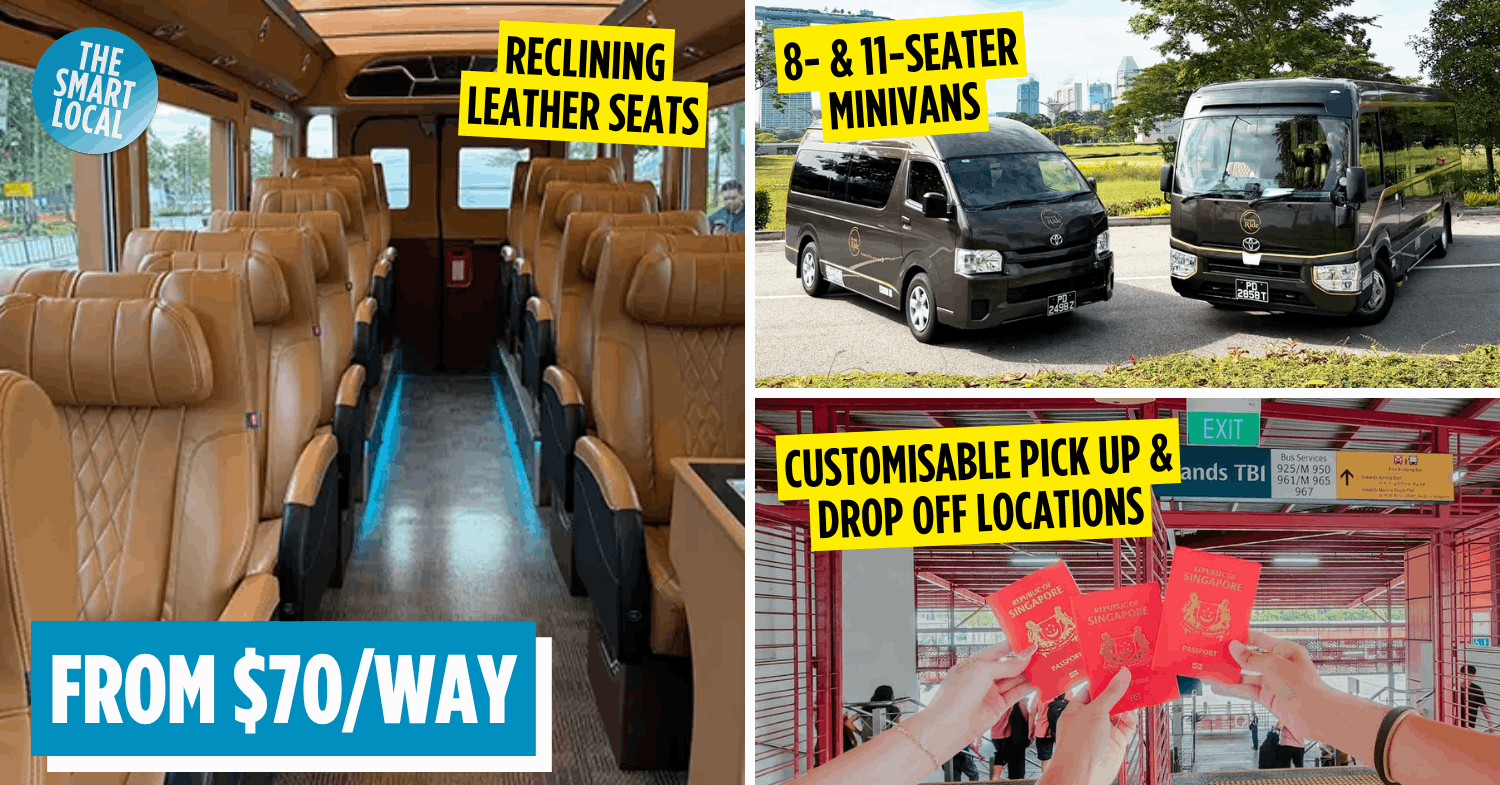
The service offers 8-seater and 11-seater/premium mini-coach options, with private pickup in Singapore and customised Malaysian drop-off. (TheSmartLocal)
The article is clearly targeted at:
families
multi-generation groups
groups carrying lots of luggage
shopping trips
private JB day trips
people who don't want to drive through the Causeway
2. The biggest selling point: door-to-door
This is arguably more important than the fancy seats.
You can arrange:
Home → Singapore checkpoint → immigration → minibus → Malaysia destination
After clearing immigration, you get back into the vehicle rather than finding another Grab/taxi.
The article says Malaysian drop-offs can be customised, including hotels, Horizon Mall and other destinations. (TheSmartLocal)
That's particularly useful for a family carrying:
multiple children + luggage + shopping bags.
Instead of:
taxi → checkpoint → walk → immigration → bus/Grab → hotel
you effectively keep the same private vehicle for the journey.
3. The “business class” part
The 11-seater premium coach is designed to feel considerably more luxurious than a normal minibus.
Features mentioned include:
reclining leather seats
generous legroom
USB charging
privacy curtains
Smart TV
premium sound system
colour-changing mood lighting
air-conditioning
luggage space
The 8-seater has reclining seats and onboard entertainment, while the larger premium vehicle gets the more elaborate entertainment/comfort setup. (TheSmartLocal)
WTS itself describes DreamRide as being for private groups, customised tours and corporate transfers, not merely as a conventional scheduled bus. (WTS Travel)
4. The price is where things get interesting
The article gives starting rates of:
| Vehicle | Singapore city one-way |
|---|---|
| 8-seater | S$70 |
| 11-seater | S$100 |
Airport departures are similarly listed at S$70/S$100, while airport arrivals are S$80/S$110. (TheSmartLocal)
There can also be additional charges for:
late-night/early-morning pickup
extra stops
certain locations such as Tuas South, Admiralty Yard and Senoko Industrial Area. (TheSmartLocal)
But there's an important catch:
Those advertised prices are not necessarily the complete cost of a Singapore → JB private charter/day trip.
The WTS brochure separately lists hourly disposal rates and different vehicle configurations, while the article tells readers to submit a booking form and obtain a quote. (WTS Travel)
So I'd treat S$70/S$100 as a starting transfer price, not automatically the price for your entire JB excursion.
5. The economics make much more sense for a family of 5
This is where I think the article is particularly relevant to your type of JB trip.
Suppose:
5 people
An S$70 one-way vehicle works out to:
S$14/person
An S$100 one-way vehicle:
S$20/person
That's obviously much more expensive than a public bus.
But you're buying something completely different:
Private vehicle + everyone stays together + luggage + doorstep pickup + no driving + customised drop-off.
And if you compare it with hiring two separate Grab cars, the gap can become considerably smaller.
The 8-seater is therefore arguably the more interesting product for a family of five.
6. But there is an important legal/transport angle
This is where I think readers should be careful.
Singapore has had a significant crackdown on illegal cross-border private-hire services.
TheSmartLocal itself published an earlier article warning that many Singapore-JB private-car services advertised online were not legally licensed for cross-border passenger transport. (TheSmartLocal)
HardwareZone also had a 2025 discussion about Malaysian travel agencies whose MPVs were seized by Singapore authorities. Interestingly, a commenter specifically mentioned WTS/DreamRide in that discussion. That discussion was about the broader illegal cross-border transport market, however, rather than establishing that DreamRide itself was illegal. (HardwareZone Forums)
That distinction is important.
DreamRide is different from the random Telegram/WhatsApp private-driver market.
WTS Travel is an established Singapore travel agency and its DreamRide is presented as its own private/customised transport service. WTS identifies itself as a licensed travel agency, and its DreamRide materials are published through its official channels. (WTS Travel)
So I wouldn't lump DreamRide together with the unlicensed private-car operators that TheSmartLocal warned about.
7. What online discussion looks like
Here's the interesting part:
There isn't much independent discussion yet.
The article only appeared on 18 September 2026, so Reddit/HWZ/X/Threads etc. haven't had enough time to generate a substantial body of reviews.
I found:
HardwareZone
The most relevant discussion is actually the older thread about the crackdown on illegal Singapore-JB transport.
The sentiment there is strongly focused on:
legality
licensing
enforcement
insurance
whether operators are allowed to conduct cross-border passenger services
rather than DreamRide's comfort or pricing. (HardwareZone Forums)
That is useful context because legal status is one of the first things Singaporeans think about when seeing a new cross-border private transport service.
I couldn't find a meaningful current Reddit discussion specifically reviewing DreamRide by WTS Travel.
The Reddit search results were dominated by unrelated “DreamRide” references rather than this Singapore-JB service.
So I wouldn't manufacture a Reddit consensus where none exists.
Facebook / Instagram / TikTok
There is considerably more promotional/social-media material than independent reviews.
WTS has promoted its DreamRide vehicles through its own social channels; its official Telegram channel, for example, highlights the Premium 8-Seater's leather seats, entertainment, legroom, air-conditioning and luggage capacity. (Telegram)
There are also family-travel influencers promoting DreamRide; one Singapore family-travel site currently advertises a S$10 DreamRide discount code. (Milkshake)
So I'd classify the current social-media conversation as:
promotion > genuine user reviews
rather than saying there's already strong community validation.
8. The most interesting comparison is actually with Grab
Singapore-JB transport has changed significantly in 2026.
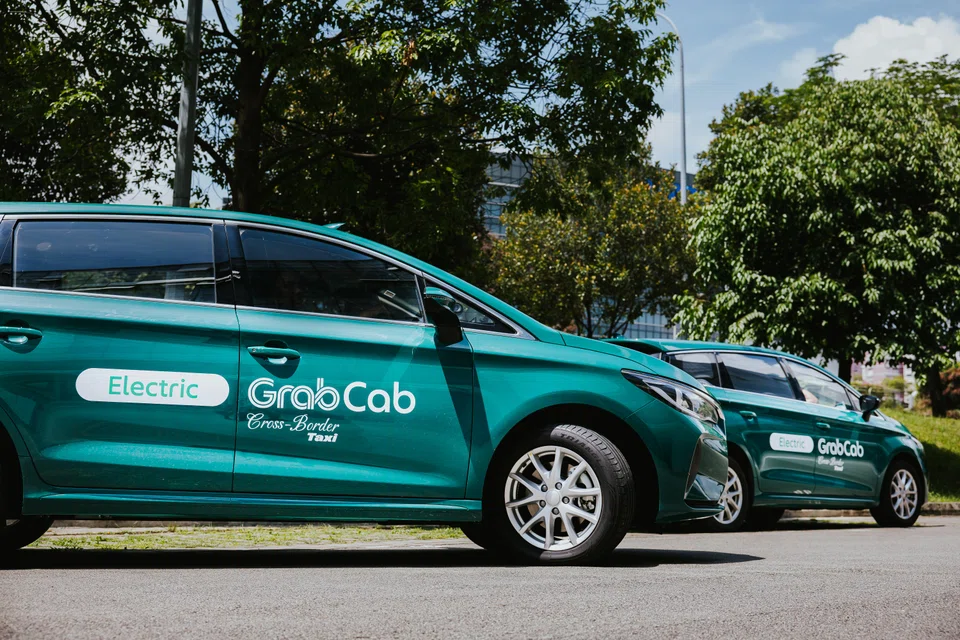
TheSmartLocal previously tested Grab's new cross-border taxi service, which provides a legal cross-border ride-hailing option. (TheSmartLocal)
That gives Singaporeans another legitimate alternative:
Option A — Public bus
Cheapest
But:
queues
luggage hassle
less privacy
everyone follows the same route
Option B — KTM
Fastest
But:
tickets can be difficult to secure
fixed schedule
getting to/from stations still required
Option C — Grab cross-border taxi
Convenient
But:
you're still dealing with car capacity
larger families may need multiple vehicles
price varies
Option D — DreamRide
Group convenience
private vehicle
8/11 seats
luggage
doorstep pickup
customised destination
everyone stays together
TheSmartLocal itself describes the general trade-off similarly: bus is cheapest, train is fastest, while car travel offers convenience. (TheSmartLocal)
9. The biggest weakness: Causeway traffic doesn't disappear
This is the point I would be most cautious about.
DreamRide gives you:
comfort while you're stuck in traffic.
It doesn't give you:
a magic way through the Causeway jam.
If Woodlands CIQ is jammed for two hours, your premium leather seat doesn't change the journey time.
That's why KTM remains fundamentally different.
DreamRide is solving:
“How do I make the journey less troublesome?”
rather than:
“How do I guarantee a fast journey?”
10. Another potential issue: immigration
Even though the minibus continues after immigration, you still have to get off and clear immigration yourself.
So don't interpret “door-to-door” as:
Sit in the vehicle while immigration happens.
It's more like:
Singapore home → vehicle → SG immigration → vehicle → Malaysia immigration → vehicle → destination
That's still substantially easier than public transport because you don't need to arrange another Malaysian ride after customs.
11. Why I think the article is getting attention
TheSmartLocal has found a very Singaporean pain point:
JB is cheap and attractive, but getting there with a family can be troublesome.
Especially when you have:
children + grandparents + luggage + shopping bags.
DreamRide basically monetises convenience.
You're not paying S$70–100 because a normal bus cannot get you to JB.
You're paying because:
“I don't want to think about the transportation logistics.”
That's the actual product.
12. My take for a family of 5
For 2 people, I'd struggle to justify it.
For 5 people, the proposition becomes much more interesting.
For 5 people + 3 children + luggage + shopping, even more so.
I'd particularly look at the 8-seater, because you don't necessarily need an 11-seater.
The calculation I'd use is:
DreamRide total quote ÷ 5
and compare that against:
KTM + Grab in JB + Grab back + local transport
rather than simply comparing it against a S$2–3 public bus.
That's a much fairer comparison.
The real question is therefore not:
“Is DreamRide cheap?”
It's:
“How much am I willing to pay to remove the transportation hassle for five people?”
At the moment, the article's biggest limitation is that there aren't enough independent user reviews yet to judge reliability, actual Causeway experience, waiting time, Malaysian pickup/drop-off experience or whether the quoted price remains attractive after add-ons.
The service itself is not brand new—WTS has been promoting DreamRide since at least 2025—but the new TSL article is bringing it to a much wider JB-trip audience now. (WTS Travel)