Source:
ChatGPT:
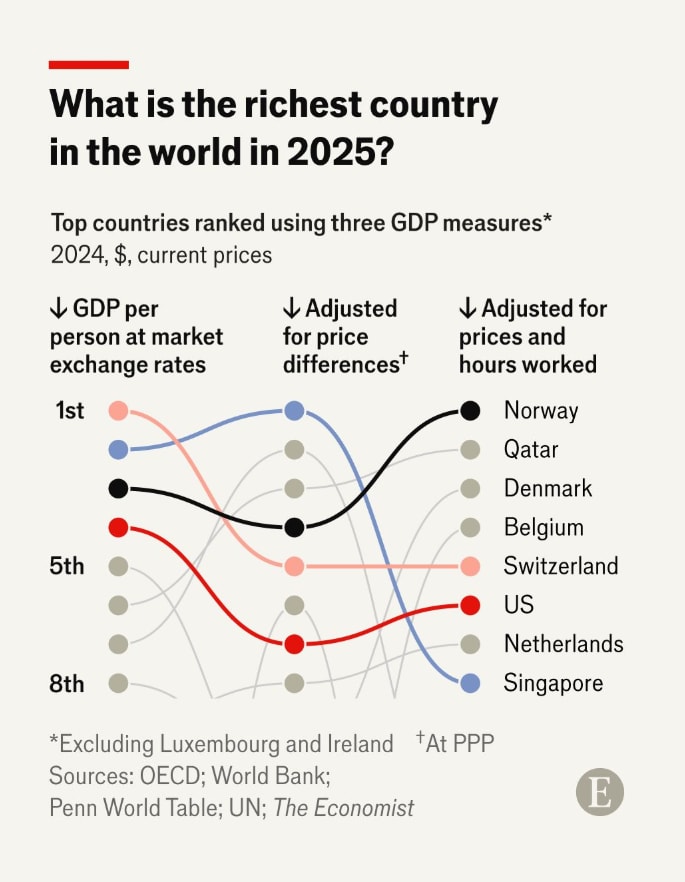
On paper, 2025 was a solid year for Singapore. GDP expanded by a healthy 4.8 per cent despite global headwinds such as US tariffs, layoffs, and geopolitical tensions. The country’s high ranking was largely driven by average annual earnings of about US$90,700 (S$116,485), placing it among the wealthiest nations by income per person.
However, the adjustment for working hours reveals a different reality. Data from the International Labour Organization shows that Singaporeans worked an average of 44.6 hours per week, significantly more than workers in many other advanced economies. When income is assessed relative to time spent working and local costs of living, Singapore’s relative prosperity declines.
In contrast, Norway rose from third place to first after these adjustments. Norwegians work an average of just 34 hours per week, yet still enjoy high incomes and strong purchasing power, allowing for more leisure time. At the other extreme, Bhutan recorded the longest average working hours at 54.5 hours per week, despite often being described as the “happiest country in the world”.
The Economist ranked 178 countries using three measures: GDP per person at market exchange rates, income adjusted for purchasing power, and income adjusted further for local prices and hours worked. The analysis highlights how differences in cost of living and labour intensity can significantly alter perceptions of wealth.
The findings sparked debate online, with some Singaporeans lamenting long working hours, while others pointed to countries like Norway as examples of better work-life balance. The contrast raises a broader question: is Singapore truly rich, or simply productive at the cost of time and energy?
Comments:
Interesting data.
Agree with it.
No comments:
Post a Comment