Source:
ChatGPT:
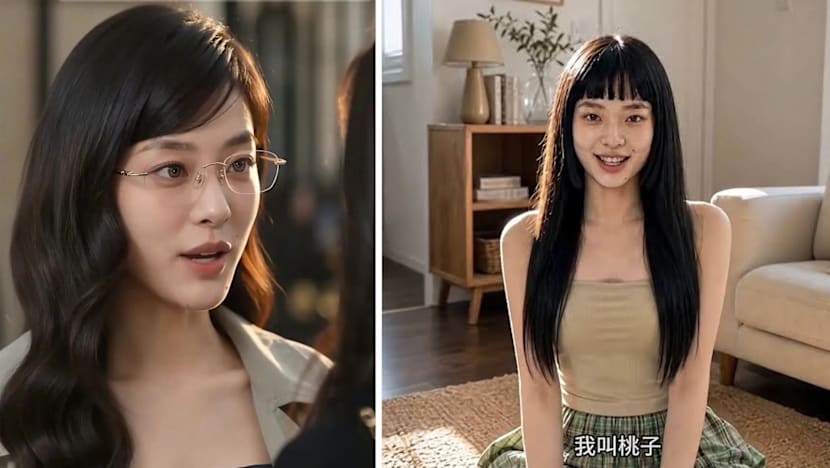
The eye-catching part is her price. Listings on Douyin’s marketing platform reportedly put Taozi’s rates at 168,000 yuan (about S$31,900) for a 1–20-second video, 208,000 yuan (S$39,600) for 21–60 seconds and 258,000 yuan (S$48,900) for longer videos. These rates can exceed those of some human celebrities and influencers with substantially larger followings.
Brands are attracted by the practical advantages of virtual personalities. Taozi does not age, get tired, cancel appearances or become involved in scandals. Her appearance and personality can also be controlled, while content can theoretically be produced continuously without the logistical demands of a human celebrity.
However, the commercial model raises questions about authenticity and consumer trust. Critics argue that an AI character cannot genuinely use a product or provide personal testimony. This is particularly significant for contact lenses, which are regulated as Class III medical devices in China. Lawyers have warned that advertising claims implying personal experience could breach rules requiring human endorsers to have actually used products.
Online reactions are divided. Some see AI influencers as the next evolution of celebrity marketing, while others question whether consumers would trust recommendations from someone who does not exist. The bigger issue may be whether Taozi represents a sustainable new advertising model—or simply the novelty phase of AI entertainment. (ECNS)
What social media and forums are saying
Chinese social media — overwhelmingly the most active discussion
The strongest discussion is currently on Weibo and Douyin, rather than English-language Reddit or Singapore forums. The hashtag “两个AI演员比内娱待爆艺人都火” (“Two AI actors are more popular than up-and-coming entertainment stars”) reportedly reached the top of Weibo's trending list. Discussion volume around the AI drama and its characters has been reported at more than 800 million, illustrating how unusual the phenomenon has become. (Sina Mobile)
The reactions broadly fall into four camps:
“AI is finally good enough.” Some viewers say they initially watched without realising Taozi was AI. Her realistic skin texture, facial imperfections and expressions are frequently cited as reasons she avoids the usual “AI face” problem. (Sohu)
AI threatens human entertainers. A recurring discussion is whether virtual actors could replace lesser-known human actors and influencers because they are cheaper, controllable and never “go offline.” (Sina Mobile)
The “fake world” concern. Others find the idea of an AI character posting breakfast, exercising, shopping and interacting with fans unsettling because the entire “life” is manufactured. (Xueqiu)
Commercialisation is the real test. Chinese industry commentary increasingly focuses on whether AI characters can turn viral attention into sustainable advertising revenue rather than merely generating views. (The Paper)
Interestingly, Taozi's success appears to come from more than visual realism. Her team created a complete “virtual human” persona: daily vlogs, interactions with another AI character, simulated relationships and lifestyle content. That gives followers the feeling that Taozi exists outside the drama itself. (Sina)
Reddit, X, Facebook, Instagram, TikTok, Threads & HardwareZone
I found much less indexed discussion on Reddit, X, Threads and HardwareZone specifically about Fang Taozi than on Chinese platforms. This appears to be a China-first viral phenomenon at this stage. TikTok/Instagram/Facebook content is also harder to reliably search and verify publicly, so I wouldn't treat isolated reposts or comments as representative of overall sentiment.
That itself is noteworthy: the story has enormous Chinese social-media traction but has not yet generated comparable English-language forum discussion.
Overall sentiment
The most interesting takeaway isn't really the S$49K advertising fee. It's that AI characters are starting to behave like complete media brands rather than simply fictional characters.
Taozi has a storyline → followers → personal social account → lifestyle content → fan relationships → brand advertising.
That is essentially the same commercial funnel used by a human influencer, except the “person” can theoretically be controlled 24/7.
The biggest obstacle remains trust. If consumers know Taozi isn't real, will they still trust her recommendations? And if AI endorsers become common, will advertisers eventually prefer them because they are cheaper and more predictable—or will audiences become increasingly resistant to synthetic personalities?
For now, Taozi looks less like a gimmick and more like an early experiment in a potentially very large AI influencer economy. (The Paper)
No comments:
Post a Comment