Source:
ChatGPT:
1. The article in a nutshell
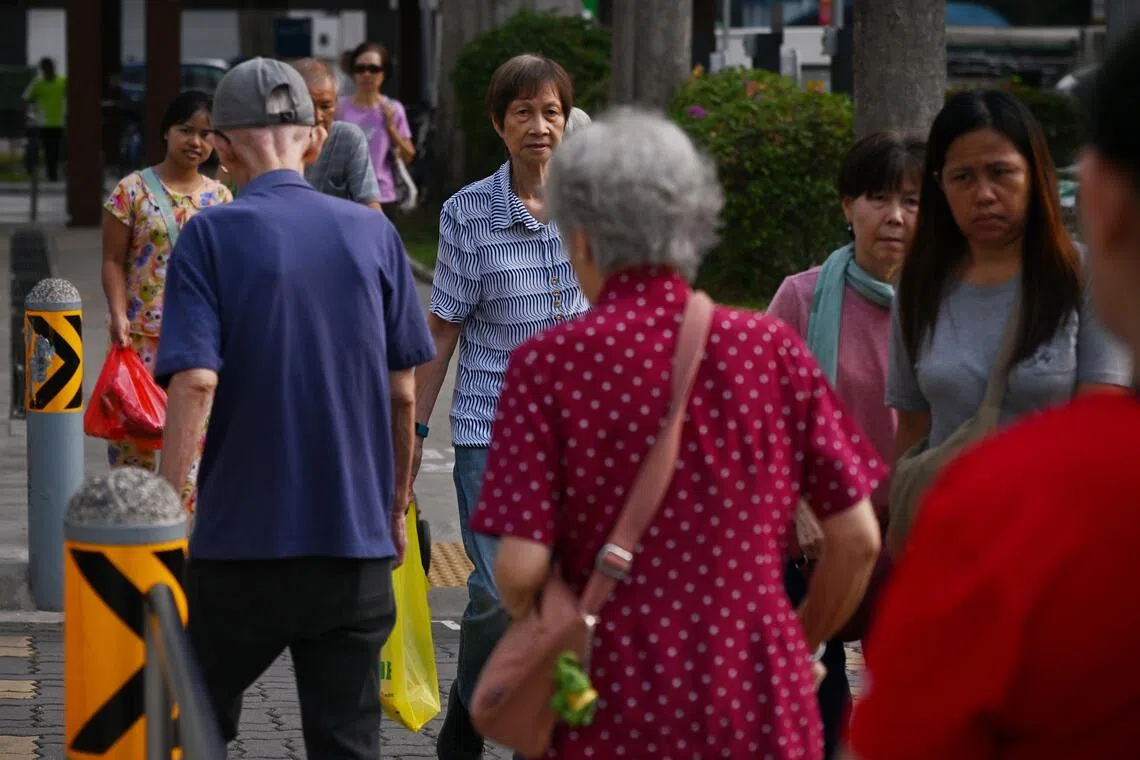
The Straits Times article reports that Singapore has crossed the “super-aged society” threshold, with 21.4% of its citizen population aged 65 and above in 2026, compared with 20.7% in 2025 and only 13.7% in 2016. The UN benchmark is 21%. (The Straits Times)
The bigger story is that ageing is accelerating while births remain extremely low.
Key numbers
| Indicator | Latest figure | What it means |
|---|---|---|
| Citizens aged 65+ | 21.4% | Crossed “super-aged” threshold |
| Citizens aged 65+ in 2016 | 13.7% | Huge increase over 10 years |
| Citizens aged 80+ | 152,000 | Up 60% from 95,000 in 2016 |
| Expected 65+ by 2035 | >25% | More than 1 in 4 citizens |
| Citizens aged 20–64 | 59.3% | Down from 64.3% in 2016 |
| Working-age : 65+ citizens | 2.8 : 1 | Down from 4.7 : 1 in 2016 |
| Projected ratio in 2035 | 2.2 : 1 | Further pressure on working-age population |
| Median Singaporean age | 44.1 | Up from 43.7 in 2025 |
| Resident TFR | 0.87 | Extremely low fertility |
| Citizen births in 2025 | 26,071 | Down 10.8% from 2024 |
The official SingStat figures similarly show the resident population's 65+ share rising from 12.4% in 2016 to 19.5% in 2026. (Singapore Department of Statistics)
One important technical point
The 21.4% figure refers specifically to citizens, not everyone physically living in Singapore.
That's significant because Singapore's definition of “super-aged” for this announcement uses the citizen population, whereas the UN definition normally considers the broader population. Including PRs, Singapore's resident 65+ proportion is 19.5%, so the terminology needs some care. (Singapore Department of Statistics)
2. The second major issue: very low births
The ageing problem isn't occurring in isolation.
In 2025:
Citizen marriages fell 5.6%
Citizen births fell 10.8%
Resident TFR fell from 0.97 to 0.87
First-time mothers' median age increased from 30.3 in 2015 to 31.9
Singapore's population of singles increased across most age groups. (HardwareZone Forums)
So Singapore is simultaneously experiencing:
more elderly people + fewer babies + people marrying later + fewer working-age people relative to elderly people.
That combination is what makes the demographic issue more consequential than simply saying “Singaporeans are living longer.”
3. Immigration is the other big part of the story
This is where the online discussion becomes much more heated.
Singapore's total population reached 6.21 million in June 2026, up 1.6%.
But the components moved very differently:
Citizens: 3.68m, +0.7%
PRs: 0.55m, roughly stable
Non-residents: 1.98m, +3.7%
The increase in non-residents was mainly driven by work-permit holders, particularly for construction and infrastructure projects. (The Straits Times)
Singapore also granted 25,094 citizenships and 35,352 PRs in 2025. The government's report explicitly says immigration helps moderate the effects of ageing and low birth rates and prevents the citizen population from shrinking over the long term. (HardwareZone Forums)
This is the part that generated the most debate online.
4. HardwareZone reaction
The HardwareZone Forums thread is particularly active, and the tone is considerably more cynical than the official report.
HardwareZone discussion thread
I would group the discussion into roughly five themes:
A. “This is going to get much worse”
Some commenters focus on the trajectory rather than today's 21.4%.
They point out that the proportion is expected to exceed 25% by 2035, while the working-age/elderly ratio continues falling. There are comments predicting that today's 30s and 40s will have difficulty achieving a conventional retirement.
That's an opinion rather than something established by the demographic data, but the underlying concern is based on a real trend. (HardwareZone Forums)
B. Retirement and CPF anxiety
A surprisingly large portion of the thread turns into discussion about:
CPF
retirement age
CPF withdrawal age
adequacy of retirement savings
healthcare costs
GST
whether younger Singaporeans will be able to retire comfortably
Some comments sarcastically suggest that CPF withdrawal ages will keep increasing.
Those are commenters' fears/jokes, not announced policy changes. The demographic report itself does not say that CPF withdrawal rules will be changed. (HardwareZone Forums)
C. Immigration becomes the central argument
This is probably the biggest HWZ theme.
One camp essentially argues:
Without immigration, Singapore would face an even sharper demographic decline.
Another camp argues that immigration merely delays the underlying problem because immigrants eventually age too.
The interesting thing is that both sides are responding to a genuine feature of the government's demographic strategy: the official report explicitly says immigration is helping to moderate ageing and low birth rates. (HardwareZone Forums)
So the disagreement isn't really about whether immigration exists as a demographic tool; it is about whether it is a sustainable long-term solution.
D. “Why are we still talking about population growth?”
Another recurring reaction is essentially:
If Singapore is becoming old, why does the population keep increasing?
This comes from the fact that Singapore simultaneously has:
6.21m total population + 21.4% of citizens aged 65+ + extremely low fertility.
That seems contradictory at first, but it isn't. Population growth is currently being driven substantially by the non-resident population, while the citizen population itself is ageing. (The Straits Times)
E. Cost of living / fertility
Some HWZ commenters connect low fertility with:
housing costs
raising children
childcare
general cost of living
career pressures
That is a popular interpretation, but it's important not to treat it as proven causation. The demographic report establishes that fertility is falling; it doesn't establish that any single factor explains the decline.
5. Reddit reaction
The Singapore Reddit discussion is somewhat more analytical than the HWZ thread, although there is still considerable cynicism.
(Reddit)
The strongest recurring themes:
1. Immigration vs natural population ageing
Several commenters noticed that immigration is helping keep the working-age population from falling as quickly.
Others argue that this simply postpones the problem because immigrants eventually become older too. (Reddit)
2. Caregiving is a major concern
People raise the possibility of Singapore eventually requiring substantially more:
nurses
healthcare workers
caregivers
foreign domestic workers
This is particularly relevant because the 80+ population has increased 60% in a decade. (The Straits Times)
3. Japan comparisons
A number of commenters compare Singapore's trajectory with Japan, particularly around:
elderly-heavy communities
shortages of caregivers
reliance on foreign workers
shrinking younger generations
That's a comparison rather than a prediction that Singapore will follow Japan's exact path.
4. “Who will pay for everything?”
Another recurring concern is the economic burden created by a shrinking ratio of working-age people to elderly people.
That concern has a legitimate demographic basis: the ratio has fallen from 4.7 working-age citizens per elderly citizen in 2016 to 2.8 today, and is projected to reach 2.2 in 2035. (CNA)
6. What I found across other social media
I searched for public/indexed discussion on Facebook, Instagram, X and Threads as well as Reddit and HardwareZone.
The publicly indexed results for Facebook/Instagram/X/Threads are much less comprehensive than Reddit/HWZ, so I wouldn't pretend that I can measure sentiment on those platforms accurately.
The strongest searchable discussion is currently on:
HardwareZone — highly cynical, immigration/CPF/cost-of-living focused.
r/singapore — more demographic/economic discussion, particularly immigration and caregiving.
r/worldnews — broader international reactions, often focusing on ageing Asian societies, housing and labour. (Reddit)
The Reddit world-news thread is particularly interesting because the discussion shifts from Singapore specifically to a broader question: what happens when many wealthy Asian countries simultaneously experience ultra-low fertility and rapid ageing? (Reddit)
7. What I think is the most important takeaway from the article
The headline “21.4% are 65+” actually understates the bigger structural change.
The more important numbers are:
13.7% → 21.4% elderly share in 10 years
and
4.7 → 2.8 working-age citizens per elderly citizen
and
0.87 fertility rate
and
152,000 people aged 80+
Those four figures together describe a much more significant demographic transformation than simply crossing an arbitrary 21% threshold. (Singapore Department of Statistics)
At the same time, there is an important counterpoint: Singapore isn't simply heading toward an uncontrolled population collapse. The government expects the 20–64 population share to remain broadly stable through 2035, partly because younger cohorts are entering the working-age population and through managed immigration. (CNA)
So the picture is more accurately:
Singapore is ageing rapidly → births aren't replacing the population → immigration is being used to moderate the demographic/worker shortage → but the underlying citizen-ageing trend continues.
8. What this could mean for ordinary Singaporeans
The demographic shift potentially affects five areas particularly strongly:
🏥 Healthcare: greater demand for chronic disease management, hospitals, nursing and eldercare.
👷 Labour: greater reliance on productivity improvements, automation and foreign workers.
💰 Retirement: individuals may need to plan for longer retirements and potentially higher healthcare expenses.
🏠 Housing: more households will eventually involve elderly singles/couples rather than families with children.
👨👩👧👦 Family structure: fewer children will increasingly have to support ageing parents.
There is also an economic opportunity. Health, senior living, insurance, retirement products, wellness, tourism and technology aimed at older consumers could become increasingly important. Singapore's health minister has previously described this as part of a potential “longevity economy.” (Reddit)
Bottom line
The online reaction is substantially more pessimistic than the official demographic presentation. The data itself is unambiguously showing rapid ageing, but some of the more dramatic claims on HWZ/Reddit — such as “there will be no retirement,” inevitable CPF changes, or Singapore eventually becoming mostly foreign — are commentary/speculation, not conclusions established by the report.
The genuinely important issue is the combination of very low fertility + longer life expectancy + rapidly growing elderly population + fewer working-age citizens per elderly person. Immigration can moderate the pace, but it does not reverse the ageing of the existing citizen population. (The Straits Times)
No comments:
Post a Comment