Labels

Lifestyle (430) Investing (390) Entertainment (302) Singapore (244) Technology (143) Rewards (131) Insights (107) Gaming (102) Equities (97) AI (87) Food (77) U.S. (77) Data (76) Crypto (71) Sports (67) Travel (63) Portfolio (54) News (45) Credit Card (37) Movies (35) Savings (34) Earnings (31) Football (31) Policies (26) Property (26) Shows (24) Holidays (23) Tennis (23) Bonds (16) Promotions (16) Toys (15) World (15) Malaysia (13) REITs (13) T-Bills (12) China (11) Apps (10) Referral (10) Healthcare (9) Anime (8) DeFi (8) Cash Management (7) Currency (7) Retirement (6) Security (6) CPF (5) ETFs (5) Miles (5) Shopping (5) Commodities (4) Robotics (4) Weird (4) platform (4) Cashback (3) Insurance (3) Japan (3) Blog (2) Reviews (2) Robo-Advisor (2) 1-For-1 (1) Asia (1) Australia (1) Banking (1) Funds Management (1) Futuristic (1) Indonesia (1) Inflation (1) Nerfs (1) SGD (1) SSB (1) Social (1)

Friday, 14 August 2026

Food Updates: McDonald’s Samurai Burger Returns 20 Aug With Katsu Chicken Tenders, Kyoho Grape Soft Serve & Strawberry Daifuku Pie


Source:


ChatGPT:


McDonald’s Singapore is bringing back its popular Samurai Burger range on 20 August 2026 at 11am, alongside several new Japanese-inspired items. The returning line-up includes Samurai Beef and Chicken Burgers, Tamago versions with egg, and Seaweed McShaker Fries.

The Samurai Beef Burger features a beef patty with teriyaki sauce, lettuce and mayonnaise, while the Chicken version delivers the same sweet-savoury flavour profile. Samurai Special Meals start from $10.15, while the Tamago Samurai Special starts from $11.45.

The biggest new savoury addition is Katsu Chicken Tenders, priced from $5.50 for three pieces or $8.50 for five. Seaweed McShaker Fries can also be added to meals for a $1.25 upgrade.

The dessert selection is arguably more adventurous. Kyoho Grape Soft Serve, priced from just $1.50, will also be available as an Oreo McFlurry. The new Strawberry Daifuku Pie, from $1.80, combines mochi, red bean paste and strawberry jam inside a pink crust.

McDonald’s is also launching a free Samurai IKE! game-show-style pop-up at Bugis Junction from 18-30 August, featuring challenges such as Hole in the Wall, Fries and Furious and Kyoho Grape Drop. Competitive participants can potentially win up to $800.

The food range will be available islandwide through restaurants, Drive-Thrus, McDelivery, GrabFood and foodpanda, while stocks last.

Overall, this is a significantly broader Samurai comeback than simply bringing back the burger. McDonald’s is combining familiar favourites with highly social-media-friendly new products—particularly the purple grape soft serve and pink daifuku pie—to create a campaign that encourages customers to try multiple items rather than just returning for the classic Samurai Burger.

Social media & forum reaction

Because the announcement is extremely recent, 13 August 2026, there is not yet enough indexed discussion to claim a statistically meaningful social-media consensus.

Reddit: Searches did not surface a substantial Singapore-specific discussion about this exact 2026 launch yet. However, historical Singapore discussions about McDonald’s seasonal Japanese products show strong interest in limited-time items and debate over whether novelty flavours justify McDonald’s prices.

The most interesting reaction is likely to centre on the Kyoho grape soft serve. Grape ice cream is relatively unusual, but wider Reddit discussions show that people who have tried Kyoho grape desserts generally describe them as distinctive and enjoyable. One recent discussion specifically mentioned Japanese and Taiwanese Kyoho grape soft serve as particularly good. (Reddit)

HardwareZone: I could not find a meaningful current thread specifically discussing this August 2026 Samurai launch. I therefore wouldn't attribute specific opinions to HardwareZone users.

X / Instagram / TikTok / Facebook / Threads: Public search results are currently too limited to establish reliable sentiment. Given the highly visual purple-and-pink desserts and game-show pop-up, these platforms are likely to be important for food photos, first-bite reviews and short-form reaction videos, but that is an inference rather than evidence of current engagement.

What will probably get the most attention

πŸ₯‡ Kyoho Grape Soft Serve — probably the biggest social-media item because of its unusual flavour and striking purple colour.

πŸ₯ˆ Strawberry Daifuku Pie — mochi + red bean + strawberry gives it strong “Japanese dessert” appeal.

πŸ₯‰ Katsu Chicken Tenders — likely the safest new item for people who don't want experimental flavours.

Samurai Burger remains the nostalgia anchor, while the new desserts and game-show activation make this campaign feel designed specifically for Instagram/TikTok-style sharing.

One interesting detail: Kyoho grape soft serve isn't an entirely strange combination. Reviews of Kyoho soft serve in Japan describe it as having a strong grape flavour and sometimes a slightly sherbet-like texture. (Lavie Taste)

My prediction: the Samurai Burger itself will bring back the loyal fans, but Kyoho Grape Soft Serve will generate the most curiosity and social-media posts.

Crypto Updates: Trezor Customer Data Exposed in Shipping Partner Breach


Source:


ChatGPT:


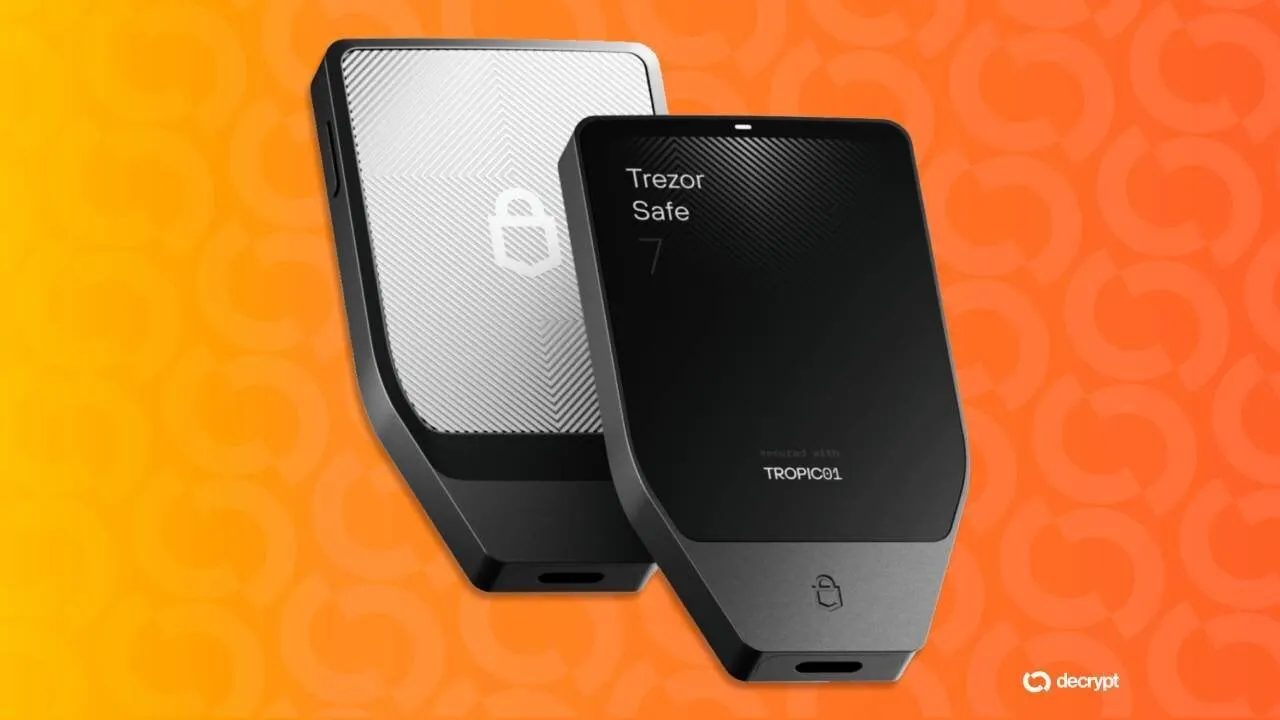
A data breach at ShipMonk, a third-party fulfilment partner used by Trezor, exposed personal information belonging to 13,689 Trezor customers. The incident affected customers who ordered between May 10 and August 8, 2026, across the US, UK, Sweden, Colombia, Brazil, Italy and Portugal. (Decrypt)

Of those affected, 11,742 customers had their full names, shipping addresses, phone numbers and email addresses exposed, while another 1,947 had their names, cities and email addresses leaked. Trezor says its own systems were not compromised and that wallets, private keys, recovery backups and devices remain secure. (Protos)

The bigger concern is what criminals can do with the information. Because the victims can now potentially be identified as Trezor customers—and, for most, their home addresses are known—the data could enable highly convincing phishing, impersonation and social-engineering attacks. The article also highlights the more serious possibility of physical targeting, noting that crypto-related “wrench attacks” have been increasing. (CryptoRank)

Trezor says its policy requiring fulfilment partners to delete or anonymise order data after 90 days limited the breach's scale. It is also accelerating an Anonymous Delivery option involving locker collection, neutral packaging, generic sender information and automatic deletion of shipping identifiers. The service is targeted for the EU by September and the US by year-end.

The incident comes shortly after the major Coldcard security crisis, making hardware-wallet users particularly nervous. However, the two incidents are fundamentally different: Trezor itself was not hacked, whereas the ShipMonk breach exposed customer information held by a logistics provider.

The main lesson is that even when a hardware wallet securely protects cryptocurrency, the purchase trail and customer's physical identity can remain a significant security vulnerability.

Social media & forum reaction

Reddit has the clearest and strongest reaction so far. A post in r/Bitcoin received about 310 upvotes, while Trezor's own Reddit announcement received about 308. (Reddit)

The dominant sentiment is essentially: “The wallet is safe, but the owner is now easier to target.”

One particularly useful Reddit discussion distinguishes the breach from an actual wallet hack: users emphasised that attackers did not obtain seed phrases, private keys or wallet access. (Reddit)

However, anxiety is still substantial. Users specifically worry about:

  • Targeted phishing using their real name and purchase history.

  • Criminals knowing their home address.

  • Potential physical attacks against wealthy crypto holders.

  • Trezor's reputation after Ledger previously suffered a customer-data breach.

  • Whether moving to another hardware-wallet manufacturer actually solves the underlying supply-chain/privacy problem. (Reddit)

There is also frustration from customers who recently bought Trezor specifically because of the recent Coldcard incident. Some commenters described the timing as particularly unfortunate, while others stressed that ShipMonk—not Trezor's wallet infrastructure—was breached. (Reddit)

Interestingly, users are also discussing Amazon purchases. Trezor representatives confirmed that orders from its official Amazon stores use a different fulfilment partner and were not affected. (Reddit)

r/CryptoCurrency reflects similar concerns, with users noting that the Coldcard incident may have pushed more people towards Trezor shortly before this breach. (Reddit)

HardwareZone: I couldn't find a meaningful current HardwareZone discussion specifically about this breach, so there isn't enough evidence to claim a Singapore-forum consensus.

X, Facebook, Instagram, TikTok and Threads: Publicly searchable discussion remains limited because posts are frequently login-gated or poorly indexed. I therefore wouldn't assign a sentiment percentage to these platforms.

Overall takeaway

This is not a Trezor wallet-security breach. It is a customer-privacy and physical-security breach—and arguably that distinction is the most important point.

For affected users, the realistic immediate threat is much more sophisticated phishing, not someone remotely emptying the Trezor. But because the leaked information can link a person's identity and home address to ownership of a hardware wallet, the incident is considerably more serious than an ordinary email database leak. (Financial Times)

Sports Updates: VAR, timewasting and subs - new rules for the new season


Source:


ChatGPT:


The 2026-27 Premier League season introduces an unusually large number of rule changes, with the main objective of reducing time-wasting and increasing the amount of football actually played. The changes were tested at the 2026 World Cup, where the ball was in play for about 60.43% of match time, compared with 56.86% at Qatar 2022.

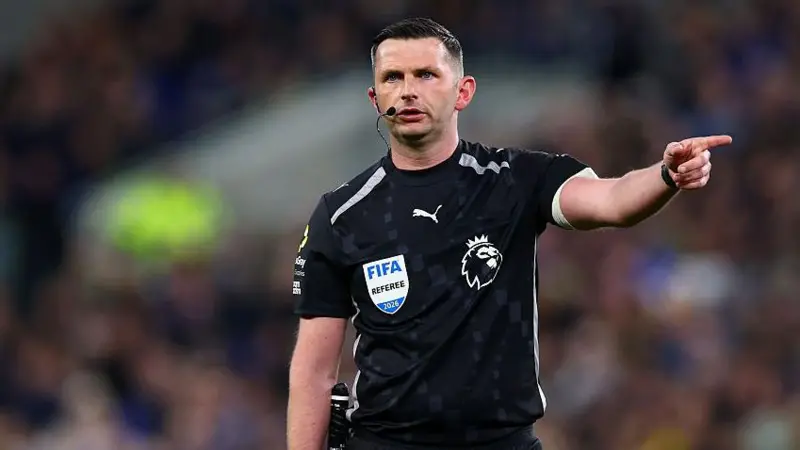
The biggest changes concern restarts. Players will face a five-second countdown for deliberately delayed throw-ins and goal-kicks. Failure to restart in time can result in possession being awarded to the opposition, including a corner instead of a goal-kick. (Talksport)

Substitutions are also being tightened. Players have 10 seconds to leave the pitch at the nearest point. If they take longer, their replacement must wait at least one minute before entering, potentially leaving their team temporarily with 10 players. Middlesbrough's Will Lankshear became the first high-profile player caught by the rule in the Carabao Cup after he admitted he was unaware of it. (Talksport)

Players receiving treatment must now remain off the pitch for one minute, up from 30 seconds, although exceptions apply for certain injuries and disciplinary situations.

Goalkeeper “tactical timeouts” are also being targeted. If a goalkeeper requires treatment, an outfield player nominated by the coach must leave for one minute, preventing teams from using fake or strategically timed injuries to regroup. (Liverpool FC)

VAR receives limited additional powers. It can review a second yellow card leading to a sending-off, certain attacking fouls before set-pieces that directly lead to goals or penalties, and genuine mistaken-identity incidents.

Overall, the changes are designed to make football faster and discourage the “dark arts”, but they also introduce potentially controversial judgement calls for referees.

Social media & forum reaction

Reddit has been particularly active. The first Lankshear incident generated more than 2,600 upvotes, with fans joking about referees effectively becoming “F1 pit-stop timers” and wondering whether VAR will eventually measure whether a player took 10.01 seconds to leave the pitch. (Reddit)

Another large discussion about the World Cup's timed-substitution rule showed the divide: some fans called the punishment harsh, while others strongly supported it because deliberate substitutions can consume significant time. (Reddit)

The broader sentiment is mostly supportive of tackling time-wasting, but fans are sceptical about enforcement. Reddit users have already reported concerns that referees may apply the five-second restart rule inconsistently. (Reddit)

There is also considerable support for tackling fake injuries. One Reddit discussion argued that time-wasting through injuries has become so frustrating that stronger measures are necessary, although commenters debated how genuine injuries should be protected. (Reddit)

HardwareZone: I couldn't find a meaningful, current HardwareZone thread specifically discussing these 2026-27 changes, so I wouldn't manufacture a Singapore-forum consensus.

X, Facebook, Instagram, TikTok and Threads: Publicly indexed discussion is similarly limited. Much of the conversation is behind login walls or not searchable through conventional web indexing. The accessible football discussion broadly reflects Reddit: fans like the anti-time-wasting objective, but worry about inconsistent refereeing and excessive technicality.

My take

The 10-second substitution rule may be the most consequential. Lankshear's incident demonstrates that this isn't merely a theoretical rule—it can immediately leave a team a man short.

The five-second restart rule could be even more interesting in the Premier League because teams have become extremely sophisticated at slowing games down. The key question isn't whether these rules are good; it's whether referees apply them consistently from the first minute to the 90th.

If they do, we could see noticeably faster matches with fewer frustrating stoppages. If enforcement varies from referee to referee, however, these rules could become another major source of VAR/refereeing controversy.

Sports Updates: How Premier League shirts will change with gambling sponsor ban


Source:


ChatGPT:


Premier League shirts are entering a new commercial era after clubs voluntarily banned gambling companies from sponsoring the front of matchday shirts from the 2026-27 season. The change ends a 20-year period in which betting and casino brands became particularly important sponsors for clubs outside the traditional “Big Six.” The Premier League says the ban was agreed collectively and takes effect after the 2025-26 season. (Premier League)

Eight clubs needed new shirt sponsors this summer, with Nottingham Forest, Sunderland and Chelsea still without front-of-shirt deals as the new season begins. The disappearance of gambling companies has reduced competition among potential sponsors and contributed to lower valuations, particularly for smaller clubs. Earlier estimates suggested the league could face an £80m sponsorship shortfall. (The Guardian)

Technology and artificial intelligence are emerging as replacements. Crystal Palace and Fulham have moved to Temporal and ClickHouse, while finance has become the largest sponsoring sector, with five clubs featuring financial-services companies. Tourism, insurance and recruitment are also filling the gap.

The article places this change in historical context. Shirt sponsorship began becoming widespread around 1979-80, initially dominated by familiar British and Japanese electronics brands. As the Premier League became a global commercial phenomenon, sponsors increasingly came from international companies and less familiar industries.

Gambling sponsorship exploded following the 2005 Gambling Act, with Tottenham's 2006 Mansion deal marking an early landmark. Gambling firms subsequently became particularly attractive to smaller clubs because they possessed large advertising budgets.

However, the ban is not a complete removal of gambling advertising. Betting companies can still appear on sleeves, training wear and stadium advertising. The article also warns that cryptocurrency companies could become the next controversial category, with regulators already questioning some sponsorship arrangements. (GOV.UK)

Social media & forum reaction

Reddit has generated substantial discussion, and the reaction is broadly positive about removing gambling from the most prominent part of the shirt. A major r/soccer discussion about the new sponsor landscape had more than 2,200 upvotes. One recurring sentiment was essentially: good first step, but not enough. Fans pointed out that gambling companies remain visible on sleeves, training kits and stadium advertising. (Reddit)

There is also a strong “aesthetics” argument. Some supporters simply prefer shirts without large betting logos, while others joked that replacing gambling companies with finance, trading and cryptocurrency firms doesn't necessarily represent a huge moral improvement. One popular reaction was effectively: “from gambling to finance.” (Reddit)

The biggest concern is financial. Discussions in r/TheOther14 highlight that gambling sponsors were particularly valuable to smaller clubs, meaning the Big Six may benefit disproportionately because they can attract major technology, finance and multinational brands. (Reddit)

Interestingly, some fans are already predicting a “crypto/AI sponsor” problem: if gambling disappears but is replaced by cryptocurrency exchanges, trading platforms or opaque AI companies, the advertising may simply shift from one controversial sector to another. (Reddit)

On X, Facebook, Instagram, TikTok and Threads, publicly searchable discussion is much harder to quantify because much of the conversation is login-gated or poorly indexed. I therefore wouldn't claim a numerical consensus there. The accessible discussion broadly mirrors Reddit: fans welcome cleaner shirts but question whether banning only the front logo actually addresses gambling's wider presence in football.

Bottom line

The ban is more significant commercially than it first appears. Gambling companies helped bridge the sponsorship gap between smaller Premier League clubs and the Big Six. Removing them may produce cleaner-looking shirts and reduce gambling's prominence, but it also risks widening the financial divide—and could simply replace betting logos with finance, crypto and AI brands.

Property Updates: A New Survey Reveals What 77% Of HDB Owners Want Most In Their Next Home — And It’s Not Price Or Space


Source:


ChatGPT:


A new PropNex survey suggests Singapore’s traditional property-upgrading ladder is becoming less straightforward. The “HDB Flat Owners Sentiment Report 2026”, based on more than 1,530 HDB owners surveyed from February to June, found that 55.1% aspire to own private housing. However, 73.9% said their current HDB flat already meets their housing needs, indicating that wanting a condo does not necessarily mean dissatisfaction.

The longer owners remain in their flats, the less likely they are to want an upgrade: 40.2% of those living in HDB flats for under five years had no upgrading plans, rising to 63% among those there for more than 20 years. Millennials were also much more likely than Baby Boomers to aspire to private housing.

Accessibility, rather than prestige, emerged as the strongest priority. Among aspiring private-home buyers, 77% ranked proximity to an MRT station, bus interchange or transport hub as important, ahead of reasonable pricing at 67% and living space at 41.6%. City-fringe condos were the most popular private-home choice, while only 7.2% preferred prime-district locations. Moreover, 40.6% wanted their next home near their current one, highlighting strong neighbourhood attachment.

Affordability remains a major constraint: about 60% budgeted below $1.5 million, while 21.9% planned to spend $1.5 million to $2 million.

The survey also points to changing attitudes towards Executive Condominiums. Following new rules doubling the MOP to 10 years and delaying full privatisation to 15 years, 40.5% of a small post-announcement sample said the longer MOP would deter them.

Overall, the survey portrays upgrading as still desirable, but increasingly shaped by affordability, convenience, neighbourhood familiarity and retirement considerations, rather than prestige, speculation, or status alone.

What social media & forums are saying

Reddit: The discussion broadly supports the article’s central point that location and value matter more than simply owning a condo. A fresh r/singapore thread about the same PropNex findings attracted discussion questioning what private housing actually adds beyond HDB facilities and status. (Reddit)

Another recent discussion showed people comparing HDB and condos based on space, MRT access and price, with some arguing that a large, well-located HDB can provide better value than a much smaller condo. (Reddit)

HardwareZone: Forum discussions are similarly focused on the space-versus-facilities trade-off. One recent thread about moving from HDB to condo questioned whether upgrading actually improves quality of life, particularly because comparable condo units can be significantly smaller. (HardwareZone Forums)

There is also strong emphasis on MRT accessibility. HardwareZone discussions repeatedly treat proximity to MRT, amenities and transport links as major determinants of property desirability—closely matching the survey’s 77% finding. (HardwareZone Forums)

X, Facebook, Instagram, TikTok and Threads: I found limited publicly indexable discussion specifically tied to this August 13 article, so I would not claim there is a clear consensus on those platforms. This is an important limitation: much of the conversation on these platforms is either behind login/search restrictions or not indexed by search engines.

Overall social-media takeaway

The online conversation appears to reinforce three themes:

  1. HDB isn't necessarily a stepping stone anymore — many people see a good HDB in a convenient location as a perfectly acceptable long-term home.

  2. MRT/location beats “atas” postcode — accessibility is viewed as practical value, not merely convenience.

  3. The condo upgrade needs to make financial sense — commenters increasingly question taking on a much larger mortgage simply for facilities or status. Recent discussions explicitly debate whether the money could instead remain in HDB while the difference is invested. (Reddit)

The interesting conclusion is that the PropNex survey's 55% figure doesn't necessarily mean Singaporeans are unhappy with HDB. It may instead indicate that many want the financial optionality, perceived wealth-building potential and lifestyle flexibility associated with private property—while still valuing the affordability, space and location of HDB.

Monday, 10 August 2026

Investing Updates: What to Expect in the Week Ahead (CPI, PPI; Earnings from CoreWeave, Super Micro, Lumentum)

Source:


ChatGPT:


The week of Aug. 10–14 is shaping up as an important test for both U.S. inflation expectations and the AI investment cycle. July CPI on Wednesday is the main macro event, with headline inflation expected to ease to 3.4% from 3.5% and core CPI to 2.5% from 2.6%. Softer metals prices, airfares, hotels and auto insurance could help reinforce expectations that inflation is moderating. PPI on Thursday and retail sales on Friday will provide further clues about producer costs and consumer resilience. The data are particularly important after weaker July jobs data reduced expectations for another Fed rate hike. (Investopedia)

Earnings are heavily concentrated in AI infrastructure. Sea is expected to deliver strong growth, while CoreWeave, Super Micro Computer and Lumentum will provide crucial evidence on AI-cloud demand, server margins, optical networking and data-centre spending. Nebius, Coherent, Cisco and Applied Materials add further exposure to GPUs, networking, optics and semiconductor equipment. Collectively, these results could indicate whether hyperscaler AI capital expenditure remains sustainable. (Liquid)

The previous week’s market rebound was led by technology stocks. Palantir jumped 40% following 93% revenue growth and stronger guidance, while Nvidia gained 11% after SpaceX indicated that its AI infrastructure would use Nvidia’s upcoming Vera Rubin architecture. Microsoft also advanced 7%, helped by Azure and Copilot momentum.

Social media & forum reaction

Reddit: Discussion is particularly intense around CRWV and SMCI. CRWV investors are debating whether the recent rebound has already priced in good earnings, with short interest still viewed as significant. (Reddit) SMCI discussions are more nervous: investors expect strong orders but remain worried about margins, dilution and execution. (Reddit)

Broader investing forums: The dominant question is whether Tuesday’s CRWV/SMCI/LITE earnings can confirm that AI datacentre capex is still accelerating. (Reddit)

Palantir/Nvidia communities: PLTR sentiment is strongly bullish after its earnings beat, while Nvidia discussions are debating whether the SpaceX/Vera Rubin announcement represents genuine incremental demand or simply reinforces an already crowded AI trade. (Reddit)

HardwareZone, X, Facebook, Instagram, TikTok and Threads: I found substantially less reliably indexable, topic-specific discussion than on Reddit. Rather than manufacture sentiment from inaccessible posts, I would characterize the publicly searchable conversation as AI-infrastructure bullish but increasingly valuation-sensitive, with CPI/PPI viewed as the potential macro catalyst that could either extend or interrupt the technology rally.

Bottom line: This is essentially a “CPI + AI capex” week. A benign CPI combined with strong CRWV/SMCI/LITE results could reinforce the AI rally; hot inflation or disappointing margins/capex commentary could trigger a sharp reversal.

Sunday, 9 August 2026

Entertainment Updates: BERSAMA MAJULAH (Together, Onward) — a SPORE FALL film


Source:


ChatGPT:


“BERSAMA MAJULAH (Together, Onward)” is presented as a Spore Fall film that combines Singaporean identity with a futuristic, AI-driven science-fiction setting. Spore Fall is a Singapore-produced sci-fi universe created by Edenstone, set in the fictional city of Lionara and built around a deadly spore outbreak, social upheaval and authoritarian power. The wider project was launched as a 10-episode vertical micro-drama, with episodes running under three minutes and distributed through YouTube Shorts, TikTok and Instagram Reels. (GlobeNewswire)

The “Bersama Majulah” concept adds an explicitly Singaporean layer to the franchise. “Together, Onward” echoes the spirit of Majulah Singapura — the national anthem's call for Singaporeans to unite and move forward together. That message has long been associated with Singapore's multicultural identity, resilience and collective progress. (Prime Minister's Office Singapore)

What makes the project interesting is the contrast between a familiar Singaporean phrase and a dystopian science-fiction world. Instead of treating Singapore merely as a backdrop, Spore Fall attempts to build a locally rooted story that could be expanded internationally into films, games and other media. Edenstone describes it as a transmedia IP rather than simply a short film, and in March 2026 announced funding plans to expand the universe. (GlobeNewswire)

The online reaction is mixed. Supporters see the project as an ambitious experiment showing how Singaporean creators can use generative AI and short-form storytelling to compete globally. Critics, particularly on Reddit, question the visual quality of AI-generated entertainment, the displacement of local creative talent and whether audiences will accept AI-heavy storytelling. (Reddit)

Social media & forum reaction

The discussion I found is much stronger around Spore Fall generally than around this specific “BERSAMA MAJULAH” video.

  • Reddit: The clearest Singapore discussion is on r/SingaporeRaw, where reactions are sharply divided. Some users argue that AI allows cheaper entertainment and that people are already consuming AI micro-dramas. Others call AI productions “slop” and argue Singapore should invest more in human animators and filmmakers. (Reddit)

  • AI communities: Reddit's r/aiwars has discussed Spore Fall as an example of Singapore's emerging AI-film scene. Commenters were curious about whether it was fully AI-generated and what AI means for future filmmaking. (Reddit)

  • HardwareZone: I could not find a substantive HardwareZone thread specifically discussing this video, so I would not manufacture a supposed HWZ consensus.

  • X / Facebook / Instagram / TikTok / Threads: I likewise found no sufficiently verifiable public discussion specifically tied to this video's title/YouTube ID. The project is officially designed for TikTok, YouTube Shorts and Instagram Reels, so those platforms are important distribution channels, but searchable public commentary about this exact film remains limited. (GlobeNewswire)

  • Mainstream media: The Straits Times has covered Spore Fall as part of Singapore's emerging micro-drama industry, placing it alongside other local experiments with short-form digital storytelling. (The Straits Times)

  • Chinese-language media: Lianhe Zaobao highlighted the bigger question behind projects such as Spore Fall: AI can dramatically expand production possibilities, but creators still need enough “humanity” for audiences to connect with the work. (SPORE FALL)

Bottom line: BERSAMA MAJULAH is interesting less as a conventional Singapore patriotic film and more as an experiment in Singaporean identity + AI filmmaking + globally scalable entertainment. The biggest debate isn't really the “Majulah” message — it is whether AI can produce Singapore-made stories that audiences genuinely care about.

Saturday, 8 August 2026

Sports Updates: Why can't the Premier League attract the world's best players?


Source:


ChatGPT:


The Premier League is the richest and arguably most competitive domestic football league, yet it rarely attracts established global superstars at the peak of their careers. Vinicius Jr’s decision to renew with Real Madrid until 2032, despite Arsenal’s interest, is the latest example of this paradox. (The Times of India)

Since 1992, only Michael Owen, Cristiano Ronaldo and Rodri have won the Ballon d’Or while playing for an English top-flight club. The Premier League’s greater strength has instead been developing elite players. Dennis Bergkamp, Thierry Henry, Ronaldo and Erling Haaland all became even bigger stars after arriving in England, rather than moving there already established as the world’s best.

Historically, Serie A was more successful at attracting superstars such as Maradona, Ronaldo, Platini, Van Basten and Zidane during their primes. Today, Premier League spending is increasingly spread across deep squads, with huge sums also spent on players already established domestically. The league’s strategy is therefore less about signing one “Galactico” and more about building 18-22 elite players.

Spain, particularly Real Madrid and Barcelona, retains a unique advantage. Players including Neymar, Ronaldo, Bellingham, Mbappe, Bale, Hazard and Suarez chose Spanish giants over Premier League opportunities. Their Champions League pedigree, global status, Ballon d’Or associations, lifestyle and cultural appeal make them especially attractive destinations.

The Premier League can certainly compete financially, but money alone cannot replicate Real Madrid or Barcelona’s prestige. Even Haaland’s future illustrates the issue: although successful at Manchester City, his father has acknowledged that any player ultimately wants to play for Real Madrid.

The article’s central argument is therefore that England is excellent at making superstars, but Spain remains better at attracting and retaining players who have already reached the summit.

What social media and forums are saying

Reddit: Discussion around Vinicius was intense before the renewal. In r/PremierLeague, some fans believed he was never seriously leaving Madrid, while others were excited that Arsenal could even enter the conversation. One highly upvoted discussion described the potential move as transformative, but recognised Madrid’s enormous pull. (Reddit)

After the renewal became clear, r/soccer reaction was dominated by jokes and Arsenal “hatewatch” comments, while many users said staying at Madrid was always the likeliest outcome. (Reddit)

HardwareZone: Singapore forum discussion is more general EPL/football chatter rather than a dedicated Vinicius debate. The EPL thread shows substantial interest in Vinicius-related incidents and matches, suggesting the player has strong recognition among Singapore football fans. (HardwareZone Forums)

Arsenal forums: Arsenal supporters initially reacted with huge excitement. Some called the potential signing “game changing” and said Arsenal should pay whatever was necessary. Others questioned whether Vinicius’ personality would fit Arteta’s dressing-room requirements and whether the total package could exceed £200 million. (onlinearsenal.com)

Instagram/social media: Vinicius' Instagram activity became part of the transfer speculation. Reports that he removed Real Madrid references generated excitement among Arsenal fans, although subsequent reporting noted that the changes had actually occurred earlier and should not automatically be interpreted as a transfer signal. (Tribuna)

Overall sentiment: The online reaction broadly supports the article's thesis: Premier League money can create a serious transfer opportunity, but Real Madrid's prestige remains extremely difficult to overcome. The Vinicius saga also shows how quickly social media can amplify transfer rumours before reliable information emerges.

Friday, 7 August 2026

Rewards Updates: Buffed: Chocolate Visa Card boosts Max Miles earning caps by 2-3X


Source:


ChatGPT:


The Chocolate Visa Card is getting a significant upgrade from 1 September 2026, with higher earning caps but a new minimum-balance requirement. The headline change is that cardholders will earn 1 Max Mile per S$1 on their first S$2,000 of monthly spending, doubling the previous S$1,000 threshold. Spending above S$2,000 will continue earning 0.4 Max Miles per dollar without a cap.

The monthly bill-payment cap will also triple from 100 to 300 Max Miles. This is particularly useful for expenses such as insurance, utilities, medical bills and government services, which often do not earn rewards on conventional credit cards.

However, the card's Miles Multiplier will be removed. Previously, maintaining higher average balances could generate bonuses of up to 100%. From October, customers must instead maintain a S$5,000 average daily balance in SGD to earn any Max Miles. September has a transitional exemption.

The card remains more of a niche miles tool than a primary spending card. Its strongest uses are bill payments, education, charitable donations and overseas spending, where its zero additional FX markup can be valuable.

Another potentially attractive development is Chocolate's Miles for Returns programme. From September to November, customers can purchase Max Miles at an effective 1.25 cents each, according to the article. Max Miles can be transferred to numerous airline and hotel programmes or redeemed through HeyMax's FlyAnywhere feature at 1.8 cents per mile.

Overall, the changes make Chocolate Visa more useful, particularly for people who can comfortably maintain S$5,000 with Chocolate.

What Singapore's online community is saying

HardwareZone: Discussion has historically been much more cautious. Users liked the card for excluded categories and overseas spending, but several became sceptical after the AXS episode. Some explicitly withdrew their funds after AXS rewards were removed, while others continued using the card for insurance and utilities. (HardwareZone Forums)

Reddit / r/singaporefi: Sentiment has similarly focused on whether Chocolate's rewards justify the risks and complexity. Users appreciate the broad earning categories, zero-FX feature and flexibility of Max Miles, but repeatedly note that Chocolate is not SDIC-insured and that programme terms can change. (Reddit)

X, Facebook, Instagram, TikTok and Threads: I could not find enough reliably indexed, publicly accessible posts from these platforms specifically discussing the 7 August 2026 announcement to claim a representative consensus. Search visibility is particularly limited on TikTok and some Meta/Threads content. I would therefore avoid presenting isolated posts as evidence of overall sentiment.

Bottom line: The announcement is broadly positive for miles maximisers: the 1-mpd ceiling doubles and bill-payment rewards triple. But the S$5,000 balance requirement and removal of the Miles Multiplier make the proposition less attractive for people who previously used Chocolate primarily as a low-balance spending account. The community's historical reaction suggests enthusiasm about the miles, but continued caution about Chocolate Finance's changing terms and product risk.

Property Updates: Singapore Properties Are Too Expensive. Can Living in Malaysia Work?


Source:


ChatGPT:


Dr Wealth argues that rising Singapore property prices are prompting some Singaporeans to consider living in Johor Bahru (JB) while working in Singapore. The strategy is essentially a housing and cost-of-living arbitrage: earn Singapore dollars while spending more of them in Malaysia, where accommodation and daily expenses can be substantially cheaper.

The article estimates a one-bedroom condominium outside Singapore's city centre at about S$2,600–S$3,000 monthly, compared with roughly S$440–S$735 for a comparable JB unit near the CIQ. It estimates potential rental savings of around S$2,000 monthly, or S$120,000 over five years before transport, currency and other costs. Daily living expenses in JB can also be considerably lower.

However, Singaporeans buying Malaysian property face restrictions. The article says Johor's general foreign-buyer minimum is RM1 million, while certain areas such as Medini have exemptions. Foreign buyers also face an 8% residential-property stamp duty from 2026 and potentially substantial Real Property Gains Tax, making short-term property speculation unattractive.

The biggest potential game changer is the Johor Bahru-Singapore RTS Link, targeted for passenger service by the end of 2026. With a five-to-six-minute rail journey between Bukit Chagar and Woodlands North and capacity of up to 10,000 passengers per hour in each direction, the RTS could make cross-border commuting considerably more practical.

Nevertheless, the strategy involves trade-offs: immigration, commuting time, healthcare access, social life and potentially crowded peak-hour trains remain concerns. The article recommends that buyers focus on properties close to the RTS or CIQ rather than generic developments vulnerable to oversupply.

Its conclusion is targeted rather than universal: young professionals, remote workers and people prioritising capital accumulation may benefit most, while families requiring convenience and Singapore-based services may find the lifestyle compromises harder to justify.


Social media & forum reaction

I researched HardwareZone, Reddit, Facebook and publicly indexed discussions on X/Instagram/TikTok/Threads. The strongest conversation is actually around RTS + JB property + daily commuting, rather than this specific Dr Wealth article.

🟒 Reddit: “It makes financial sense, but can you tolerate the commute?”

A May 2026 r/singaporefi discussion asked whether a Singaporean could share an Airbnb/rental in JB while working in Singapore. The financial argument was attractive—particularly for someone with some work-from-home days—but commenters repeatedly warned that commuting is the real problem and that long-term accommodation requires dealing with immigration/visa rules. (Reddit)

Another Reddit user considering a JB home while working in Singapore was advised to rent or stay in JB for a week first and experience five days of commuting before committing to a purchase. (Reddit)

That captures the central online debate:

The money is attractive; the lifestyle is the question.

🟠 HardwareZone: much more sceptical about JB property speculation

HardwareZone has several active discussions about JB property and the RTS.

One 2026 thread explicitly discussing whether to buy JB property warns that buyers should focus carefully on location and not assume they will automatically make money. Another poster argues that large numbers of new condos around the RTS could eventually create oversupply and pressure rental yields. (HardwareZone Forums)

There is also scepticism about the assumption that the RTS automatically makes surrounding properties winners. One HardwareZone comment bluntly suggested that if JB property is attractive, RTS-area condos are more likely to benefit than Singapore properties, while another warned that JB prices could simply become more expensive as Singaporeans and Malaysians increasingly use the area. (HardwareZone Forums)

πŸš† RTS is the real star of the discussion

The RTS generates considerably more excitement than the property article itself.

A recent Reddit post about RTS train testing received 424 upvotes, with commenters expressing excitement about finally having a fast rail connection to JB. Others immediately worried about crowding once it opens. (Reddit)

The official LTA Facebook post announcing the first RTS train arriving for testing attracted 427 reactions and 2,000 shares, showing how much public interest there is in the project. LTA says the system is targeted for passenger service by December 2026 and will have peak capacity of up to 10,000 passengers per hour in each direction. (Facebook)

πŸ’° But will RTS really make JB living cheaper?

This is where the online debate becomes interesting.

Some Redditors think the RTS could dramatically increase demand for JB homes. Others believe prices near Bukit Chagar/CIQ will rise precisely because Singaporeans can now access them more easily. One discussion predicted that properties around the RTS could become significantly more expensive. (Reddit)

There is also a counterargument: if RTS fares are around S$5–S$7 per trip, the savings from living in JB are reduced for daily commuters. Reddit discussions have already debated whether the fare would make sense compared with buses or cars. (Reddit)

πŸ‡ΈπŸ‡¬ Singapore vs πŸ‡²πŸ‡Ύ JB: the “best of both worlds” argument

Supporters essentially see this as:

Earn SGD + live in JB + spend MYR + enjoy larger housing.

A HardwareZone discussion described the RTS as potentially creating a “win-win” situation: Singaporeans can enjoy cheaper JB consumption while Malaysian workers can reach Singapore jobs more easily. (HardwareZone Forums)

But critics argue that JB isn't as cheap as it used to be, particularly in areas popular with Singaporeans. A recent Reddit discussion even described JB as increasingly expensive unless you consolidate multiple activities—shopping, petrol, meals and services—into one trip. (Reddit)

🏠 The property-investment warning

This is perhaps where I would differ slightly from the article's optimistic tone.

The online property community repeatedly stresses:

RTS proximity ≠ guaranteed capital appreciation.

HardwareZone users are already discussing the number of condos being built around JBCC/RTS and whether the future supply could overwhelm demand. One discussion specifically warned about potentially 15,000 units around JBCC by 2029–30 and possible pressure on rental yields. (HardwareZone Forums)

So the consensus among more experienced property commenters appears to be:

Buy for lifestyle first; investment return second.

πŸ“± X, Facebook, Instagram, TikTok & Threads

I couldn't find enough publicly indexed, verifiable posts specifically discussing the Dr Wealth article itself on X, Instagram, TikTok or Threads to establish a reliable platform-wide sentiment.

Facebook, however, has strong engagement around the RTS. The official LTA announcement generated 2,000 shares, while RTS-related Malaysian Facebook posts focus heavily on faster commuting and the expected transformation of JB. (Facebook)


Overall sentiment: 🟒 Attractive idea, 🟑 major caveats

The social-media debate can be distilled into four camps:

ViewSentiment
“Live in JB, earn SGD”🟒 Very attractive
“RTS changes everything”🟒 Optimistic
“But daily commuting is painful”🟑 Cautious
“Don't assume JB property will make you rich”πŸ”΄ Strong warning

The financial arbitrage is real, but the article arguably makes the strategy sound easier than it will be for a typical Singaporean family.

For a single person or couple with hybrid/WFH arrangements, JB + RTS could be genuinely compelling.

For someone commuting five days a week, the calculation changes dramatically. Even a five-minute train journey doesn't mean a five-minute door-to-door commute—you still have to get to the station, clear immigration, travel from Woodlands North to your workplace and repeat the process every evening.

And for property buyers, I'd take the online community's warning seriously: the safest thesis is “I want to live there,” not “RTS will make my condo appreciate.”

The most interesting possibility is that RTS could simultaneously make JB more attractive to Singaporeans while making the best-located JB properties more expensive—partially eliminating the very arbitrage that attracted people there in the first place. (HardwareZone Forums)