Source:
https://growbeansprout.com/20-year-green-sgs-infra-bond-2026
ChatGPT:
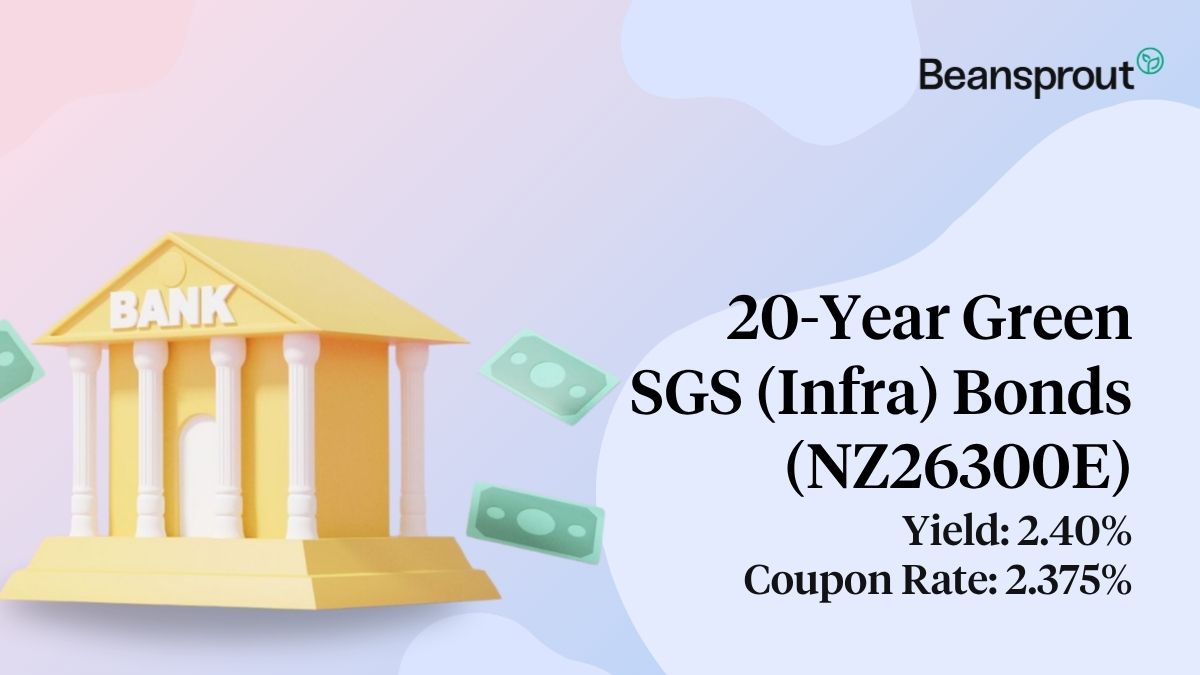
A new 20-year Green Singapore Government Securities (Infrastructure) (SGS) bond is being offered to retail investors with a fixed 2.40% annual yield, and applications close on 27 July 2026. The bond is issued to finance Singapore's long-term green infrastructure projects as part of the country's commitment to achieving net-zero emissions by 2050. Unlike regular SGS bonds, which are typically issued through auctions, this Green SGS bond is issued through syndication, with its yield determined before the public subscription period.
The article compares the Green SGS bond with other low-risk investment options. While its 2.40% yield exceeds the latest six-month Treasury Bill (1.55%) and the current Singapore Savings Bond (SSB), investors must commit to a 20-year maturity ending in 2046 or risk capital losses if they sell before maturity. Unlike SSBs, which can be redeemed monthly without losing principal, the Green SGS bond trades in the secondary market, where prices fluctuate according to interest rates.
Beansprout also notes that the bond's yield is only 0.10 percentage points higher than the benchmark 10-year SGS, despite investors taking on substantially greater interest-rate risk. A historical example showed a 30-year SGS issued in 2021 falling from 98.30 to 90.51 as rates increased.
The article concludes that the Green SGS bond suits investors seeking predictable long-term income and who are comfortable holding it until maturity. Those prioritising flexibility may still prefer SSBs or Treasury Bills. Applications are accepted only in cash through DBS, OCBC and UOB channels, with CPF and SRS funds not eligible during the initial offering.
Social media and forum discussions
HardwareZone (Singapore)
Discussion volume is moderate, largely within investment and CPF threads.
Many members compare the Green SGS with SSBs and Treasury Bills.
A common view is that 2.40% is not sufficiently attractive for locking money away for 20 years.
Some users see value for conservative retirees who want guaranteed government-backed income.
Others prefer waiting for higher long-term bond yields.
Overall sentiment: Mixed.
Investment-related subreddits (especially Singapore-focused communities) discuss:
Whether 2.40% adequately compensates for 20 years of interest-rate risk.
Comparisons with CPF Ordinary Account (2.5%) and Special Account (4%) interest rates.
Advice that investors should only buy if they intend to hold until maturity.
Positive comments about supporting Singapore's green infrastructure while earning a fixed return.
Overall sentiment: Mixed, leaning cautious.
X (formerly Twitter)
Most posts come from:
Financial educators.
Investment bloggers.
Wealth management firms.
Discussion focuses on:
The difference between Green SGS, SSBs and T-bills.
Educational infographics explaining duration risk.
Application deadlines and eligibility.
Singapore investment groups mainly discuss:
Whether to switch from T-bills to Green SGS.
Concerns about inflation reducing the real return over 20 years.
Questions about using CPF or SRS (many discover cash is required during issuance).
Personal finance creators publish:
Short explainers comparing Green SGS, SSBs and fixed deposits.
Carousel posts highlighting risks versus rewards.
Infographics on Singapore's green financing initiatives.
TikTok
Finance influencers create:
One-minute videos explaining bond duration risk.
Comparisons with CPF interest rates.
Step-by-step application guides using banking apps.
Threads
Discussion remains relatively limited.
Most posts recommend investors understand:
Interest-rate risk.
Liquidity risk.
The importance of matching the bond with long-term financial goals.
Overall online sentiment
Overall sentiment is around 65–70% neutral to positive, with investors viewing the bond as a safe but specialised product.
Positive
✅ Backed by the Singapore Government.
✅ Higher yield than current T-bills and SSB first-year returns.
✅ Supports Singapore's green infrastructure projects.
✅ Suitable for long-term income-focused investors.
Negative
❌ 20-year lock-in is considered too long by many retail investors.
❌ Yield is only slightly above the 10-year SGS despite significantly higher duration risk.
❌ Lower return than CPF OA (2.5%) and substantially below CPF Special, MediSave and Retirement Accounts (4%).
❌ Potential capital losses if sold before maturity due to rising interest rates.
The consensus across forums is that the Green SGS bond is best suited for investors with a long investment horizon who are comfortable holding it to maturity, while those seeking liquidity and flexibility generally continue to favour Singapore Savings Bonds or Treasury Bills.
No comments:
Post a Comment