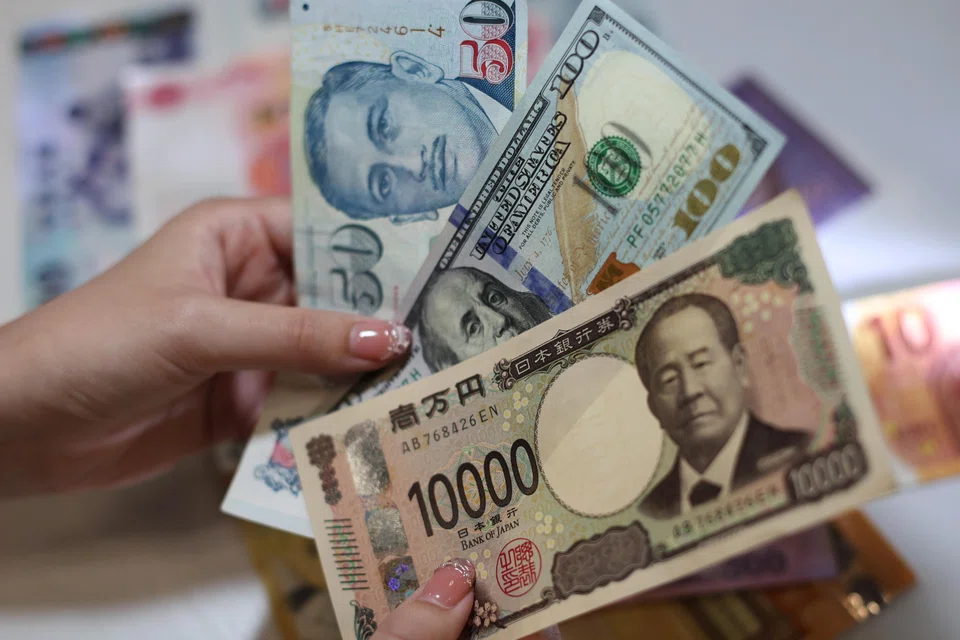
Source:
ChatGPT:
Experts warn that currency concentration can create hidden portfolio risk. An investor may hold diversified stocks, bonds and funds but still have significant exposure to one currency. A sharp depreciation can therefore wipe out investment gains when converted back into Singapore dollars.
OCBC FX strategist Christopher Wong and Maybank Securities’ Saktiandi Supaat favour diversification rather than trying to predict a single winning currency. The Singapore dollar and Swiss franc are viewed as relatively resilient, while the yen and Indonesian rupiah are expected to remain more volatile. Investors should consider differences in monetary policy, fiscal credibility, economic growth and external balances.
Hedging is another option. Currency options provide protection while retaining upside if exchange rates move favourably, although premiums become more expensive when volatility rises. Forward contracts offer more certainty but lock in exchange rates.
The appropriate hedge depends on the portfolio. Bond investors may hedge most or all foreign-currency exposure because FX losses can overwhelm relatively modest bond yields. Equity investors, with longer horizons and higher expected returns, may hedge only part of their exposure or remain unhedged.
The experts stress that the objective is not to eliminate currency risk, but to prevent any single currency from having an outsized effect on overall portfolio returns. Regular rebalancing can also prevent currency concentration from developing. (The Wall Street Journal)
What investors are discussing online
I found limited evidence of direct discussion of this specific BT article on the major social platforms so far, but the underlying issue is generating substantial discussion among Singapore investors:
Reddit / r/singaporefi: Discussion is strongly focused on Singaporeans holding USD-heavy portfolios. One recent thread asked how to manage a portfolio entirely in USD when future spending will be in SGD. Responses debated whether equities should actually be considered USD exposure, with several users arguing that the underlying companies' global revenues matter more than their listing currency. (Reddit)
Currency hedging: Reddit users discussed SGD-hedged ETFs, borrowing USD, options/swaps and simply accepting FX fluctuations. A recurring view was that long-term investors should not necessarily hedge everything, while people approaching retirement or withdrawals have a stronger reason to manage FX risk. (Reddit)
HardwareZone: Singapore investors have debated this issue for years. One detailed discussion recommends USDSGD futures as a practical way to hedge USD exposure, while another argues that the currency in which a stock is listed should not be confused with the investor's actual economic exposure. (HardwareZone Forums)
HardwareZone and bonds: Forum discussions are particularly cautious about foreign-currency bonds. The view expressed is that for Singapore-based investors, currency risk can overwhelm the relatively small yield advantage of foreign bonds, making SGD bonds more attractive for the defensive portion of a portfolio. (HardwareZone Forums)
Instagram/TikTok/Threads/Facebook/X: I did not find enough independently verifiable public posts specifically discussing this BT article to claim there is meaningful platform-specific sentiment. Broader financial-content creators continue to discuss currency hedging, particularly hedged versus unhedged global ETFs. (Listen Notes)
Bottom line: The online Singapore-investor discussion broadly supports the article's central message: don't try to predict FX perfectly; diversify currency exposure, match currency exposure to future spending needs, and consider selective rather than blanket hedging.
No comments:
Post a Comment