Source:
ChatGPT:
A property selling above its purchase price does not necessarily mean the owner made a large net profit. Historical success stories can also be misleading because they may omit financing costs or depend on buying in particularly desirable locations during strong market periods. (Seedly - Get Rich or Die Tryin')
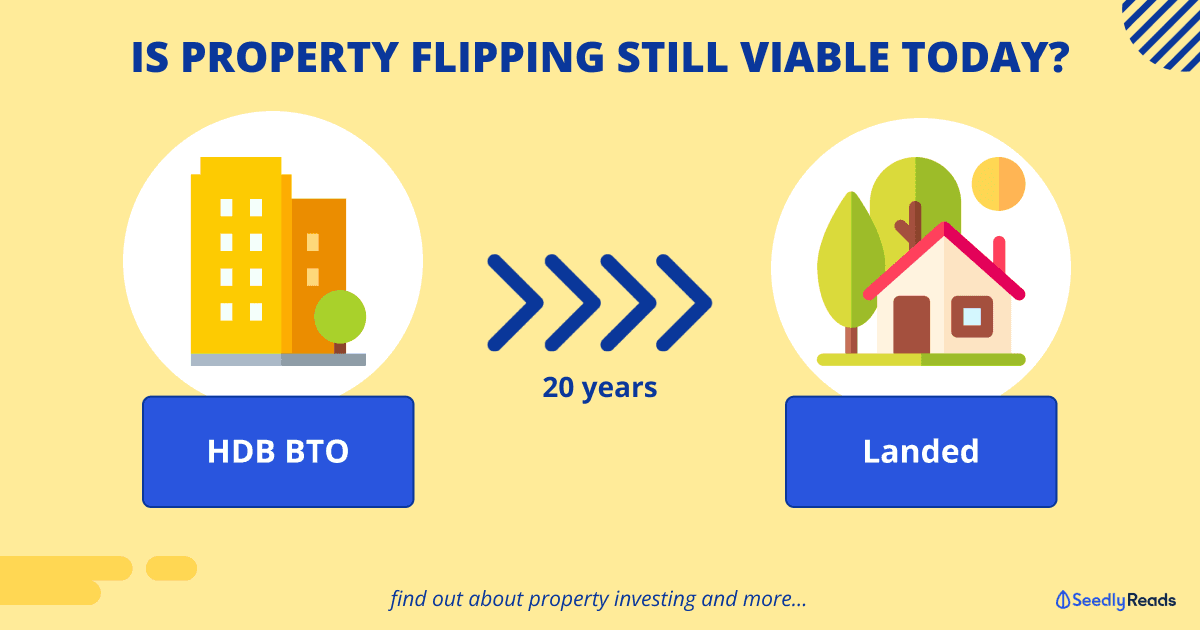
Short-term flipping has become particularly difficult after 4 July 2025, when Seller's Stamp Duty (SSD) was increased and extended to four years. Residential properties purchased from that date face SSD of 16% if sold within one year, 12% after one to two years, 8% after two to three years and 4% after three to four years. (Ministry of Finance (MOF))
BTO owners also face MOP restrictions, meaning a BTO cannot simply be bought and quickly resold. Plus and Prime flats generally have longer 10-year occupation requirements. Meanwhile, property prices do not rise uniformly: Seedly notes that 2Q2026 private residential prices rose 0.5%, but non-landed prices fell 0.1% while landed prices increased 2.6%. (Seedly - Get Rich or Die Tryin')
The article concludes that property can still build wealth, but flipping should not be viewed as a low-risk shortcut to becoming rich. Buyers should stress-test mortgages against higher interest rates, income loss and weaker markets, while considering liquidity and diversification.
Social media & forum reaction
Reddit has the strongest directly relevant discussion. A July 24 r/asksg thread questioning whether flippers actually make money attracted 129 upvotes, with commenters highlighting renovation, mortgage interest, CPF refunds, transaction costs and opportunity costs. Several argued that headline "paper gains" can substantially overstate actual profits. (Reddit)
Another Reddit discussion specifically questioned the BTO-to-property-upgrade strategy, with users noting that rising prices for the next home can consume much of the apparent gain from selling the first property. (Reddit)
HardwareZone: I found relevant historical forum discussions around property flipping and Singapore housing, but no significant thread directly discussing this newly published Seedly article.
X, Facebook, Instagram, TikTok and Threads: I could not find enough publicly indexed, verifiable posts specifically about this Seedly article to establish meaningful platform-specific sentiment. This is important because absence from search results does not mean there was no discussion—many social posts are private, poorly indexed or inaccessible to search engines.
Overall sentiment: The discussion is noticeably more sceptical than the traditional "BTO appreciation → condo → landed" success story. The dominant theme is that gross property appreciation is not the same as net wealth creation. Reddit commenters particularly emphasise financing costs, CPF interest, renovation, liquidity and the risk that the next property appreciates faster than your current home. (Reddit)
My takeaway: For Singapore investors, the article's strongest point is not that property cannot make money, but that you need to calculate the entire property cycle—not just the selling price minus purchase price.
No comments:
Post a Comment